
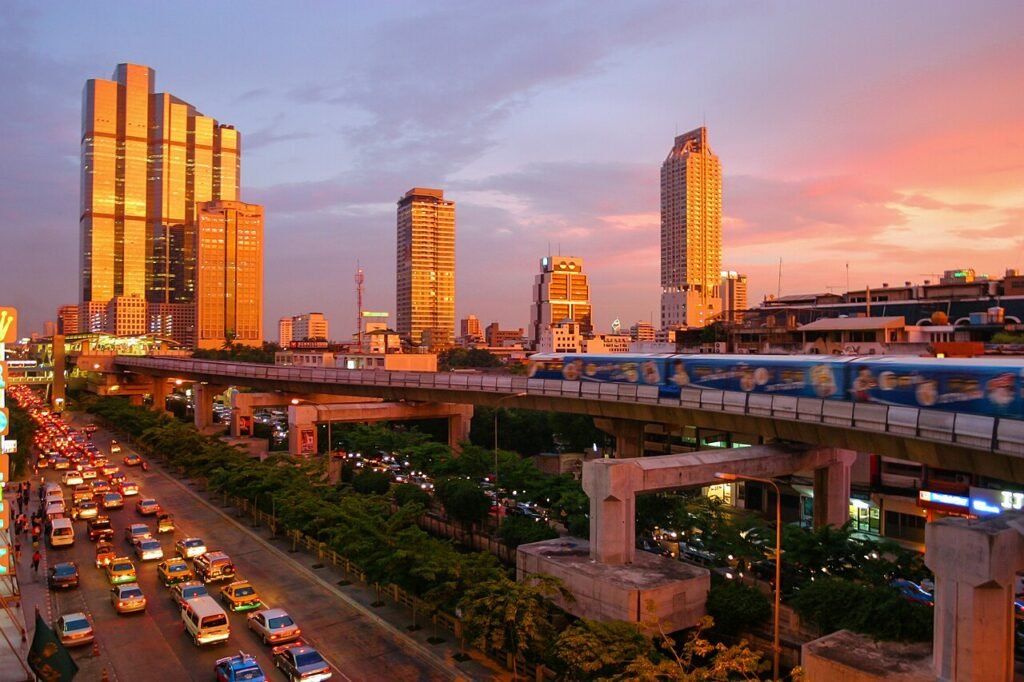

BANGKOK THAILAND Asia Sustainable Energy Week 2026 expands to become the region’s premier deal-making platform, and Australian companies are positioning early.
July 1-3, 2026 | Queen Sirikit National Convention Center, Bangkok, Thailand
Asia Sustainable Energy Week (ASEW) 2026 is shedding its “ASEAN” prefix and scaling up literally and strategically. ASEW 2026 returns as the region’s most influential platform driving clean energy transformation, bringing together innovators, policymakers, and industry leaders from across Asia with a renewed focus on Sustainable Energy Towards Net Zero.
For Australian renewable energy companies, technology suppliers, and investors, this isn’t just another trade show. It’s the essential marketplace where Southeast Asia’s $120 billion energy transition gets financed, negotiated, and deployed—and where Australia’s $2 billion Southeast Asia Investment Financing Facility (SEAIFF) meets the projects it was designed to fund.
The Numbers That Demand Attention
The exhibition spans over 25,000 square meters, showcasing cutting-edge technologies with over 1,500 global energy brands unveiling groundbreaking technologies. Attendees engage with leading companies from eight national pavilions, including China, Finland, Germany, Japan, Korea, Singapore, Switzerland, and the United Kingdom.
Critically for Australian companies: no Australian national pavilion is currently listed. That’s not a barrier but an opportunity to claim white space before competitors crowd in.
The event attracts a diverse professional audience, including industry experts, policymakers, and representatives from research institutions, with over 200 expert-led sessions focused on the latest trends, policies, and innovations within the clean energy landscape.
Four Exhibitions, Infinite Deal Opportunities
ASEW 2026 comprises four specialized platforms under one roof:
Renewable Energy Asia: The flagship showcase for solar PV, wind, bioenergy, hydropower, geothermal, and hydrogen technologies. This is where project developers meet equipment suppliers and financiers close deals.
Energy Efficiency Asia: Focused on building technologies, energy management systems, and industrial efficiency solutions. Australian smart building tech and energy management software companies should target this heavily.
Energy Storage Asia: Battery technologies, grid-scale storage, and microgrid solutions. With Australia’s lithium dominance and battery innovation expertise, this segment offers natural competitive advantage.
MobilityTech Asia: Thailand’s premier EV exhibition covering charging infrastructure, battery recycling, and sustainable transport. Australia’s critical minerals for battery production create natural partnership opportunities here.
Why Australian Companies Can’t Afford to Miss This
Government-Backed Market Entry
Australia has approved a $75 million (US$50 million) equity investment in the Singapore Government’s Financing Asia’s Transition Partnership (FAST-P) initiative, which aims to support the region’s clean energy transition, contributing to bridging critical gaps in Southeast Asia’s sustainable infrastructure financing.
FAST-P specifically targets renewable energy and storage, EV infrastructure, sustainable transport, and water/waste management—precisely the sectors featured at ASEW 2026. Australian exhibitors can connect with FAST-P-backed projects actively seeking technology partners and suppliers.
Austrade’s Active Regional Engagement
Powerledger has joined a number of Austrade-led trade missions to the region, including the Australia Energy Mission to Thailand and Vietnam in March 2023, demonstrating government commitment to facilitating market access.
FutureNow is organising an Australian Business-Match group to attend this important Event. We have an expert on-ground support for companies exhibiting at ASEW, offering market intelligence, introductions to decision-makers, and navigation assistance through Thailand’s business protocols. EOI. FIND OUT MORE!
The Competitive Landscape Favors Australian Positioning
Current trade data reveals opportunity: China is the leading trade partner in clean technologies across the five ASEAN countries at USD 4.3 billion, followed by South Korea (USD 316.2 million), Japan (USD 85.6 million) and Australia (USD 16.1 million).
Australia’s minuscule market share isn’t weakness—it’s massive upside potential. Chinese manufacturers dominate hardware, but Australian companies excel in areas where ASEAN markets increasingly demand differentiation:
- System integration expertise (grid management, VPP platforms)
- Project development sophistication (bankable feasibility studies, regulatory navigation)
- Quality assurance and safety standards (critical for insurance and financing)
- Long-term service commitments (20-year performance guarantees Chinese competitors often can’t match)
Thailand as the Regional Manufacturing Hub
Redflow’s battery manufacturing plant in Chonburi, Thailand, demonstrates the strong local supply base and long-term commitment to manufacturing in the region with backing from the Australian Government through the Australian embassy and Austrade in Thailand.
Companies exhibiting at ASEW aren’t just selling to Thailand—they’re evaluating Thailand as a regional manufacturing base to serve all ASEAN markets. The expo provides concentrated access to local suppliers, logistics partners, and government incentive programs.
Which Australian Companies Are Already Positioning?
While comprehensive exhibitor lists won’t be finalized until March 2026, several Australian companies have demonstrated commitment to ASEAN renewable energy markets and are likely candidates for ASEW participation:
Powerledger (blockchain-based energy trading platforms): Already active in Thailand with peer-to-peer energy trading pilots and backed by Austrade mission participation.
Redflow (zinc-bromine battery manufacturer): Operating manufacturing facility in Thailand with government support and strong regional relationships.
ACEN Australia (renewable energy developer): With 60+ staff and 8 GW development portfolio, actively seeking regional partnerships and technology suppliers.
Australian solar module manufacturers, energy storage system integrators, and smart grid solution providers should be watching closely as exhibitor registration opens.
The Strategic Value Beyond the Exhibition Floor
Supported by Thailand’s Ministry of Energy and the country’s strong commitment to sustainable energy initiatives, ASEW provides an ideal platform for organizations to introduce their technologies to the Southeast Asian market and establish partnerships with local and regional stakeholders.
This government backing means ASEW attendees include:
- Electricity authority decision-makers with procurement budgets
- State energy ministries setting policy and offering incentives
- Development banks financing projects
- Major industrial energy consumers seeking decarbonization solutions
These aren’t tire-kickers—they’re the actual buyers, regulators, and financiers who determine which technologies get deployed across ASEAN.
ASEAN’s Massive Investment Gap = Australian Opportunity
ASEAN needs more than US$200 billion in annual investment to stay on track for 2030, with foreign capital continuing to flow in as Vietnam ranks second and Indonesia ninth among developing economies for renewable-energy FDI.
Current reality: ASEAN countries were aiming for renewables to make up 23% of primary energy supply by 2025, but are currently only on track for around 19.6%, with the region receiving only USD 8 billion annually between 2016 and 2021 versus the USD 27 billion required.
This gap isn’t a problem—it’s the market. Projects are struggling to close financing not because deals don’t exist, but because they lack bankable technology partners with credible track records. Australian companies can fill that credibility gap.
Cross-Border Synergies: Australia-China Collaboration Potential
Collaboration pathways exist, including electric vehicles, with China’s leading role in EV technologies complementing Australia’s abundant supplies of lithium and other critical minerals, and renewables like hydrogen, where Australia and China offer significant advantages in production and research and development respectively.
ASEW provides rare neutral ground where Australian lithium suppliers can meet Chinese battery manufacturers and ASEAN project developers simultaneously—creating triangular partnerships that serve all parties.
Practical Steps for Australian Companies
March-April 2026: Decision Window
Exhibitor registration typically opens 4-5 months before the event. Australian companies should:
- Register early for prime booth locations near complementary exhibitors
- Coordinate with Austrade Bangkok for co-marketing and buyer introductions
- Target specific conferences where your technology addresses policy priorities
- Arrange pre-scheduled meetings with FAST-P portfolio companies
Booth Strategy:
The event is particularly distinguished by its accompanying conferences, expert seminars, and networking events, fostering in-depth professional dialogue and driving innovation and business development.
Your booth isn’t just for display—it’s your base for 30+ pre-scheduled meetings with qualified buyers. Companies that treat ASEW as a sales campaign rather than passive exhibition typically close 3-5 substantive partnerships from a single event.
Post-Event Follow-Through:
Bangkok’s excellent regional connectivity makes it easy to schedule site visits immediately after ASEW. Smart companies block July 4-7 for follow-up meetings in Thailand, Vietnam, or Malaysia with hot leads generated during the expo.
The Bottom Line: First-Mover Advantage is Real
Australia is positioning itself to become a renewable energy superpower through its ‘Future Made in Australia’ framework and promotes regional climate initiatives under its ‘Southeast Asia Economic Strategy 2040’.
Policy is aligned. Government financing is deployed. Market demand is desperate. The only missing ingredient is Australian company execution.
ASEW 2026 isn’t where Australian companies should consider going—it’s where they must establish presence before European and North American competitors fully wake up to ASEAN’s opportunity scale.
By July 1, 2026, when the Queen Sirikit National Convention Center’s doors open, the Australian companies that invested in booth space, pre-arranged buyer meetings, and cultural preparation will be positioned to capture disproportionate market share in a region about to deploy hundreds of billions in renewable energy infrastructure.
The question isn’t whether ASEAN’s energy transition will happen—it’s whether Australian companies will be selling the technology that makes it happen, or watching from the sidelines as others capture the opportunity we’re perfectly positioned to win.
For Australian renewable energy companies, ASEW 2026 is the starting line for the race that will define the next decade of regional market share. The gun goes off July 1. Are you registered?
FNGN will provide regular updates on Australian companies confirmed for ASEW 2026, Austrade support programs, and practical guidance on maximizing ROI from Bangkok exhibition participation. FNGN are organising a ASEW 2026 media-driven business-match tour for Australian businesses. Contact ani@futurenowgreennews.com for all the details.
Future Now Green News is a forward-thinking media platform dedicated to spotlighting the people, projects, and innovations driving the green & blue economy across Australia, Asia and Pacific region. Our mission is to inform, inspire, and connect changemakers through thought leadership and solutions-focused storytelling in sustainability, clean energy, regenerative tourism, climate action, and future-ready industries.