


AUSTRALIA’S housing future is being reshaped by climate reality.
Across the country, homes are increasingly being designed to withstand heatwaves, floods and bushfires, with architects and builders prioritising thermal performance, structural durability and low-energy living. The shift centres on a “thermal-first” approach — better insulation and sealing — combined with fire-resistant materials, flood-safe construction, passive solar design and electrification to reduce both emissions and household energy costs.
At the forefront of this thinking is Glenn Murcutt AO, widely regarded as Australia’s pioneer of environmentally sensitive residential design.
Winner of the Pritzker Architecture Prize and multiple international honours, Murcutt is best known for his restrained, site-responsive architecture, guided less by style than by climate, landscape and orientation.
“The principles that govern my designs have nothing to do with style,” Murcutt has said. Instead, he focuses on how buildings sit on the land, respond to prevailing winds and capture sunlight.
His philosophy echoes the Aboriginal phrase “touch the land lightly” — creating homes that work with nature rather than against it.
Designing for place, not fashion
Australia spans 69 climate zones, and housing needs vary dramatically between regions. CSIRO research shows that local conditions shape everything from construction materials to layout, while climate risk continues to rise.
Today, around 8.7 % of residential buildings sit in very high-risk areas: a figure projected to climb to 13.5% by 2090.
Key strategies for resilient homes
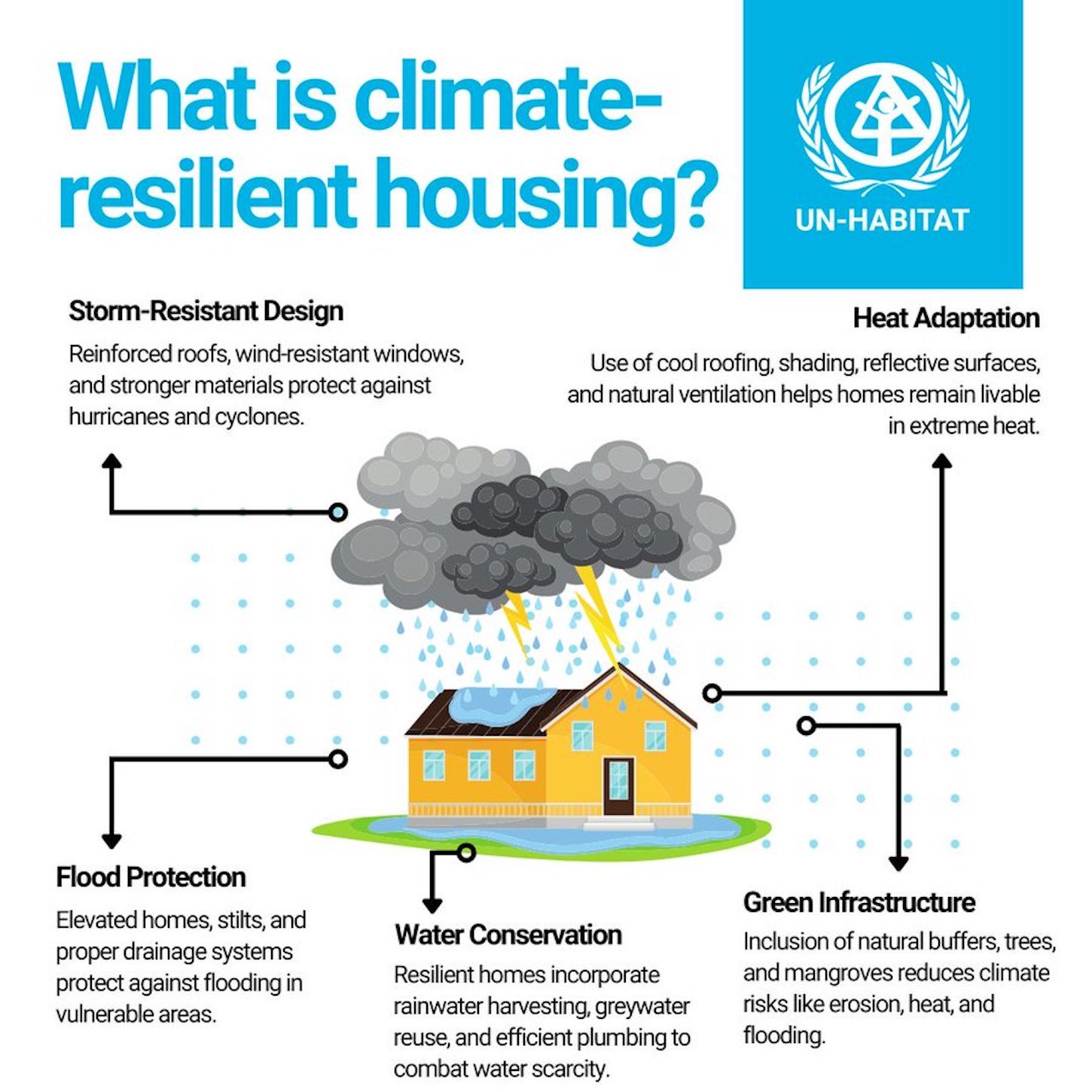
Climate-resilient housing in Australia focuses on both mitigation (cutting emissions) and adaptation (withstanding hazards).
Core strategies include:
Thermal performance and energy efficiency
Improving airtightness and insulation across roofs, walls and floors is the starting point. Upgrading homes to “climate-ready” standards can save households between $1,000 and $2,200 a year on energy bills.
Heatwave adaptation
Exterior shading, reflective “cool roofs” and internal “cool retreats” help maintain safe temperatures during extreme heat.
Bushfire preparedness
Ember-proof building envelopes, fire-resistant materials and advanced ventilation systems with HEPA filtration are increasingly used to protect indoor air quality during smoke events.
Flood resistance
Raising floor levels, installing effective drainage and using water-resistant materials such as fibre cement and concrete help homes recover faster after flooding.
MURCUTT’S CLIMATE-RESPONSIVE DESIGN
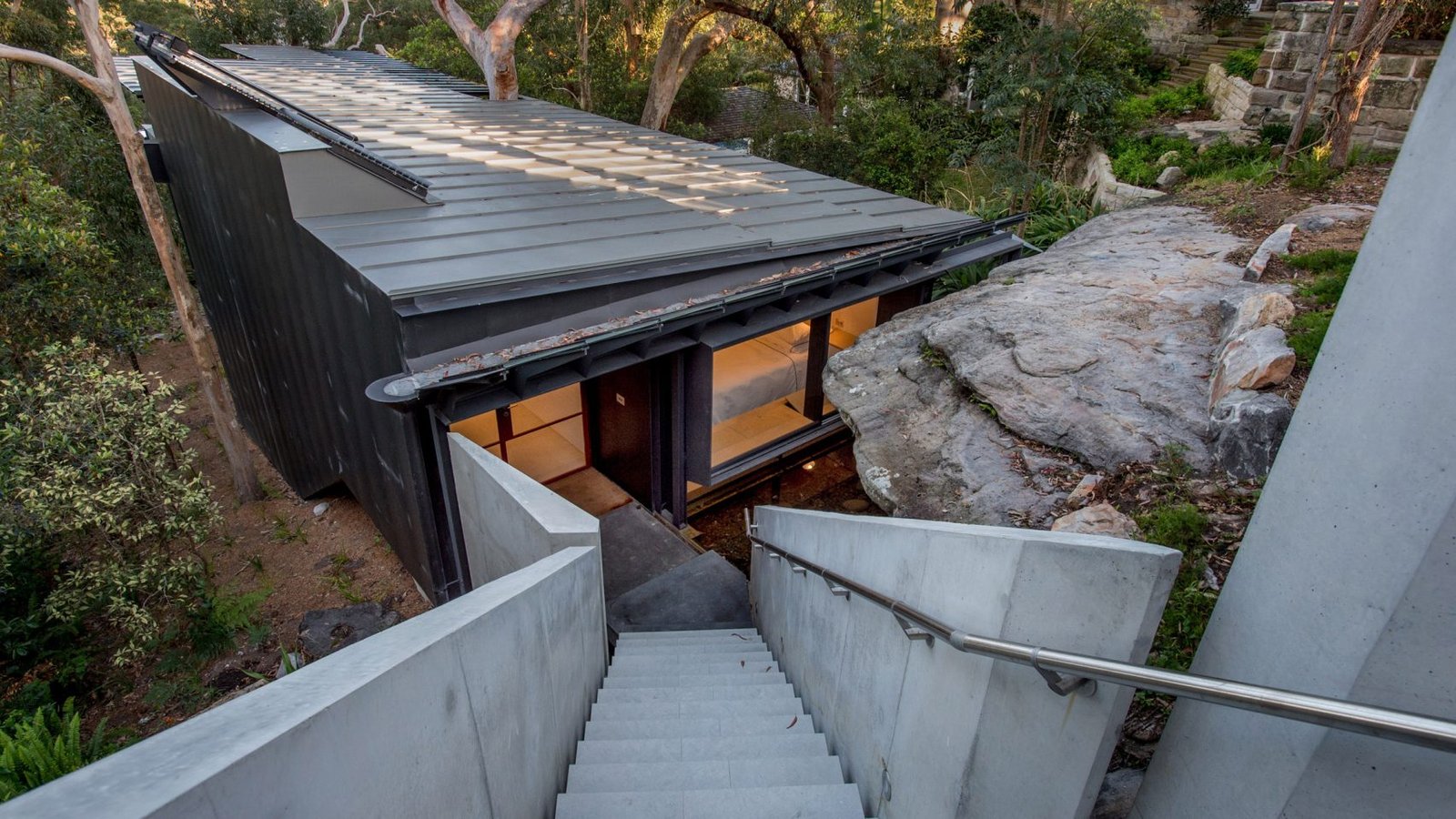
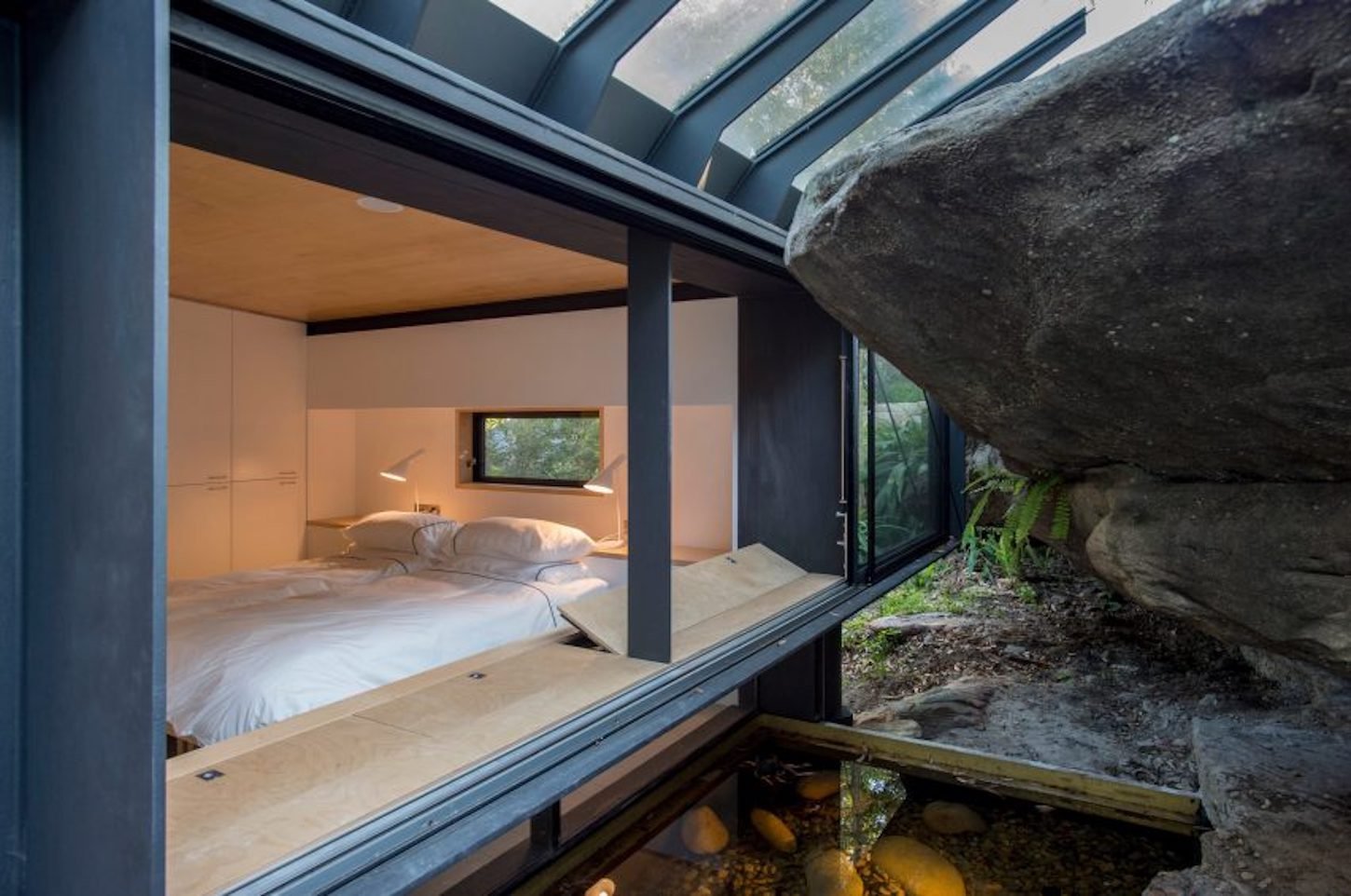
Murcutt’s Donaldson House, located in bushland on Sydney’s Palm Beach peninsula, offers a practical example of climate-responsive design. The home is angled to preserve surrounding trees, with circulation areas placed to the south so bedrooms and living spaces can capture northern sunlight.
Its exterior is clad in blackened zinc, chosen for durability in a high bushfire-risk zone. Reinforced concrete foundations anchor the structure, while plywood walls are wrapped in a protective metal skin. Windows are made from toughened, mesh-covered glass set in steel and anodised aluminium frames to defend against embers.
The result is a house shaped by climate realities — not architectural trends.
Regulation catches up with reality
Governments and industry bodies are moving toward stronger standards designed to ensure homes are built to last; not just survive disasters.
The National Construction Code sets minimum requirements for safety, health and sustainability, with recent updates increasing energy efficiency and thermal performance benchmarks. Further reforms aimed at embedding climate resilience are expected in the 2028 edition.
Meanwhile, the Climateworks Centre and CSIRO are calling for a national “renovation wave” to retrofit the eight million homes built before 2003, many of which fall short of modern efficiency standards.
Insurance pressures are also mounting. Around 652,000 properties are now considered at high risk of becoming uninsurable due to climate hazards, with improved building standards seen as one of the few viable ways to close the growing insurance protection gap.
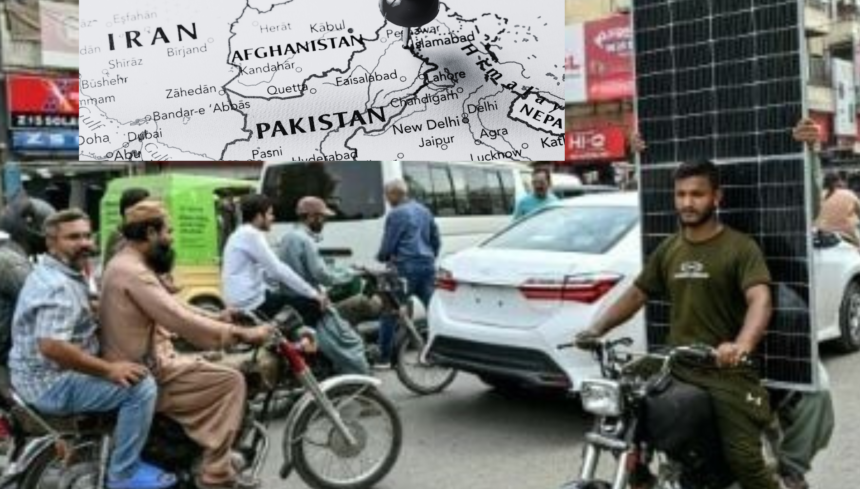
CHECK OUT OUR ARTICLE ‘BUILDING RESISTANCE IN PAKISTAN’S CLIMATE-RESISTANT HOMES’
Free tools for building better
Several organisations offer science-backed resources to help Australians design or retrofit resilient homes:
- FORTIS House — free architectural plans for homes designed to withstand bushfires, floods and cyclones
- Bushfire Resilience Rating — a self-assessment tool from the Resilient Building Council
- YourHome — the Australian Government’s guide to sustainable and climate-adapted housing
- Renew and the Resilient Building Council — advocacy and expert guidance on resilient construction
As climate extremes intensify, Australia’s approach to housing is quietly evolving. Architects like Glenn Murcutt show that resilience doesn’t require high-tech solutions — just careful design, respect for place and an understanding that buildings must respond to the environments they inhabit.
In an era of rising risk, climate-resilient homes are no longer optional. They are becoming the new baseline.
More at the Glenn Murcutt Foundation.
Future Now Green News is a forward-thinking media platform dedicated to spotlighting the people, projects, and innovations driving the green & blue economy across Australia, Asia and Pacific region. Our mission is to inform, inspire, and connect changemakers through thought leadership and solutions-focused storytelling in sustainability, clean energy, regenerative tourism, climate action, and future-ready industries.