
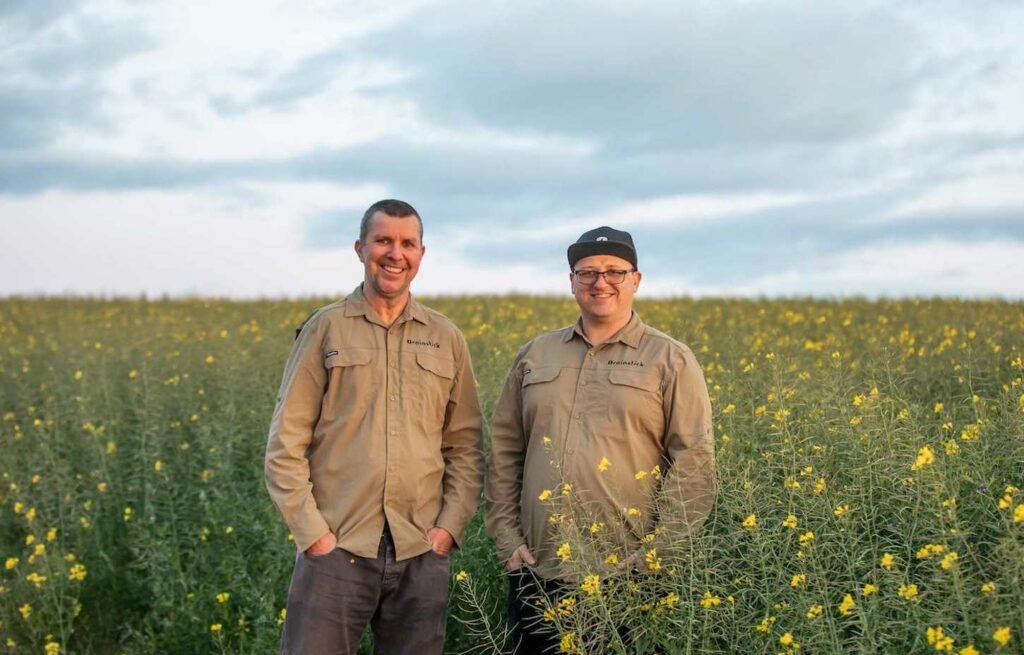

I’ve seen what drought does to families. Climate volatility isn’t abstract for us. — Darryl Lyons
WHEN Darryl Lyons takes the stage at next week’s Climate Investor Forum in Melbourne, he won’t be pitching another incremental agtech product.
He’ll be talking about lightning.
More specifically, how his Cairns-based startup Rainstick is using low-energy electric fields to stimulate seeds — inspired by the natural effects of thunderstorms and grounded in Maiawali rainmaking knowledge — in a bid to improve crop establishment and plant vigour, without chemicals or genetic modification.
It sounds unconventional, and that’s because it is.
But it’s also moving out of the laboratory phase and into real-world trials.
From rainmaking to regenerative tech
Rainstick started with what Lyons describes as a mix of curiosity and coincidence.
His co-founder rang one day with a simple question: what about this thing called electroculture?
At first, it sounded fringe.
“It was a bit woo-woo,” Lyons admits. “People putting copper coils around plants and trying to create electric fields to make things grow faster.”
But then they started digging into research from Japan, where electric fields had been used to accelerate mushroom growth.
That’s when it clicked.
“They were inspired by medicine men who would go up into the mountains after thunderstorms to harvest mushrooms, because they were more medicinal,” Lyons says. “And we went, hang on — that’s what my mob were doing. We’re a rainmaking tribe. We used the Chuggera to influence thunderstorms, to bring rain into dry areas, and that had a profound effect on growing grain for millennia.”
Rather than chasing chemicals or genetic modification, Lyons and co-founder Mic Black began experimenting with how electrical fields might influence seeds.
Early tests happened in a suburban garage. Then came a leap few startups attempt: working with a high-voltage physicist in Serbia, in a former World War II bunker, to prototype what Lyons jokingly calls their first “lightning machine”.
“We were just silly enough to try,” he says. “Different failed experiments, putting our own coin in, just seeing if there was something there.”
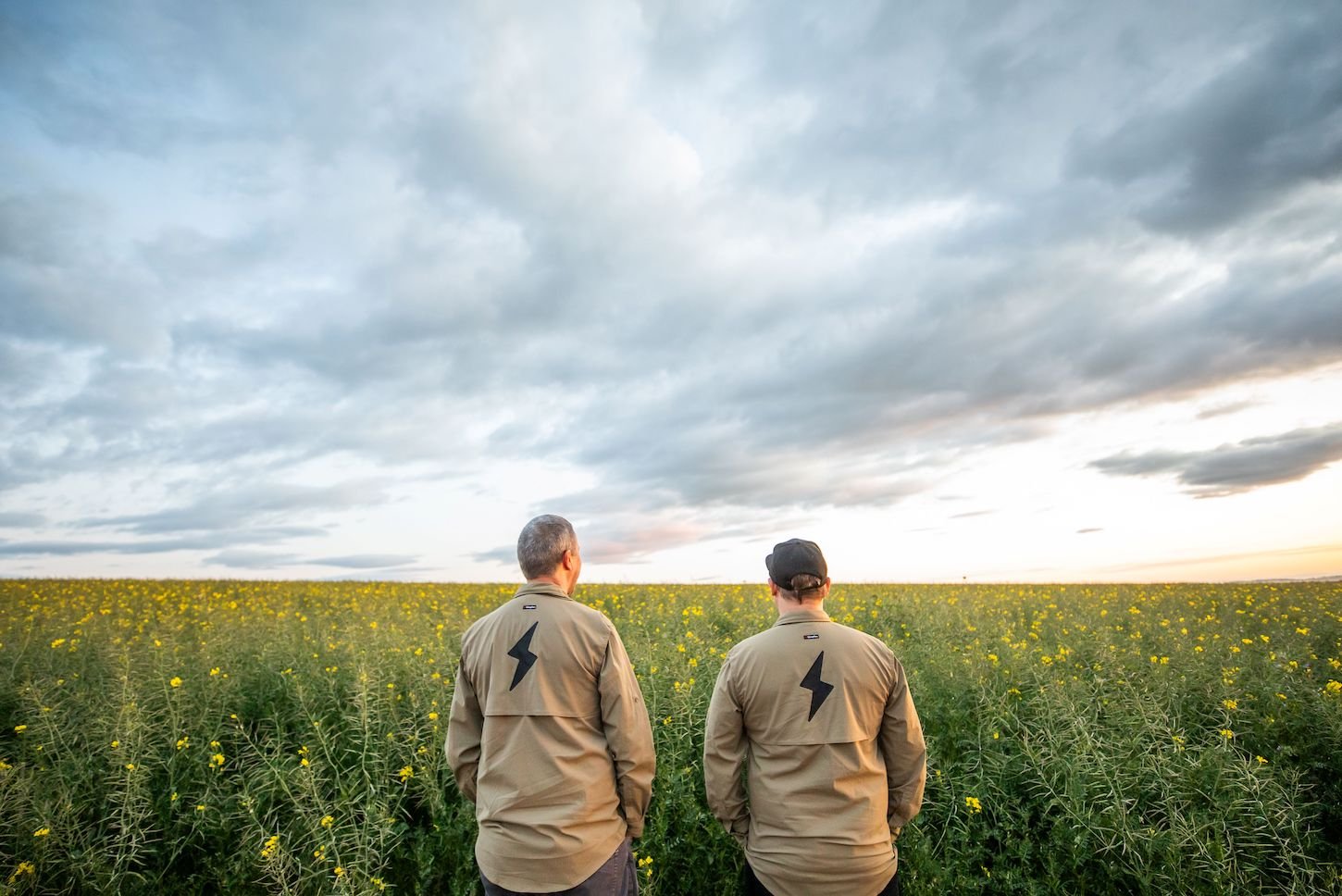
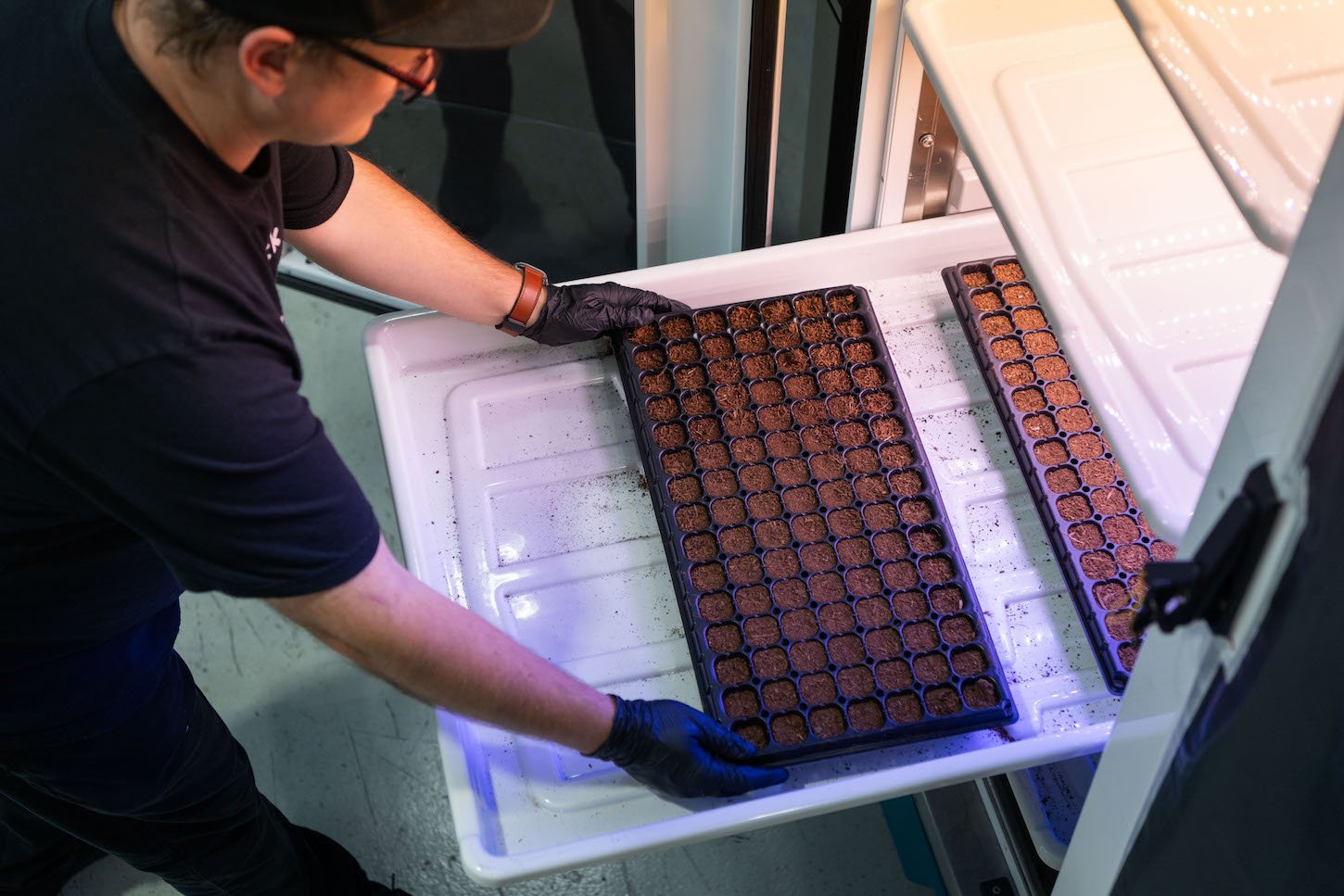
Three years later, Rainstick is treating seeds using controlled electrical fields designed to mimic aspects of natural storm systems. The energy input is deliberately minimal (low enough to run off a small solar setup) with the aim of keeping costs workable for growers.
Proof before promises
Lyons estimates the technology sits around TRL 4–6. Early signals include improved establishment in canola, increased biomass targets in leafy greens, and promising responses in tomatoes.
Rainstick is currently running trials across multiple crop types — including canola, lettuce and processing tomatoes with Kagome in Echuca — alongside work with the Singapore Food Agency on leafy greens.
“We’ve got trials in the ground now,” he says. “We’ve got trials growing with Singapore. The results so far are very, very promising. But we’re still a few years away from treating tonnes of seed every couple of hours. That’s the next stage.”
Lyons is upfront about where Rainstick sits today. This is early-stage work.
And rather than disappearing into academic rabbit holes, the team made a deliberate call to prioritise outcomes.
“We had to make a decision early on,” he says. “This could become a massive rabbit hole — chasing the exact mechanism of action. But growers don’t really care about that. My old man doesn’t care about that. He cares about what comes out of the ground.
“So, we said we’ve got to build something commercial. Treat the seed, grow it out to 30 days, share the results. That’s what we’ve been doing.”
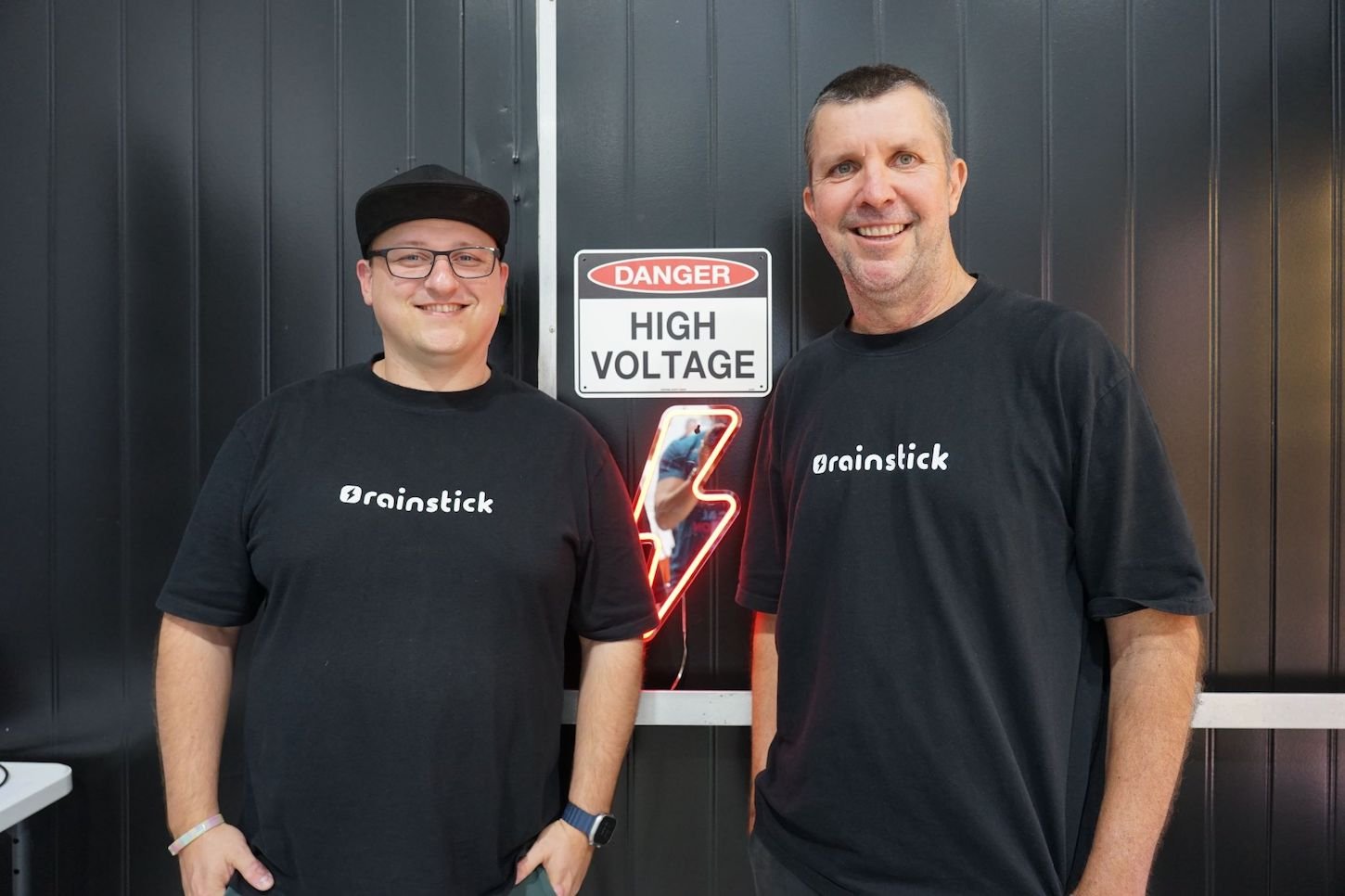
So far, Rainstick has measured more than half a million seedlings across lab and field environments.
“We just show that to industry and say, ‘Hey, something’s going on here. Do you want to try it?’ And that’s helped us progress.”
Beyond agriculture: restoration and resilience
While food production remains Rainstick’s primary focus, Lyons sees broader applications.
“It works in any seed,” he says. “Not just agriculture.”
The company is now exploring native species and land restoration, including early pilots aimed at improving establishment in degraded landscapes.
For Lyons, this is deeply personal.
He grew up around farming. His grandfather lost a cotton operation. His parents endured years of drought on a cattle property.
“I’ve seen what drought does to families,” he says. “Climate volatility isn’t abstract for us. It’s real. You either sit back and accept it, or you have a crack at building something that might help.”
Rainstick is testing whether treated seeds can establish more reliably in colder soils, hotter starts and stressed environments… conditions farmers are increasingly forced to contend with.
“There’s a lot of opportunity there,” Lyons says. “Planting windows are changing. Pest pressures are changing. People are needing to adapt fast.”
A third-time founder with purpose
Before Rainstick, Lyons worked across telecommunications and IoT, building data and operations startups. He now serves as Entrepreneur in Residence at Farmers2Founders and Indigenous Entrepreneur in Residence at James Cook University.
But Rainstick feels different.
“This is my third startup,” he says. “So, you learn. You learn how to zig and zag. You learn how to protect your family while doing something that might fail tomorrow.”
Rainstick has completed a pre-seed round and expects to pursue a seed raise later this year to support engineering scale-up and broader deployment.
CHECK OUT ‘SOUTH KOREAN FARMERS’ CLIMATE LAWSUIT SENDS WARNING‘
Why the Climate Investor Forum is important
Rainstick arrives at the Climate Investor Forum in Melbourne on February 18-19 at a moment when agriculture is under pressure from every direction: climate volatility, rising input costs, restoration obligations and investor scrutiny.
The company sits across sustainable farming, Indigenous-led innovation, climate adaptation and deep tech.
It’s still early and unproven at scale, but it’s also one of the more original approaches emerging from Australia’s climate-tech ecosystem right now.
At CIF, Lyons will be looking for partners, collaborators and investors willing to engage with that journey… not just the destination.
Editor’s note
Future Now Green News will be attending Climate Investor Forum. We’ll be following Rainstick’s progress closely and sharing updates as trials mature and scale pathways become clearer.