

OPINION PIECE
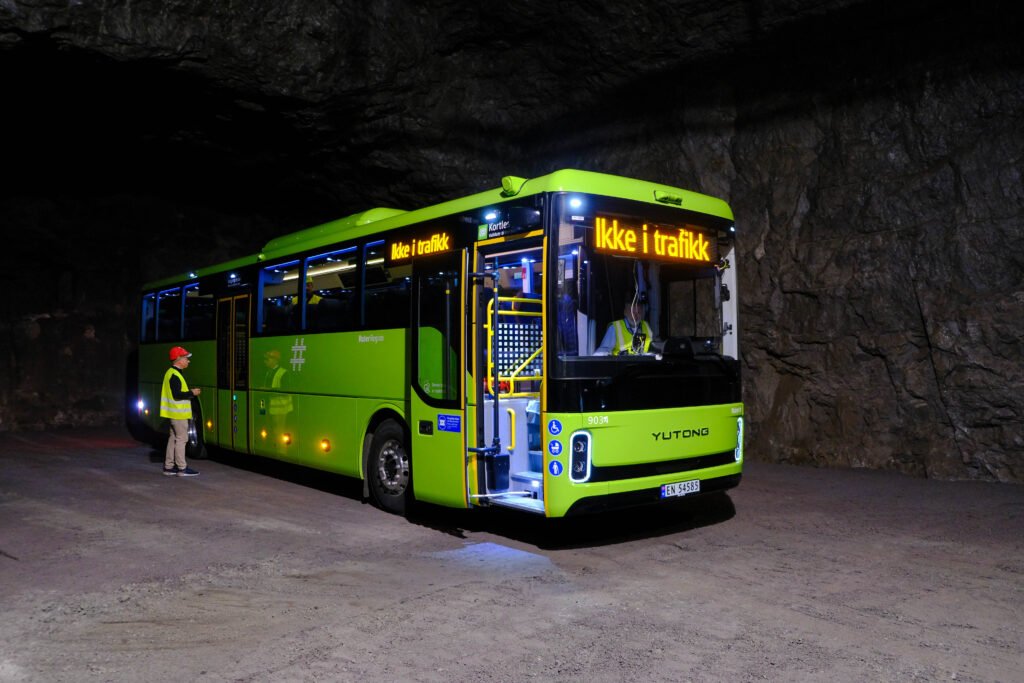
THIS opinion piece is in response to the Australian Financial Review (AFR) January 20 report about the concern over the Chinese-made Yutong battery-electric buses (in particular a kill switch) which has been speculated to possibly stop buses in their tracks. According to AFR, the UK National Cybersecurity Centre and Department for Transport is now investigating.
Oddly, this is of such concern to the UK National Cybersecurity Centre that they have published absolutely nothing about this threat, neither has the UK Department for Transport. The report stems from testing that Ruter, a Norwegian bus operator, conducted on their electric buses — testing that was announced to the media in October 2024. Since then, the article has been picked up by the ABC and The Guardian in November 2025, and only finding column space in the Australian Financial Review in mid-January (yesterday).
Most of the column space is given over to Alastair MacGibbon, Chief Strategy Officer of CyberCX, whose views have featured prominently in public debate on Chinese-made EVs. Among other things, he is described as a “vocal critic of the security risks associated with Chinese-made EVs”.
Battery safety is not managed solely in the realm of software … making it highly unlikely that a catastrophic event could be remotely initiated.
Misinformation and disinformation are some of the biggest threats to a rapid transition to a clean, decarbonised global economy. So much so that the Australian Senate has set up the Senate Committee on Information Integrity on Climate Change and Energy to understand the impact of misinformation and disinformation in the energy transition.
It’s often said that a lie can go around the world before the truth can get its boots on; but half-truths amble, mutate, and metastasise.
“Chinese Security services could potentially interfere with vehicles through SIM cards that are meant to be used for software updates, the agencies concluded this month; though there was no evidence the function had been used to date.” ~ AFR January 2026.
There is no evidence or factual reporting that this has indeed occurred. Only what I believe is inflammatory fearmongering. The Australia Capital Territory since 2023 have 90 Yutong battery-electric buses, and NSW operates 26; four in Brisbane and Adelaide city in trial stage. In Australia, Yutong spokesperson of Vehicle Distributors International said that Yutong’s bus model, tested in Europe, is not the same as sold or operating in Australia which has VDI updates employed in person, not remotely from China.
Back in September 2025, it was widely reported that Prime Minister Anthony Albanese took a ride in a Great Wall Motors-manufactured SUV. And Mr MacGibbon was available for interviews on 7 News to describe a scenario where a Chinese OEM remotely detonated the battery in an EV.
I have a long history with batteries and energy storage. Battery safety is not managed solely in the realm of software — the physical cells and packs have to be designed and tested to exceed stringent safety standards to prevent and arrest thermal runaway, making it highly unlikely that a catastrophic event could be remotely initiated.
The Real Threats Get Less Attention
Nonetheless, there are genuine threats out there. Late in 2024, Stephanie Crowe, the head of the Australian Cyber Security Centre at the Australian Signals Directorate, alerted Australians to the danger that internet-connected vehicles such as EVs had vulnerabilities like any other system connected to the web, including around the collection of personal data and the apps that linked the vehicle to a driver’s mobile phone.
When speaking to the Australian Financial Review she was quoted as saying, “If, for example, a cybercriminal … compromised an individual’s phone and the app that they use to unlock their car, for example, it’s not secure. There is technical plausibility that a malicious actor could … unlock your car and get it started, without you having control over that.”
Vehicles are vulnerable. If you look through the scholarly research on the subject, browse the proceedings of the USENIX VehicleSec conferences, for example, you can find many vulnerabilities in vehicles and associated systems, many of which are open and available to malicious actors from anywhere in the world.
Despite all of this, Mr MacGibbon is strangely silent on the threats and vulnerabilities on EVs and vehicles with petrol and diesel engines that don’t come from one specific country.
The Solution Is Simpler Than the Hysteria Suggests
So how do we deal with this threat to our critical transport infrastructure? Well, luckily Ruter has the answer:
“Currently, Ruter can disconnect the bus from the internet by removing the SIM card, as all connectivity to the network goes through this single point. This ensures that we retain local control if necessary.”
Clearly, sovereign cybersecurity and critical infrastructure is an issue for all nations – anywhere in the world.
Ed is co-founder of EV Meetups in Melbourne, Adelaide and Sydney. The next Melbourne EV Meetup Event is on Thursday February 5th, 2026. 5.30pm – 8.30pm. Bookings here>>>
FNGN Publisher (Ani Allbutt) comment:
Australia’s renewable energy push is colliding with cybersecurity concerns as investigations increasingly scrutinise Chinese-manufactured goods – including offshore and onshore wind turbines, with inherent implications of grid security. Australia could learn from Germany.
Germany recognises potential cybersecurity risks with components tied to Chinese suppliers and is incorporating those concerns into security frameworks and industrial policy. The focus is on compliance with cybersecurity standards and supply-chain diversification, rather than explicit prohibition.
Disclaimer:
This article is an opinion piece written by an external contributor. The views expressed are those of the author and do not necessarily reflect the views, positions, or editorial stance of Future Now Green News (FNGN). Opinion articles are published to encourage informed debate and diverse perspectives within the green economy and sustainability sectors.
Future Now Green News is a forward-thinking media platform dedicated to spotlighting the people, projects, and innovations driving the green & blue economy across Australia, Asia and Pacific region. Our mission is to inform, inspire, and connect changemakers through thought leadership and solutions-focused storytelling in sustainability, clean energy, regenerative tourism, climate action, and future-ready industries.