


Future Made in Australia moves from policy to project: Quinbrook’s Northern Quartz Campus case study
FOR all the discussion around Australia’s Future Made in Australia (FMA) agenda, one question continues to echo across boardrooms, investment committees and government corridors: what does it actually look like in practice?
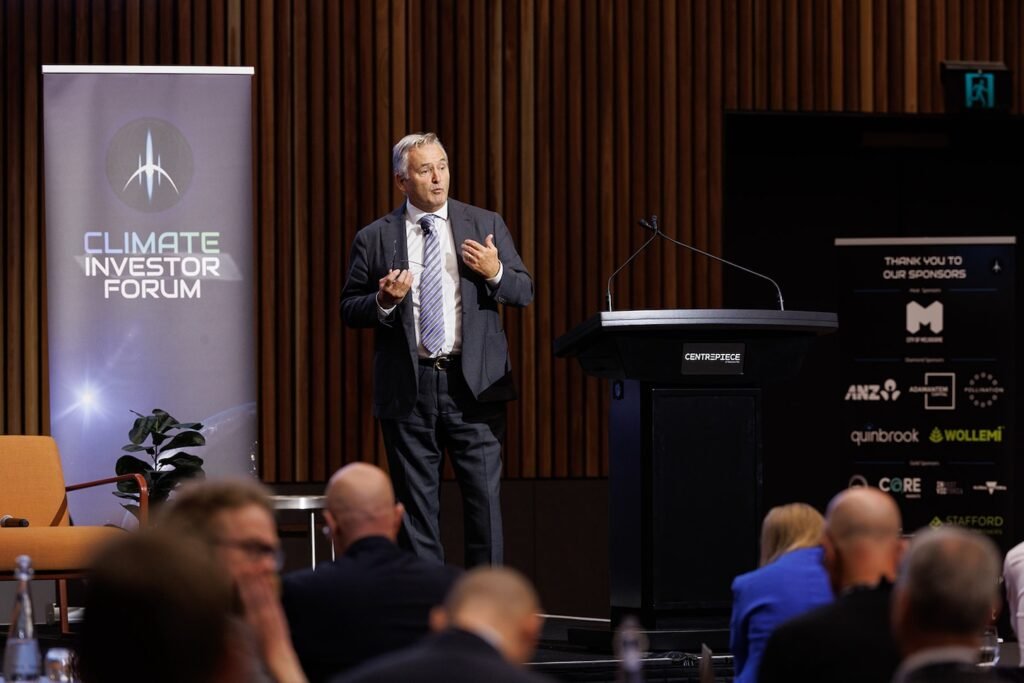
At the Climate Investor Forum in Melbourne last month, Quinbrook co-founder and managing partner David Scaysbrook attempted to answer exactly that question with a case study.
Following the keynote from Climate Change Authority chair Matt Kean, who framed the challenge as “turning targets into investment”, Scaysbrook presented what he described as a real-world example of how the FMA agenda can translate into infrastructure, supply chains and global export opportunity.
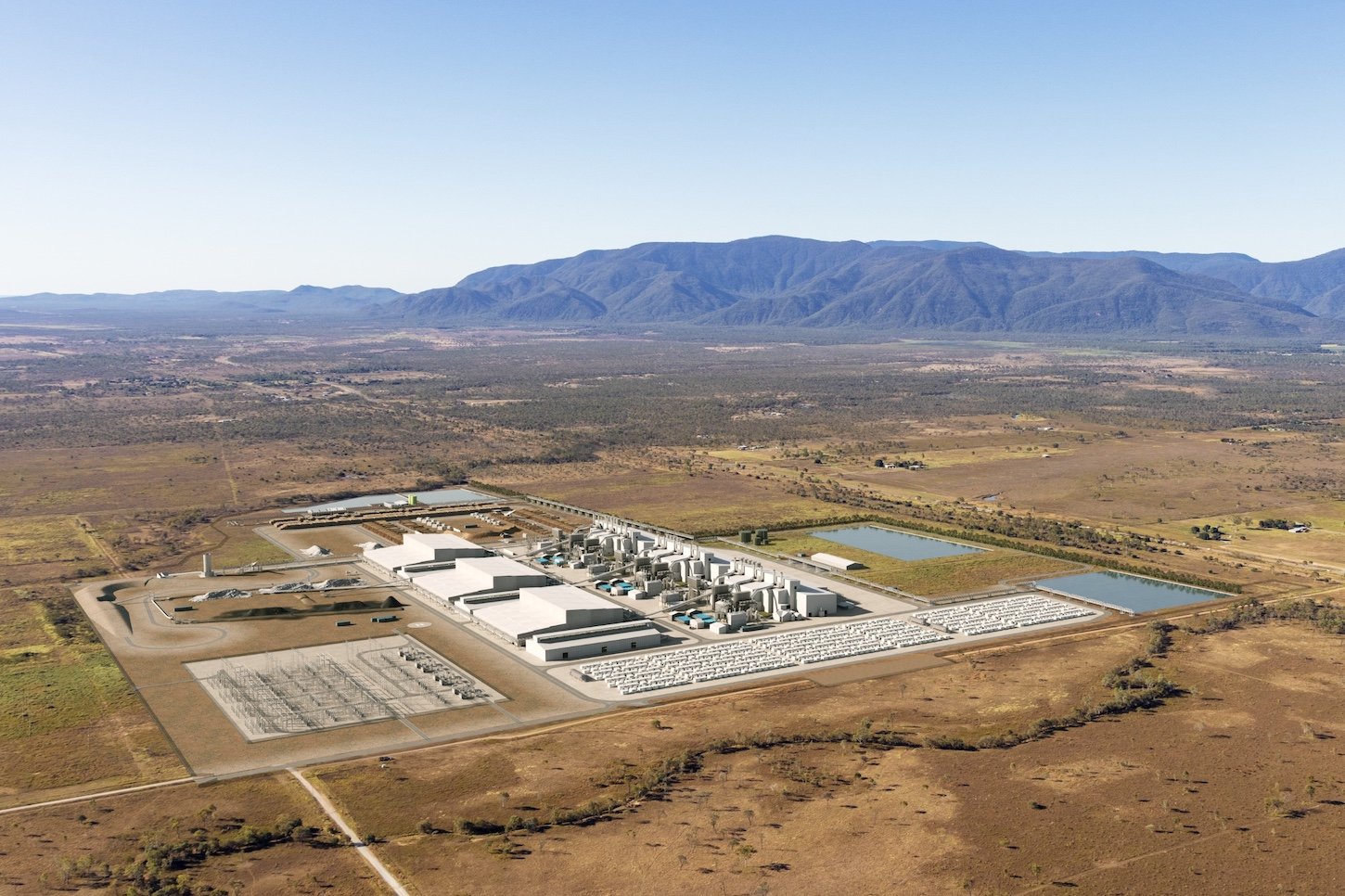
His example: Quinbrook’s Northern Quartz Campus, an ambitious clean-industrial project centred around Townsville in North Queensland.
At its core is a simple but geopolitically significant proposition… building a sovereign supply chain for silicon, the fundamental building block of solar panels and semiconductors.
“We wanted to give you some insight into what an actual Future Made in Australia project looks like,” Scaysbrook told the audience. “A future made in Australia is about new projects, new idea creation, new asset building and risk-taking — managed risk-taking — and that’s what we’re trying to convey here today.”
The uncomfortable truth behind the energy transition
Scaysbrook began by confronting what he described as an “inconvenient truth” of the global clean energy transition.
“The western world is almost entirely dependent on Chinese companies for the energy transition,” he said.
“China produces around 95 per cent of the world’s polysilicon, the key building block of solar panels, and most of it is produced using coal-fired electricity.”
He was equally candid about the technological reality underpinning that dominance.
“We have China to thank, ironically, for the roughly 90 per cent reduction in solar costs over the past decade and the extraordinary advances in battery storage,” Scaysbrook said.
In nearly 40 years in the energy industry, I have never seen anything like the pace of technological change in batteries — and much of that progress is driven by China’s technology leadership.”
That dependence, however, is increasingly colliding with geopolitical and supply chain concerns, particularly in the United States and Europe, where governments are seeking to diversify access to critical energy transition materials.
This is where Scaysbrook believes Australia has a rare opportunity.
Australia’s natural advantage
The logic behind Quinbrook’s Northern Quartz Campus is rooted in Australia’s natural comparative advantages.
Northern Queensland hosts some of the highest-purity quartz resources in the world, a critical raw material used to produce silicon metal and polysilicon.
“What we discovered when we started investing in these resource projects is that we have access to some of the highest-purity quartz on the planet — semiconductor-grade material,” Scaysbrook said.
“And the remarkable thing about these resources is that they’re not deep mining operations. In many cases this quartz is literally outcropping, you can pick it up with an excavator.”
Quartz can be smelted into metallurgical silicon, which is then refined into polysilicon used for solar cells and semiconductor wafers. But the process is intensely energy-hungry.
That is where the Northern Quartz Campus concept comes into play.
Joining the dots in North Queensland
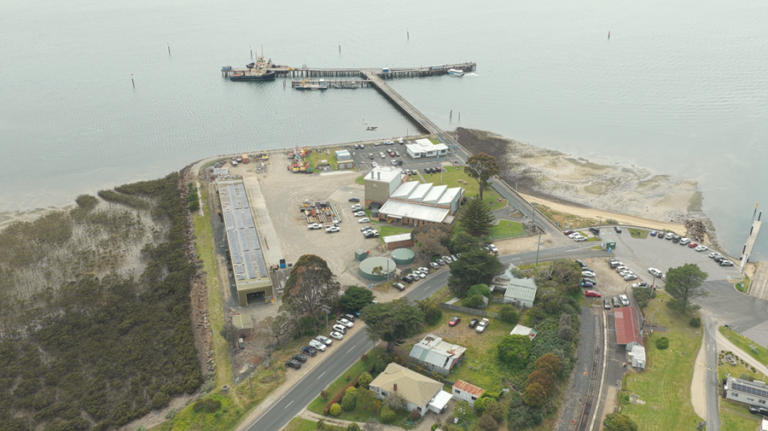
Quinbrook’s project centres on the Lansdown Eco-Industrial Precinct, located around 40 kilometres from the Port of Townsville, and the campus sits at the intersection of several strategic advantages:
-
world-class solar resources
-
proximity to high-purity quartz deposits
-
access to biomass feedstocks for renewable carbon
-
deep-water export infrastructure
-
and the planned $6 billion CopperString transmission line, designed to unlock wind resources in regional Queensland.
“When you join those dots (power, critical minerals, logistics and industrial infrastructure) you begin to see a unique opportunity,” Scaysbrook said.
“We’re creating a campus designed specifically for energy-intensive industries that can access low-cost renewable power, raw materials and export markets.”
The project also includes large-scale solar farms and battery storage developed by Quinbrook, connected directly into the precinct’s substation.
That direct connection avoids the transmission costs typically associated with feeding electricity through long-distance grids.
“This will be some of the cheapest solar power anywhere in Australia,” Scaysbrook said. “By coupling solar with overnight wind from the CopperString transmission line and long-duration battery storage, we’re very close to achieving something like 24-hour renewable energy supply inside the precinct.”
A strategic supply chain
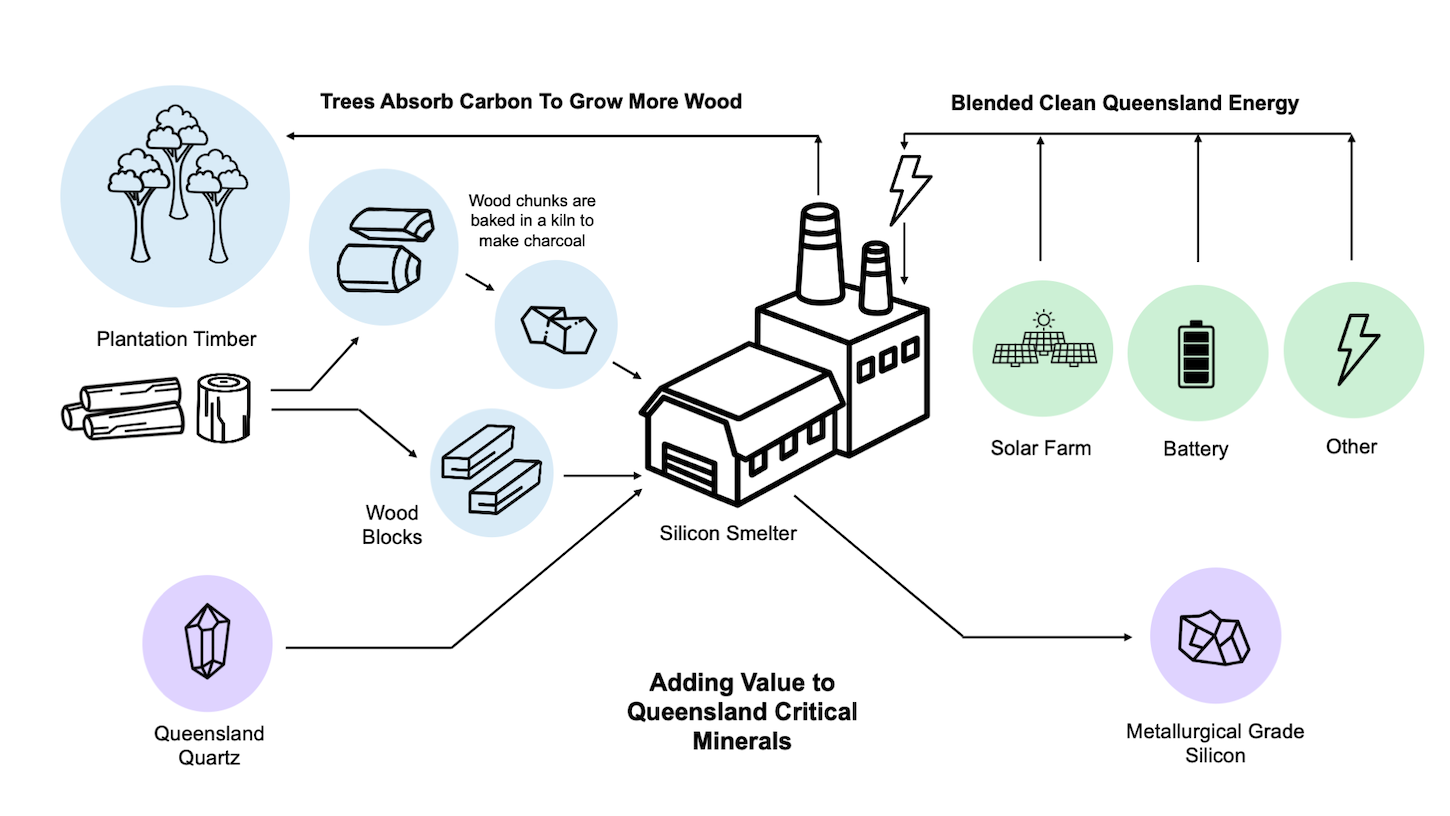
The broader ambition is to build a fully integrated supply chain, from quartz extraction through to silicon production and eventually solar or semiconductor manufacturing.
Slides presented during the keynote illustrated a circular production chain beginning with quartz mining, followed by metallurgical silicon smelting, polysilicon refining and wafer manufacturing.
“This is about moving from a rock quarry to value-added exports,” Scaysbrook said. “Instead of shipping raw materials overseas, we convert them into products that sit at the heart of the global energy transition.”
Demand projections reinforce the opportunity.
Quinbrook expects global polysilicon demand to grow at around 13–15 per cent annually between 2025 and 2030, driven by solar manufacturing and semiconductor expansion.
Combined with emerging policies such as Europe’s Carbon Border Adjustment Mechanism, which penalises high-carbon imports, low-emissions silicon produced with renewable electricity could command significant strategic value.
Capital, risk and Australia’s role
While the project aligns neatly with the objectives of the Future Made in Australia agenda, Scaysbrook stressed that projects of this scale still require entrepreneurial development and investment risk.
“What we’re trying to do here is create something that stands on fundamental competitive advantage,” he said. “This is not about asking government for massive subsidies. It’s about recognising that Australia has a unique combination of resources and infrastructure that can support globally competitive industries.”
Ironically, he added, the capital driving such projects may not come primarily from Australia.
“Australian super funds have enormous pools of capital, but most of them are already fully allocated to infrastructure and are increasingly looking offshore,” he said.
“The reality is that global capital is hugely interested in Australia right now. For the right strategies, Australia is one of the most attractive investment destinations in the OECD.”
Turning ambition into industry
The significance of the Northern Quartz Campus extends beyond a single industrial project.
If successful, it would demonstrate that Australia can move beyond exporting raw resources and instead build value-added clean-energy supply chains.
That ambition lies at the heart of the Future Made in Australia strategy, which seeks to position the country as a major player in emerging global decarbonisation industries.
For Scaysbrook, the message was simple: “Solar power is fundamental to decarbonisation. You can’t decarbonise industry without access to low-cost, carbon-free electricity. And if Australia can combine that electricity with our critical minerals and export infrastructure, we have the chance to build something globally competitive.Honestly, it’s not that different from what the Pilbara did for iron ore.”
Future Now Green News is a forward-thinking media platform dedicated to spotlighting the people, projects, and innovations driving the green & blue economy across Australia, Asia and Pacific region. Our mission is to inform, inspire, and connect changemakers through thought leadership and solutions-focused storytelling in sustainability, clean energy, regenerative tourism, climate action, and future-ready industries.