
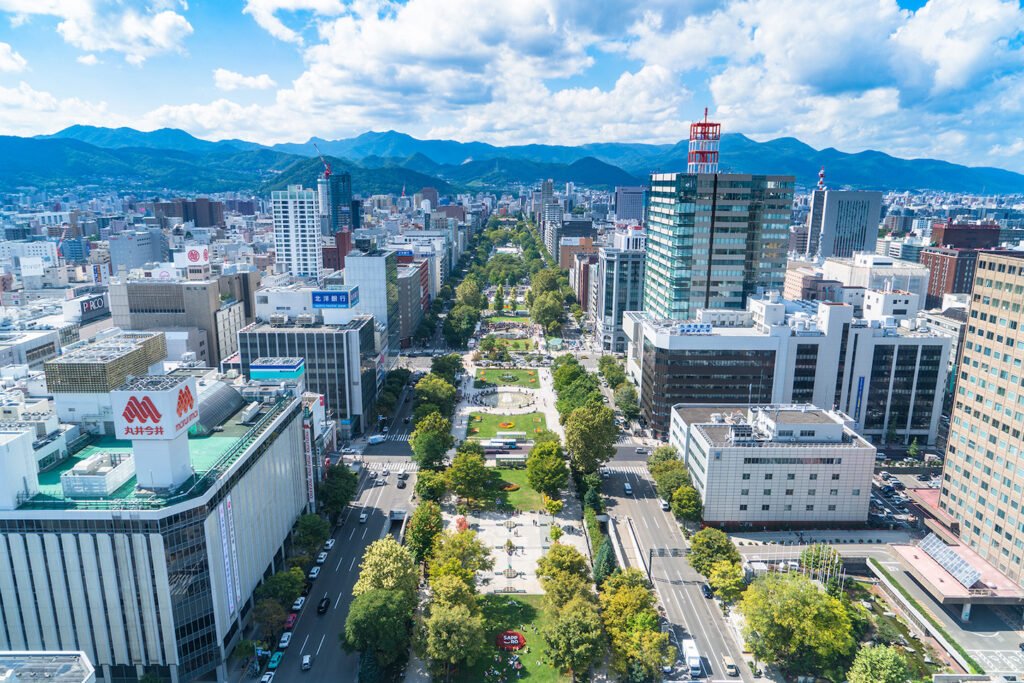


SAPPORO is making a calculated play in the global green economy, and it is not simply about energy.
As representatives from the Japanese city travelled to Australia this week for the Climate Investor Forum in Melbourne, with a further stop in Sydney, their intention was to send a clear message that Sapporo was positioning itself as a gateway for international capital into Japan’s next phase of decarbonisation and is looking to strengthen ties with Australian partners.
Designated in 2024 as a Financial and Asset Management Special Zone, the capital of Hokkaido is seeking to connect global investors with green projects across Japan, as policymakers estimate that as much as JPY150 trillion (approx AUD$1.5trillion) in public and private investment could be mobilised over the coming decade.
It is a deliberate shift in emphasis and not just generation and technology, but the financial architecture required to move capital at scale.
In that sense, Sapporo is positioning itself as a place where deals get structured, funded and delivered. So it’s beyond merely being seen as a renewable energy city.
From Energy To Capital
“We aim to become an Asian hub for green finance by connecting global investors with Japanese green projects,” says Takeo Ohashi, Chief for Investment Promotion at Sapporo City’s Green Transformation Promotion Office.
Across Asia, governments have spent the past decade accelerating renewable capacity and clean technology development, he explained. The next phase is increasingly defined by how effectively cities and regions can attract, deploy and manage capital.
Sapporo’s approach reflects that shift.
Through regulatory reform, institutional frameworks and targeted policy settings, the city is building the conditions for international investors to participate more directly in Japan’s green transition, positioning itself as a point of entry rather than simply a project location.
A system, not a project
Sapporo’s strategy is structured as an integrated system and not built around a single technology or flagship project.
Across Hokkaido, renewable energy generation is being linked with storage, transport and industrial demand, creating a closed-loop model designed to support long-term economic activity.
Energy production feeds directly into emerging industries such as data centres, semiconductors and hydrogen infrastructure, while financial mechanisms are being developed to support investment across each stage of the value chain.
The result is a coordinated investment platform (not a single project or policy), and one designed to attract, deploy and sustain capital across the full lifecycle of the green economy.
CHECK OUT OUT OUR ‘JAPAN JETRO SIGNS WITH THE AUSTRALIA HYDROGEN COUNCIL’ ARTICLE
Hokkaido As The Supply Base
At the centre of this model is the relationship between Sapporo and the wider Hokkaido region.
Hokkaido’s scale and natural resource base provide some of Japan’s strongest renewable energy potential, particularly in offshore wind, biomass and geothermal energy. That capacity underpins a broader industrial strategy, positioning the region as a supply base for energy-intensive industries.
Sapporo, in turn, is being developed as the financial and coordination centre, the point at which capital, policy and project development converge. It’s a dual structure, linking physical assets with financial capability, designed to support both domestic and international investment.
Building a Full Industrial Ecosystem
While finance sits at the centre of Sapporo’s strategy, the city’s proposition rests on the scale and diversity of its underlying industries.
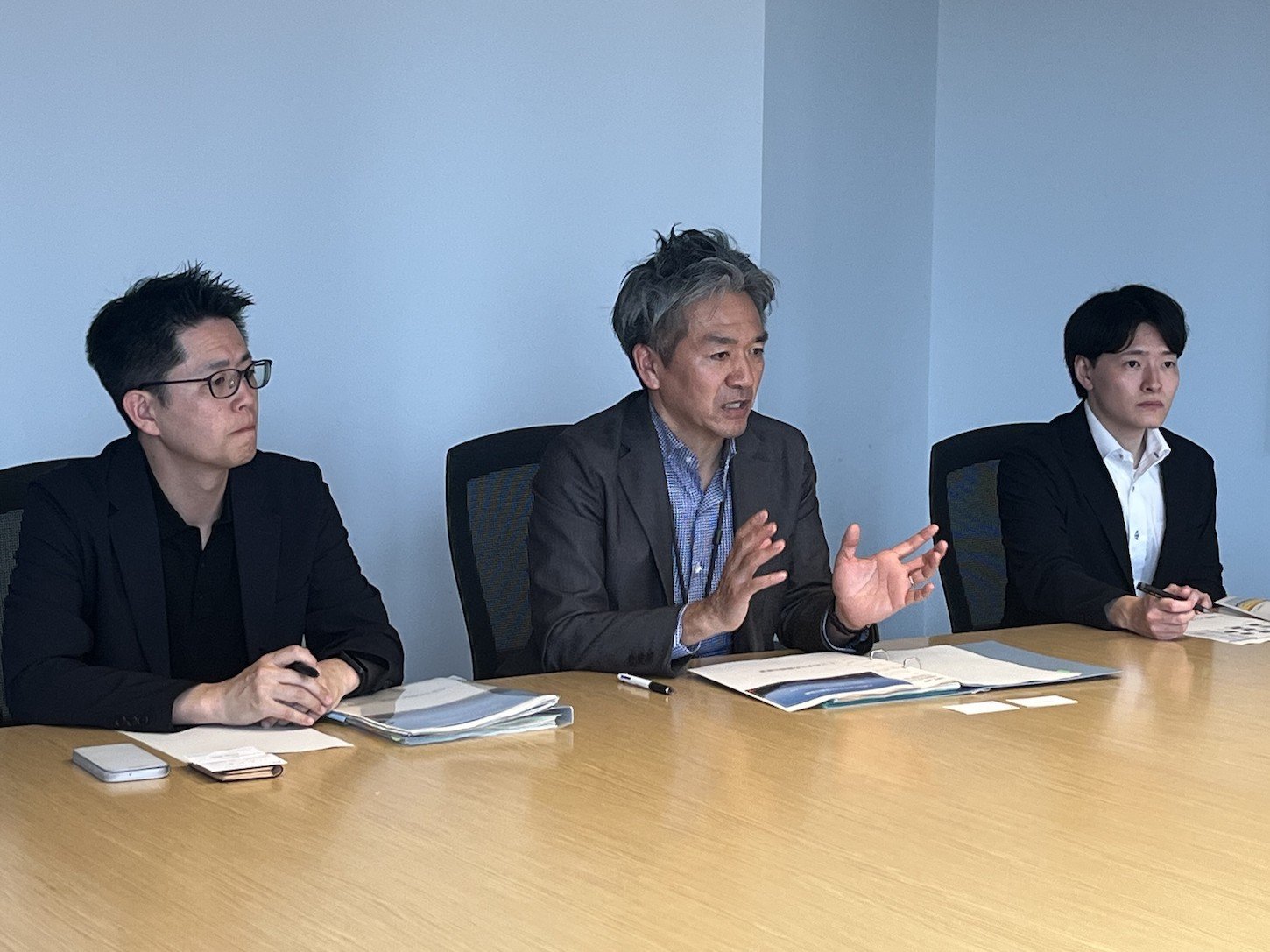
“We believe it is essential not only to generate renewable energy, but also to build a supply chain that integrates demand-side growth industries such as data centres and next-generation semiconductors,” Ohashi says.
That combination — energy, infrastructure and high-growth industries — is increasingly shaping how global investors assess opportunity.
Sapporo is also advancing hydrogen-based urban development, including the construction of refuelling infrastructure for large vehicles and the development of visitor facilities powered by hydrogen energy, signalling a broader ambition to embed new energy systems within the urban fabric.
From Strategy to Execution
While Sapporo’s ambitions are framed around long-term transformation, the scale of deployment already underway is significant.
Hokkaido has been identified as a key region for offshore wind development, with national targets pointing to tens of millions of kilowatts of installed capacity by 2040. Within Hokkaido itself, capacity is expected to expand rapidly, supported by project pipelines estimated in the trillions of yen.
This is being matched by industrial investment.
The development of next-generation semiconductor manufacturing, alongside the expansion of data centre infrastructure, is already driving increased corporate presence in the region. The number of companies establishing or expanding operations in Hokkaido has risen steadily in recent years, reflecting growing confidence in the region’s role within Japan’s broader industrial transformation.
The transition, in other words, is already underway.
 Attracting Global Investors
The city’s strategy is underpinned by efforts to reduce friction for international capital.
Sapporo is introducing tax incentives for asset management firms investing in green sectors, while working to strengthen transparency and governance frameworks for project financing — a critical factor for overseas investors navigating unfamiliar markets.
It has also established a dedicated support function, STEP, designed to assist foreign companies entering the region.
“STEP provides free, English-language, hands-on support for international businesses,” Ohashi says.
It is a practical acknowledgement that attracting capital is not just about opportunity, but accessibility.
Designing for International Capital
Central to Sapporo’s strategy is the recognition that global capital requires more than opportunity. It requires clarity, stability and access.
To that end, the city has introduced a layered framework of incentives and support mechanisms aimed at reducing barriers to entry. These include tax exemptions for both green industry and financial services businesses, regulatory reforms designed to accelerate project development, and targeted policies to attract international talent.
At the operational level, the STEP initiative functions as a one-stop gateway for overseas companies, providing end-to-end support — from business establishment through to partnership development.
Rather than waiting for capital to navigate complexity, Sapporo is actively reshaping the environment to make investment easier.
Beyond Energy
While renewable energy remains foundational, Sapporo’s strategy extends well beyond generation.
The region is actively developing clusters in next-generation semiconductors, data centres and digital infrastructure, supported by national policies encouraging decentralisation and proximity to renewable energy sources.
Plans for international submarine communication cables further signal an ambition to position Hokkaido as a digital and connectivity hub across Asia.
At the same time, hydrogen is being integrated into transport and urban systems, creating a pathway for new forms of energy use.
Together, these elements form a broader industrial transformation — one that aligns energy, technology and infrastructure within a single investment framework.
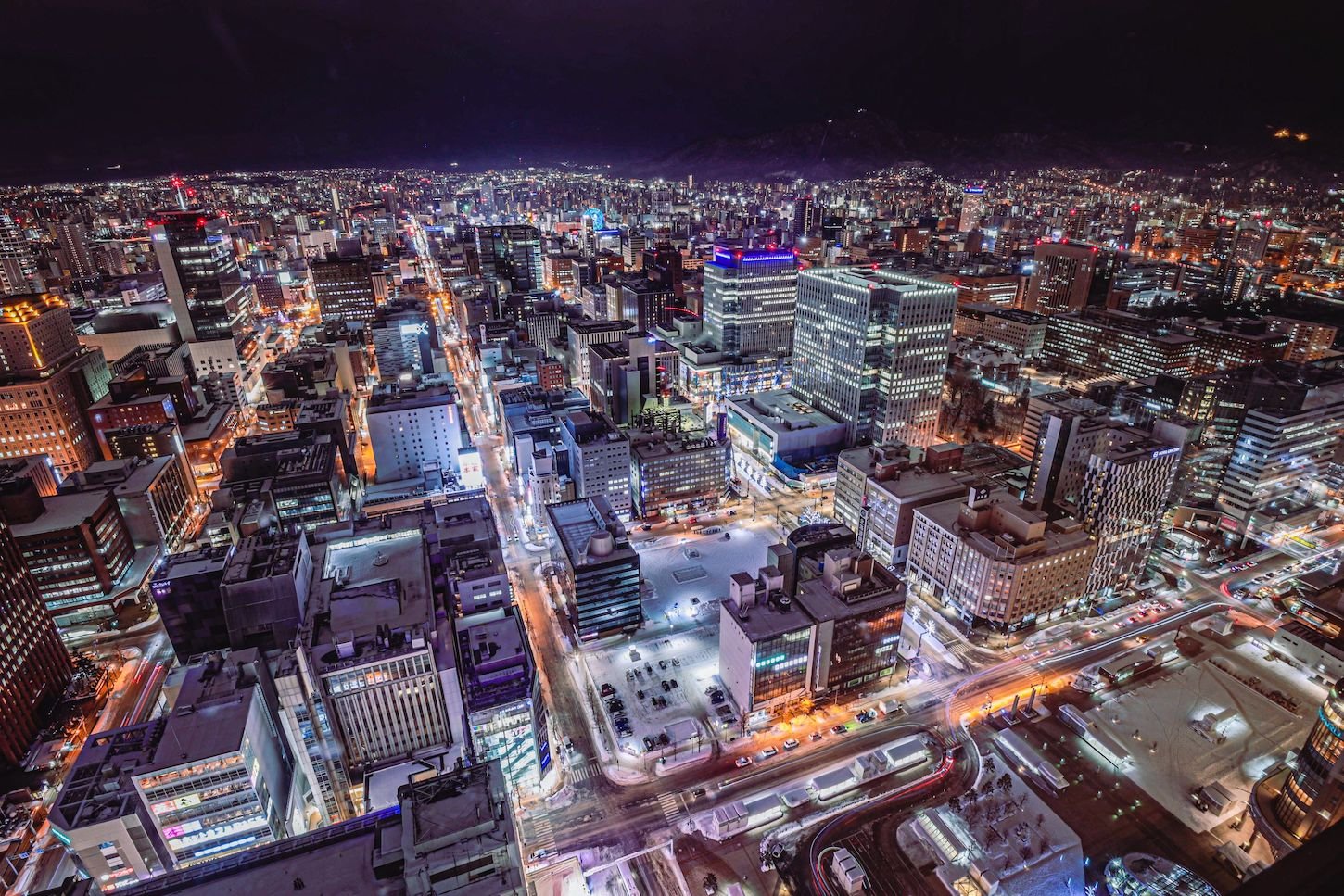
Cities across Asia are increasingly competing for green investment, but Sapporo’s approach reflects a broader shift in strategy.
“What differentiates Sapporo is that we are not only fostering green industries, but also building a concentration of financial functions to support their growth,” Ohashi says.
It is a dual play — combining physical assets with financial capability — that is beginning to define the next generation of green economy hubs.
Where earlier phases of the transition focused on infrastructure and deployment, the emerging contest is for capital, and for the systems that can attract and direct it efficiently.
An Opening for Australia
For Australian stakeholders, the signals are familiar.
“We see many similarities between Sapporo and cities such as Melbourne and Sydney,” Ohashi says, pointing to shared natural resource advantages and a growing base of sustainability-focused industry.
“There is clear scope for collaboration, from knowledge exchange and policy alignment through to cross-border investment and commercial partnerships.”
As both countries expand their green transition agendas, the opportunity may lie less in competition and more in coordination — linking capital, capability and market access across the region.
What comes next
Sapporo’s focus in the coming years is likely to deepen across several fronts, including offshore wind, next-generation semiconductors and the continued expansion of data centre infrastructure, supported by national policy encouraging decentralisation and proximity to renewable energy sources.
The city is also working closely with universities to build an innovation ecosystem capable of supporting startups and new ventures, reinforcing the long-term pipeline of ideas and talent.
“We hope international partners will watch for attractive investment opportunities emerging from our region,” Ohashi says.
Across Asia, the green transition is entering a new phase as the focus is shifting from individual projects to integrated systems, from capacity to capital, and from national policy to regional execution.
Sapporo’s model suggests that the cities best positioned to attract global investment will not be those with the most resources alone, but those able to align energy, industry and finance into a coherent, investable proposition.
For Australia, the question is no longer whether capital will move, but whether the structures are in place to capture it.
Future Now Green News is a forward-thinking media platform dedicated to spotlighting the people, projects, and innovations driving the green & blue economy across Australia, Asia and Pacific region. Our mission is to inform, inspire, and connect changemakers through thought leadership and solutions-focused storytelling in sustainability, clean energy, regenerative tourism, climate action, and future-ready industries.