

ACROSS Asia’s busiest ports, a strategic race is underway — but it isn’t just about beating other hubs to low‑carbon fuels, it’s also a response to a sudden geopolitical shock that is shaking global shipping to its core.
From Singapore to Shanghai and Busan, ports are pivoting to develop green shipping corridors: dedicated routes where ships can reliably access cleaner fuels like hydrogen, ammonia and methanol. These corridors are not a greenwash gimmick. They are quickly becoming central nodes in the future of global trade.
And now, they are being stress‑tested by a grim reality: the Middle East war is intensifying global shipping disruption and reshaping trade routes in ways few had expected.
Why Asia’s Ports Matter More Than Ever
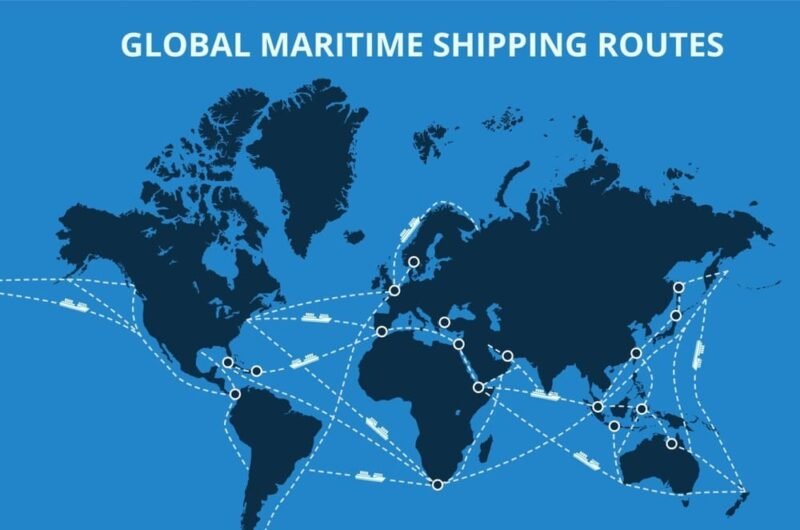
Global shipping still moves about 80% of world trade, but it also contributes roughly 3% of global greenhouse gas emissions, a share comparable to entire industrialised nations. Asia dominates those maritime routes, and its ports are transitioning from cargo hubs to clean‑fuel ecosystems, supplying next‑generation energy at scale.
Singapore’s Maritime and Port Authority, for example, highlights a stark truth: “Public‑private collaboration across global value chains can accelerate the decarbonisation and digitalisation of the shipping industry.” This isn’t feel‑good talk — it’s about industrial rewiring. (Maritime News)
Shanghai and Busan are pursuing similar ambitions, investing in infrastructure to handle methanol, hydrogen and ammonia bunkering — not just fossil fuels — and positioning themselves as Asia’s clean fuel gateways. If shipping pivots to low‑carbon fuels, these ports could control the new energy landscape.
The Middle East Shockwave: What This Means for Trade and Climate Goals
The Middle East conflict isn’t a one‑off disruption. It’s exposing the fragility of global shipping networks and the strategic cost of concentrated supply chains.
For Asia’s ports, that’s a signal: decarbonisation isn’t just about cutting emissions — it’s about securing the future of trade itself.
Green corridors are emerging as a way to:
- Reduce dependency on fossil fuel supply chains that are vulnerable to geopolitical risk.
- Anchor next‑generation fuel markets in regions that control the bulk of shipping traffic.
- Provide a buffer against volatility by diversifying fuel options and route resilience.
Asia controls most of the world’s shipping routes. If ports here can move fast to build robust green corridors, they won’t just reduce emissions — they will reshape the geopolitics of global logistics.
That’s why Singapore’s pursuit of green shipping corridors — linking Asia with Europe — matters far beyond the energy transition. It’s a blueprint for the next era of maritime infrastructure.
Just as green corridors were gaining momentum, the Middle East war triggered a dramatic blow to existing shipping patterns.
Two of the world’s most critical chokepoints — the Strait of Hormuz and the Red Sea/Bab el‑Mandeb — have effectively become no‑go zones. Major carriers including Maersk, Hapag‑Lloyd and CMA CGM have suspended transits through the Gulf and Red Sea, rerouting ships around the Cape of Good Hope instead. (Maritime News)
One analyst summed up the situation bluntly: the crisis has created “a three‑chokepoint shutdown” — Hormuz blocked, Red Sea under attack, and the Suez Canal abandoned. The only viable path between Asia and Europe now is the long route around Africa. (Mighty Shipping)
This seismic shift isn’t academic. Transit times have ballooned by as much as 10–14 days, freight rates are surging, and insurers are adding war‑risk and emergency surcharges. Emergency fuel charges alone are being passed on by carriers as they try to mitigate costly detours and rising oil prices. (Metro Global)
The result? Global supply chains are tightening at the worst possible moment.
CHECK OUT ‘NEXT STOP NET ZERO SHIPPING – BUT IS AUSTRALIA READY?’
Unintended Acceleration for Green Corridors
Here’s where reality cuts sharp: the same forces disrupting shipping may accelerate demand for green corridors in Asia.
The war is driving up bunker fuel prices and insurance costs, squeezing the economics of traditional heavy fuel oil and making alternative, cleaner fuel pathways comparatively more attractive. Ports that are ready to supply low‑carbon fuels — especially those linked to renewables — may now have a competitive advantage where old fuel supplies are constrained or more expensive.
More than that, longer routes and rising fuel bills are forcing shippers to rethink fuel security and supply diversity. Ports that can offer predictable access to future fuels — hydrogen derivatives, green methanol or ammonia — are moving from fringe experiment to strategic necessity.
Voices from the Deck and Dock
Industry leaders are feeling it on the ground:
“The risk environment has fundamentally shifted. Rerouting around Africa adds cost, time and emissions — we need cleaner, reliable alternatives at ports that understand tomorrow’s fuel landscape.” — Senior Shipping Executive, Asia Trade Line
These aren’t platitudes, they reflect shifting corporate maths as shipping lines juggle climate targets, fuel cost inflation and volatile geopolitics.
The world’s ports are no longer just physical gateways. They’re strategic pivots in economic and climate security.
The Middle East war has laid bare a stark truth: traditional shipping routes and fuel supply chains are fragile. Asia’s ports are now seizing the moment to build the future, one where cargo moves faster, cleaner and with less geopolitical risk.
Green shipping corridors are no longer just a climate play. They are trade security infrastructure.
“Where bunkering options were once about convenience, they are now about resilience. Investing in green fuel infrastructure is not a luxury — it’s a hedge against geopolitical shocks.” — Port Energy Strategist, Northeast Asia
And Asia could be the one that gets there first.
TRAINING OPPORTUNITY FOR FOUNDERS
Australian founders need to be media-ready in spokesperson media communications, with AI-Safe 24/7 Media Kits, amplifying their innovations and achievements through strategic storytelling content as well as, critically, crisis communications plans and Asia cross-cultural communications. The FNGN CLIMAX© MEDIA COMMS ACADEMY programs provides timely courses designed to build confidence and skills for successfully navigating these complex business environments.
Check out and signup for any of our 6 training programs: FNGN CLIMAX©MEDIA COMMS ACADEMY
Future Now Green News is a forward-thinking media platform dedicated to spotlighting the people, projects, and innovations driving the green & blue economy across Australia, Asia and Pacific region. Our mission is to inform, inspire, and connect changemakers through thought leadership and solutions-focused storytelling in sustainability, clean energy, regenerative tourism, climate action, and future-ready industries.