


NEW ZEALAND is renowned for its pristine landscapes, from snow‑capped mountains and fjords to lush rainforests and golden beaches. With a population of around 5.1 million, it combines a small, dispersed populace with vast natural beauty, making conservation and sustainable energy transitions both vital and highly visible to its citizens.
With the closure of the Strait of Hormuz due to escalating conflict in Iran – sending shockwaves through global energy markets – oil prices are above US $100 a barrel. This has a catastropic effect in New Zealand with record‑high petrol prices topping NZ$3 a litre, with some stations without fuel. This isn’t a distant price blip; for a country that imports 100 % of its petrol, diesel and jet fuel, it’s a stark wake‑up call about strategic vulnerability.
New Zealand is wholly reliant on imports mostly processed in South Korea and Singapore.
Those refineries depend on crude shipments that run through the waters now disrupted by Middle East tensions. Official fuel stock figures show just about 52 days’ total fuel cover and around 33 days of petrol, a buffer designed for routine hiccups — not protracted geopolitical disruption.
While New Zealand has one of the cleanest electricity grids on Earth, its transport sector remains stubbornly oil‑dependent. Their transport is nearly 99 % fossil fuel powered, with global oil price hitting households and businesses directly.
Electric Vehicles: Growth, Headwinds, and Reality
There’s been real momentum in electric vehicle (EV) adoption but the headline figures need context.
Registrations of new battery electric (BEV) and plug‑in hybrid (PHEV) vehicles in New Zealand recently passed 100,000 across the fleet, a symbolic milestone for electrification.
According to government and industry data, the plug‑in electric fleet stood at about 135,000 vehicles by the end of 2025, encompassing ~92,500 BEVs and ~42,800 PHEVs — roughly 2.8 % of the national fleet of ~4.9 million vehicles – partly because of changes to government incentives and lingering range anxiety and charging infrastructure gaps.
In fact, recent reporting suggests the EV share of new registrations has crept up but remains uneven — for example, around 6–7 % in certain months. While this is growth, it’s not yet the disruptive shift infrastructure and climate targets require. So while Kiwi households are increasingly choosing electric over petrol on a personal level, policy support and charging network build‑out remain key levers that are under‑deployed relative to the scale of the transition needed.
The country’s EV charging infrastructure has grown steadily over the last decade.
More than 1,200 public and private chargers now operate nationwide, supported by the Energy Efficiency and Conservation Authority’s Low Emission Transport Fund. The government aims to expand this to a nationwide network of 10,000 chargers by 2030 to overcome range anxiety and support wider EV adoption.
According to projections tied to the Climate Change Commission’s modelling, up to 550,000 light passenger and light commercial EVs could be on New Zealand roads by 2030. That assumes continued policy support and charging infrastructure build‑out. By 2035, the modelling suggests 100% of newly entering cars — new and new second‑hand imports — will be electric, which would see the total EV share of the fleet reach about 38% of all light vehicles.
Charging infrastructure remains vital:
Public charging coverage will need to expand — especially rapid and ultra‑rapid corridors on major highways — to ensure EVs can genuinely replace petrol cars for long‑distance travel.
Beyond Batteries: Hydrogen and Biofuels Enter the Fray
Electric cars are only part of the answer. Heavy transport, freight, buses, and sectors where batteries are currently less efficient require alternative pathways.
Hydrogen is emerging as one of the more promising options for heavy transport. Hiringa Energy- A Māori word meaning perseverance, energy, determination, inspiration, vitality – has spearheaded Australasia’s first hydrogen refuelling network, with multiple commercial stations now operational in Auckland, Hamilton and Palmerston North, and others under planning across both islands.
Hiringa hydrogen refeulling station New Zealand, is Australasia’s first hydrogen refuelling
network is online.
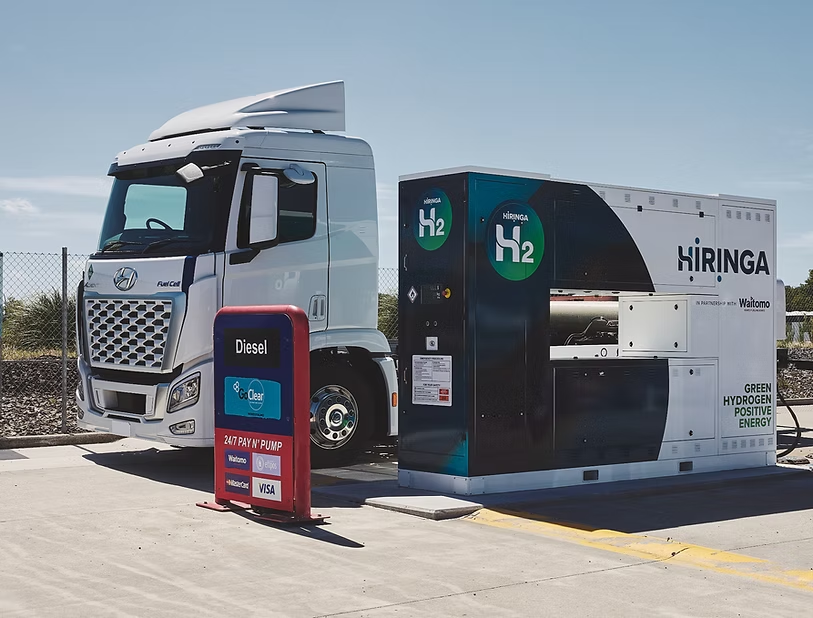
Initial hydrogen infrastructure is live
In April 2024, Hiringa Energy launched what is billed as Australasia’s first zero‑emission green hydrogen refuelling network, opening stations in Wiri (South Auckland), Te Rapa (Hamilton) and Palmerston North, with a fourth under construction in Tauranga. These sites are strategically placed to service around 95% of heavy freight routes on the North Island. They are powered by renewable electricity and can refuel hydrogen fuel‑cell trucks in roughly 10–20 minutes, putting heavy hydrogen vehicles on a similar operational timeline to diesel.
Rollout is planned to scale to 2030
Hiringa is not stopping with the initial four stations. The company has around 24 additional stations in planning, with targets to expand the network further across both North and South Islands by 2030. These future sites aim to support increasing traffic as hydrogen fuel‑cell vehicle adoption grows among logistics and transport operators.
Biofuels are also part of the mix
New Zealand has targets to increase the share of sustainable aviation fuel and biodiesel blends, with draft mandates that would require progressively higher biofuel content in transport fuels — a practical, near‑term way to reduce oil dependence while technology transitions continue.
Where Policy Should Catch Up
Despite clean electricity and global leadership potential, the policy environment has been inconsistent. Incentive programs like the Clean Car Discount boosted EV uptake, but their removal has dampened momentum. Investment in public charging infrastructure, while growing, still lags the scale required to shift mass adoption rates.
Infrastructure spend still tilts heavily toward roads for fossil fuel vehicles, and rail and public transport electrification have not received comparable priority. Yet every investment in electrified buses, regional charging corridors, rail upgrades and cycleway networks is a direct bet against imported oil and future price volatility.
A Strategic Liability or Strategic Opportunity?
New Zealand’s dependence on imported petroleum is not an isolated economic quirk; it’s a strategic liability exposed by every spike in global oil prices. But the country already has the energy fundamentals to break that link into a high‑renewable electricity system, dynamic private sector innovators in electrification, hydrogen and fuels, and an emerging startup ecosystem focused on zero‑emissions transport.
If policymakers, businesses and communities treat oil dependence as a supply chain risk and national security issue, not just an environmental goal, it would unlock a broader public mission toward transport electrification and fuel diversification.
The technologies exist, capital and expertise are lining up, and New Zealand’s global energy brand could become equally formidable in transportation resilience.
Hydrogen production and ecosystem development are underway
Another pioneer, Halcyon Power, opened New Zealand’s first commercial‑scale green hydrogen production facility tied to a geothermal power station — capable of producing around 180 tonnes of green hydrogen per year, plus a fast‑refuelling station near Auckland.
Initiatives are also emerging for hydrogen blending in natural gas pipelines and aviation sector hydrogen testing facilities, indicating interest in broader hydrogen economy development beyond trucks and buses.
The next decade — particularly through 2030 — will determine whether these technologies can move from niche solutions to mainstream replacements for imported refined fuels. Policy consistency, infrastructure scale, and market signals will be the decisive factors that make this shift less vulnerable to the next global oil shock.
Check out and signup for any of our 6 Media & Communications training programs: FNGN CLIMAX©MEDIA COMMS ACADEMY
Future Now Green News is a forward-thinking media platform dedicated to spotlighting the people, projects, and innovations driving the green & blue economy across Australia, Asia and Pacific region. Our mission is to inform, inspire, and connect changemakers through thought leadership and solutions-focused storytelling in sustainability, clean energy, regenerative tourism, climate action, and future-ready industries.
This content is protected by copyright and may not be reproduced, republished, or redistributed without prior written permission from FutureNow Green News. For content syndication, partnerships, or permission to reuse any material, please contact: editor@futurenowgreennews.com.