
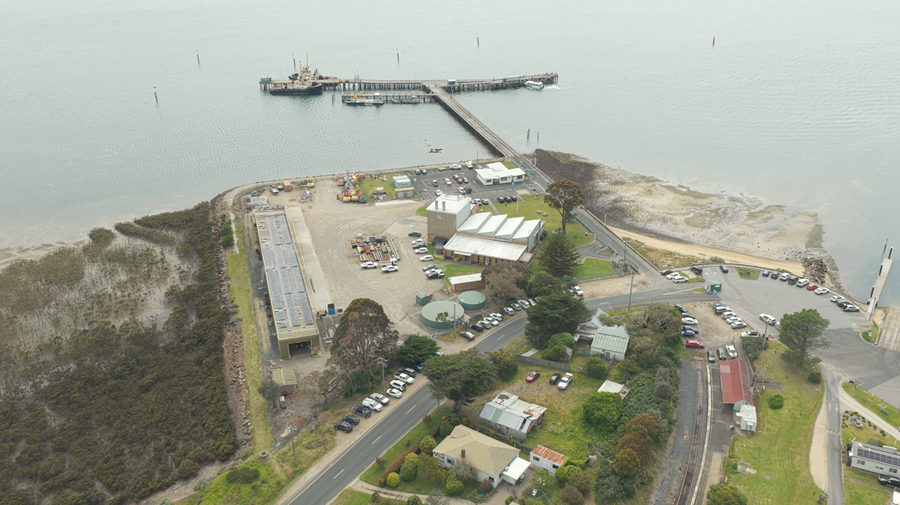

THE Port of Hastings Corporation (PoHC), established in January 2012, has released the Draft 2055 Port Development Strategy – open for public feedback and commercial interests.
PoHC holds a vision of a safe, environmentally responsible and competitive deep‑water port integrated with the state’s freight and energy strategies, is not just about freight tonnage, but about economic resilience and industrial transformation in a decarbonising world.
The port’s attributes of an especially deep water, ample industrial land and proximity to offshore wind sites, make it uniquely positioned to host this future‑facing industry.
The biggest recent shift in the Port of Hastings’ vision is its pivot toward participation in Australia’s energy transition, particularly offshore wind and hydrogen exports.

Victorian Renewable Energy Terminal
The Victorian Government has earmarked the port as the site for a Victorian Renewable Energy Terminal (VRET) — a purpose‑built facility for the import, storage and assembly of offshore wind components that will support large‑scale wind farms planned off Victoria’s Gippsland and Portland coasts.
State infrastructure planning has committed tens of millions in budget funding to ensure the terminal’s development, with Ministers emphasising its role in securing thousands of jobs and renewable energy investment for Victoria.
Hydrogen export
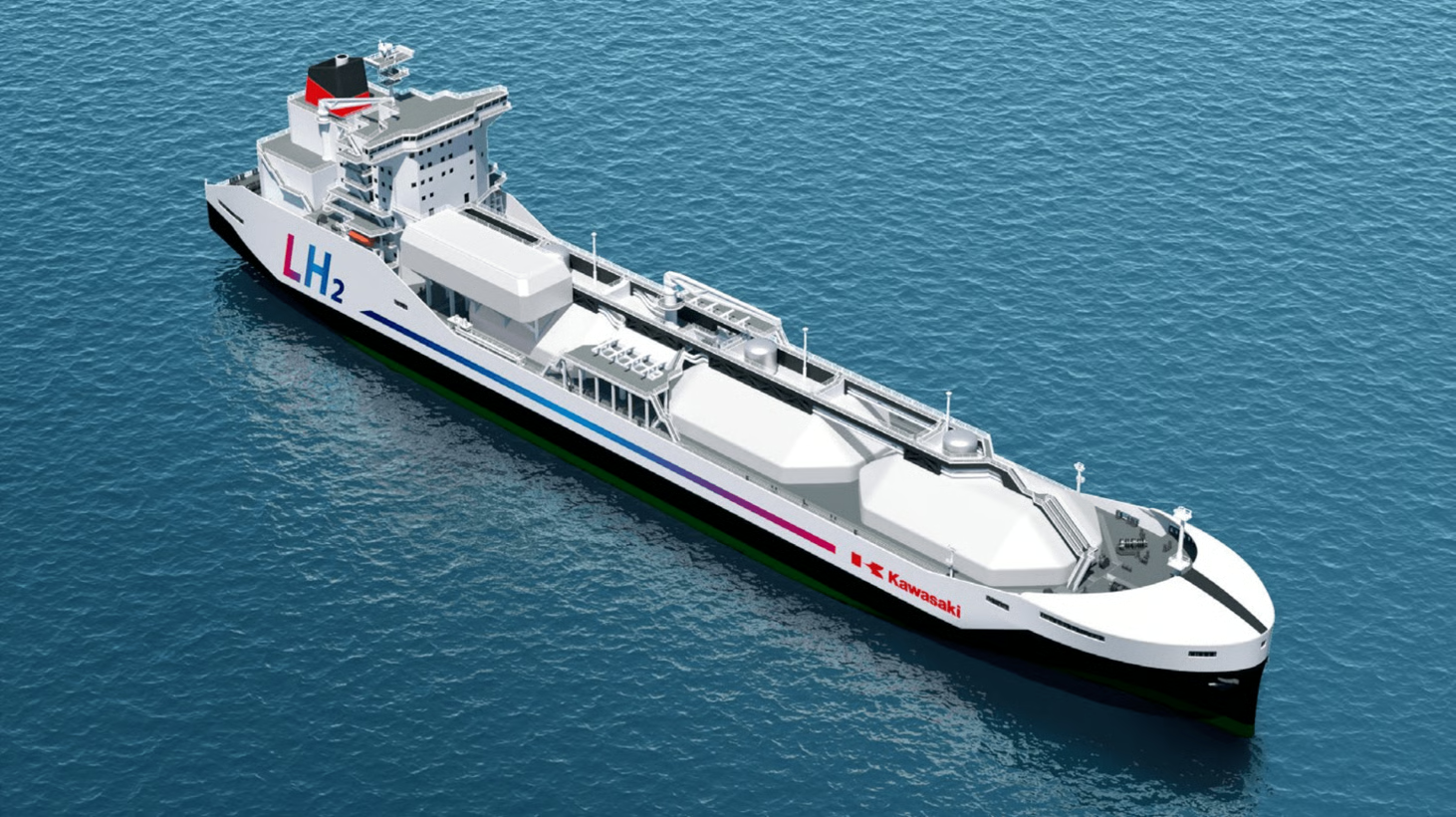
Separately, Hastings has been selected for a liquid hydrogen export terminal by a consortium including Kawasaki and Iwatani, backed by Japanese investment. Once operational, this will make Hastings one of Australia’s first ports exporting clean hydrogen — aligning with Asia’s hydrogen demand and global decarbonisation trends.
Early planning and strategic foresight
The idea of Hastings as a major Victorian port isn’t new. In the 1960s, then‑Premier Sir Henry Bolte set aside nearly 4,000 hectares of land around Western Port for future port development — essentially reserving space for one of Australia’s biggest freight gateways long before the national container trade boom.
The rationale was straightforward: containerised trade was growing fast, and reliance on a single dominant container port in Victoria posed economic and infrastructure risks — not least congestion and future capacity limits.
In 2013, the Victorian Government backed that vision with $110 million in funding to progress planning, transport connection design and approvals for a “world‑class container port” at Hastings — a development expected to increase capacity to 8–9 million containers a year, nearly double that of Melbourne at the time.
Local leaders saw jobs and economic opportunity in the plan. As one regional mayor remarked, Hastings’ expanded port would be “a significant economic opportunity providing local jobs for local people” — capturing both growth and regional benefits.
Shifting direction: from containers to diversified bulk and new economy trades
Despite the early push for a container terminal, the vision has evolved — partly due to broader freight strategy reviews and environmental constraints around Western Port’s sensitive ecosystems.
The port’s published vision from recent annual reporting is blunt about its current role:
“To be a safe, environmentally responsible, competitive deep‑water port operator facilitating the growth and development of bulk and non‑containerised trades”.
State infrastructure planning has committed tens of millions in budget funding to ensure the terminal’s development, with Ministers emphasising its role in securing thousands of jobs and renewable energy investment for Victoria.
Community concerns
The rapid broadening of the port’s strategic role hasn’t been without pushback. Plans for the renewable energy terminal have been controversial due to environmental conservation concerns. Western Port is internationally significant for migratory birds and Ramsar‑listed wetlands. Some federal environmental reviews have raised risks of habitat impacts, leading to scrutiny of project approvals and environmental safeguards.
This tension highlights a fundamental challenge for Hastings’ development: balancing industrial growth and future readiness with environmental stewardship and community values — a debate that will shape the port’s next decade.
The draft PDS is a statutory document that has been shaped by feedback received from industry, government and community over the past two years.
This draft strategy outlines a 30-year framework to guide the Port of Hastings’ development in achieving its vision of being an essential and sustainable part of Victoria’s economy and energy transition, and a valued contributor to the local community, underpinned by five key strategies:
- Supporting the renewable energy transition through offshore wind
- Enabling opportunities across the renewable energy supply chain
- Growing and diversifying the Port’s trade mix
- Recognising the value of the Western Port environment
- Protecting the potential of ourPort to serve Victoria’s future freight needs
Have your say

The Port of Hastings Corporation is seeking further feedback before finalising the 2055 Port Development Strategy.
If you would like to provide your feedback on the draft PDS, you can complete the survey by clicking the link below.
Feedback is open until 31 March 2026.
Hard copy survey forms and a printed copy of the Draft PDS can also be requested by mailing our office at 1D Stony Point Road, Crib Point VIC 3919 or calling us at 03 5979 5500.
If you have any questions or would like to reach out to our team, please email engage@portofhastings.vic.gov.au
Contact Port of Hastings
There are several ways you can contact including:
- calling on 03 5979 5500
- emailing engage@portofhastings.vic.gov.au
** A great training opportunity for green companies needing custom inhouse cohort transformation in media & communications
Australian founders need to be media-ready in spokesperson media communications, with AI-Safe 24/7 Media Kits, amplifying their innovations and achievements through strategic storytelling content as well as, critically, crisis communications plans and Asia cross-cultural communications. The FNGN CLIMAX© MEDIA COMMS ACADEMY programs provides timely courses designed to build confidence and skills for successfully navigating these complex business environments.
Check out and signup for any of our 6 training programs: FNGN CLIMAX©MEDIA COMMS ACADEMY
Future Now Green News is a forward-thinking media platform dedicated to spotlighting the people, projects, and innovations driving the green & blue economy across Australia, Asia and Pacific region. Our mission is to inform, inspire, and connect changemakers through thought leadership and solutions-focused storytelling in sustainability, clean energy, regenerative tourism, climate action, and future-ready industries.