

By Ani Allbutt-Golightly
Debate erupts at Eco -Business sustainability conference over why recycling attracts 20 times more investment than reuse systems.
A provocative statement from a global waste management executive sparked heated debate at Singapore’s Cities: Possibilities summit this week, exposing a fundamental disconnect in how the circular economy directs investment.
The city-state faces mounting pressure to address its 200,000 tonnes of annual packaging waste, almost all of which goes to landfill.
The Eco-Business summit, held at Resorts World Sentosa on November 26 with the theme “Unlocking transformation through cross-sector partnerships,” convened 200 decision-makers from government, business, finance and civil society—organized in strategic partnership with CapitaLand, Zurich Resilience Solutions and UNDP. Among the high-level discussions on AI, circular systems, nature-based design and green finance, one panel on circular economy investment revealed an uncomfortable truth: despite being more effective at eliminating waste, reuse systems remain drastically underfunded compared to recycling.
The Cities: Possibilities summit focused on how innovation, finance and inclusive urban design can accelerate transitions to sustainable cities. The opening plenary featured Dr. Cheong Koon Hean from Lee Kuan Yew Centre for Innovative Cities, alongside Andre Bald from the World Bank and Jessica Cheam from Eco-Business, discussing strategies to establish consistent regulatory frameworks and transparent metrics aimed at spurring investments in sustainable urban development.
Matt Stanelos, Singapore representative for global waste and water management company Veolia, delivered the challenge bluntly.
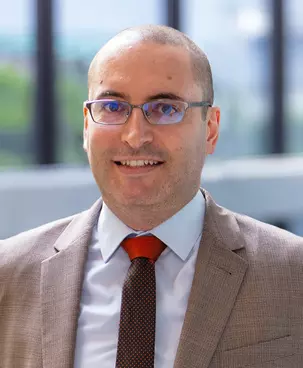
“Reuse doesn’t need capital – reuse is just a behaviour,” Stanelos told his audience. “I don’t see that there’s an opportunity for capital to really push the reuse agenda.”
His comments laid bare a stark investment reality. According to a 2024 report by Circulate Initiative, reuse models attracted just 4% of all circular economy investment for plastics between 2018 and 2023, compared with 82% for recovery and recycling.
The Counter-Argument: Reuse Needs Infrastructure, Not Just Behaviour Change
Stanelos’s assertion was immediately challenged by Jonathan Tostevin, chief executive of Muuse, a Singapore-based reusable dishware rental firm that has diverted over one million single-use items from landfills across Singapore, Hong Kong, Canada and the United States.

For Tostevin, the notion that reuse requires no capital investment fundamentally misunderstands what’s required to make reuse systems work at scale. His company operates sophisticated tracking technology using QR codes on every container, manages complex logistics for collection and washing, and maintains inventory across multiple markets—all capital-intensive operations.
Remi Cesaro, founder of sustainability consultancy Zero Waste City who moderated the panel, agreed that while reuse models may not require the same massive capital outlays as recycling infrastructure, they still need substantial investment to build durable products and the systems supporting them.
Cesaro pointed to a historical cautionary tale: Coca-Cola’s shift from reusable glass bottles to single-use plastic in the 1960s. Internal life cycle assessments by the beverage giant showed glass was more environmentally sustainable, but less profitable. After the switch, the cost of managing resulting plastic waste shifted from producers to municipalities and communities.
Reintroducing reusable glass bottles today would require substantial investment in cleaning and bottling infrastructure—precisely the kind of capital Stanelos suggested wasn’t needed. The same applies to reusable takeaway packaging, which needs funding to produce durable containers, operate collection and washing systems, and manage reverse logistics.
Why Investors Prefer Recycling Over Reuse
The investment gap isn’t accidental—it reflects fundamental differences in how capital markets view these circular economy strategies.
Vinamra Srivastava, Chief Sustainability and Sustainable Investments Officer for CapitaLand Investment, emphasized the challenge during the forum’s opening plenary. “Urbanisation in Asia presents immense opportunities, but capital often hesitates due to perceived risks and unclear returns,” he said. “Important conversations at Cities: Possibilities inspire collaboration, and align sustainability initiatives with measurable financial benefits for resilient, future-ready cities.”
This tension between measurable returns and sustainability impact pervades circular economy investment decisions.
Recycling infrastructure requires significant upfront capital investment in facilities, equipment and technology, creating the kind of tangible assets that traditional investors understand and can secure financing against. These facilities generate revenue through processing fees and sales of recovered materials, providing predictable cash flows that fit conventional investment models.
Reuse systems, by contrast, often operate on thinner margins with revenue models built around service fees, rental charges or membership subscriptions. The infrastructure is less capital-intensive but more operationally complex, requiring sophisticated logistics, customer behaviour change, and local partnerships that don’t scale as simply as building another recycling plant.
Mark Fletcher, Head of Zurich Resilience Solutions for Asia Pacific, spoke to the broader challenge of quantifying sustainability investments. “When we measure exposure, vulnerabilities and potential losses with real data, mitigation stops being abstract,” he told attendees. “It becomes a blueprint for adaptation.”
For reuse systems, this measurement challenge proves particularly acute. How do you quantify the financial value of waste prevented rather than waste processed?
Following up with Eco-Business after the panel, Stanelos clarified that reuse viability varies significantly by application. For food hygiene reasons, beverage container reuse faces challenges in acceptance today, though it remains viable in certain value chains—waste electronics like air-conditioning units, for example.
“But it’s mostly a logistics issue – and not a capital-intensive one,” he reiterated.
Yet this logistics-versus-capital framing may obscure the real challenge. Effective reuse systems require substantial investment in different forms: software platforms for tracking, relationships with collection partners, washing and sanitisation infrastructure, customer education, and the durable products themselves designed to withstand hundreds of uses.
Muuse’s model exemplifies this complexity. The company achieves a 98% return rate without requiring deposits—a remarkable feat that requires sophisticated technology, strong partnerships with corporate clients and property developers, and careful system design. That didn’t happen through behaviour change alone.
The COVID Setback and Recovery
The investment challenge for reuse systems intensified during the COVID-19 pandemic, which dealt a significant blow to reusable container programs. Businesses halted use of reusable cups and containers over contamination concerns, strengthening the position of single-use alternatives at precisely the moment when reuse systems needed momentum.
Tostevin’s company felt the impact directly. Muuse launched in Singapore in January 2020, just weeks before the first COVID-19 cases were recorded. Restrictions implemented in March caused momentum to fall away almost completely.
“Some establishments including Shake Farm, the Grand Hyatt and Heybo used our reusable container delivery offering through our website, and that helped us to survive through this period,” Tostevin reflected in a 2021 interview with Eco-Business.
The pandemic created lasting hesitancy around shared touchpoints, giving single-use packaging a health halo that persists in some contexts today. For investors already skeptical about reuse economics, COVID provided additional reason for caution.
Singapore’s Circular Economy Push
The debate at Cities: Possibilities reflects broader tensions in Singapore’s sustainability agenda. The city-state faces mounting pressure to address its 200,000 tonnes of annual packaging waste, almost all of which goes to landfill.
Brian CK Ho, Vice President for Sustainability at Resorts World Sentosa, underscored the venue partner’s commitment to the circular economy vision. “This conference convenes global leaders to address urbanisation, climate resilience and inclusive growth—issues that resonate deeply with our vision for sustainable tourism,” he said. “As Singapore’s leading lifestyle destination, Resorts World Sentosa champions green infrastructure, biodiversity conservation and sustainable operations.”
Singapore’s government has supported reuse experiments through programs like the SG Eco Fund, which enabled Muuse’s pioneering hawker centre pilot at Our Tampines Hub.
That program achieved impressive results: almost 10,000 reusable containers borrowed, 99% return rate, and 80% carbon emission savings compared to disposable packaging.
Yet scaling from pilots to citywide systems requires the kind of capital investment that Stanelos suggests isn’t flowing to reuse. Singapore’s upcoming food waste digestion facility, opening in 2027, will significantly increase renewable energy recovery—a classic capital-intensive recycling and recovery project that fits traditional investment models.
But the reuse investment debate highlighted how finance flows don’t always align with environmental effectiveness. Even when solutions demonstrably eliminate more waste, capital markets may favour alternatives offering more familiar risk-return profiles.
A Question of Time Horizons and Value
The core tension may be less about whether reuse needs capital, and more about how investors value different circular economy outcomes.
Recycling generates commodities—recovered plastics, metals and fibres—that can be sold in established markets. The value proposition is straightforward: invest in infrastructure that processes waste into saleable materials.
Reuse prevents waste from being created in the first place, delivering environmental value that’s harder to monetise directly. The beneficiaries of avoided waste—communities with less litter, municipalities with lower disposal costs, ecosystems with less pollution—typically don’t pay premiums sufficient to justify major capital investments.
Cesaro’s Coca-Cola example illustrates this perfectly. The company’s 1960s analysis showed reusable glass was environmentally superior, but the benefits accrued to society broadly rather than corporate bottom lines specifically. Shifting costs to municipalities through single-use plastic was more profitable, even if less sustainable.
For reuse to attract proportionate investment, either the value of waste prevention must be better monetised (through extended producer responsibility schemes, for example), or patient capital willing to accept different return profiles must enter the space.
Global Context and Regulatory Drivers
Beyond Singapore, regulatory pressure is gradually shifting investment dynamics. The European Union has implemented stringent packaging regulations requiring reuse and refill systems, creating compliance-driven demand for reuse infrastructure. France has banned single-use plastic in fast food restaurants. Several countries have implemented extended producer responsibility schemes making brands financially responsible for packaging waste.
These regulatory shifts create investment opportunities that pure market dynamics don’t. When reuse becomes mandatory rather than optional, capital flows follow compliance requirements.
Stanelos acknowledged Singapore’s different context compared to other markets in the region. Thailand’s informal circular economy works relatively well, while Australia and New Zealand have more formalised systems. ASEAN countries differ in regulatory consistency, with each applying its own approach.
This patchwork creates challenges for companies seeking to scale reuse systems across borders—another factor making investment less attractive compared to recycling infrastructure that operates on more universal principles.
Looking Ahead: Can Investment Patterns Change?
As the Cities: Possibilities summit concluded, the fundamental question remained unresolved: How can circular economy investment better align with environmental effectiveness?
Several potential pathways emerged from the discussion:
Policy intervention through mandates and incentives that create business cases for reuse, as European regulations are beginning to demonstrate.
Blended finance models combining philanthropic or government catalytic capital with commercial investment to de-risk reuse system development.
Technology advancement in tracking, cleaning and logistics that reduces operational complexity and improves unit economics.
Consumer preference shifts toward sustainable packaging, creating market pull that justifies investment.
Extended producer responsibility schemes that internalise waste management costs to brands, incentivising reuse over single-use.
For now, the investment reality remains stark: recycling captures 20 times the circular economy investment that reuse attracts, despite reuse being more effective at waste elimination.
Whether Stanelos is right that reuse fundamentally doesn’t need much capital, or whether Tostevin is correct that substantial investment in infrastructure and systems is essential for scaling, may be less important than recognising the current mismatch.
The circular economy’s promise depends on closing loops—but the investment flowing into those loops remains decidedly unbalanced. Until capital markets find ways to value waste prevention as highly as waste processing, the reuse revolution will continue operating at a fraction of its potential.
About Cities: Possibilities 2025
The Eco-Business Cities Summit brings together decision-makers from government, business, finance and civil society to explore sustainable urban futures. The 2025 event at Resorts World Sentosa focused on cross-sector partnerships driving transformation through innovation, finance and inclusive design.
Strategic partners included the United Nations Development Programme (UNDP) and CapitaLand, with venue partnership from Resorts World Sentosa.
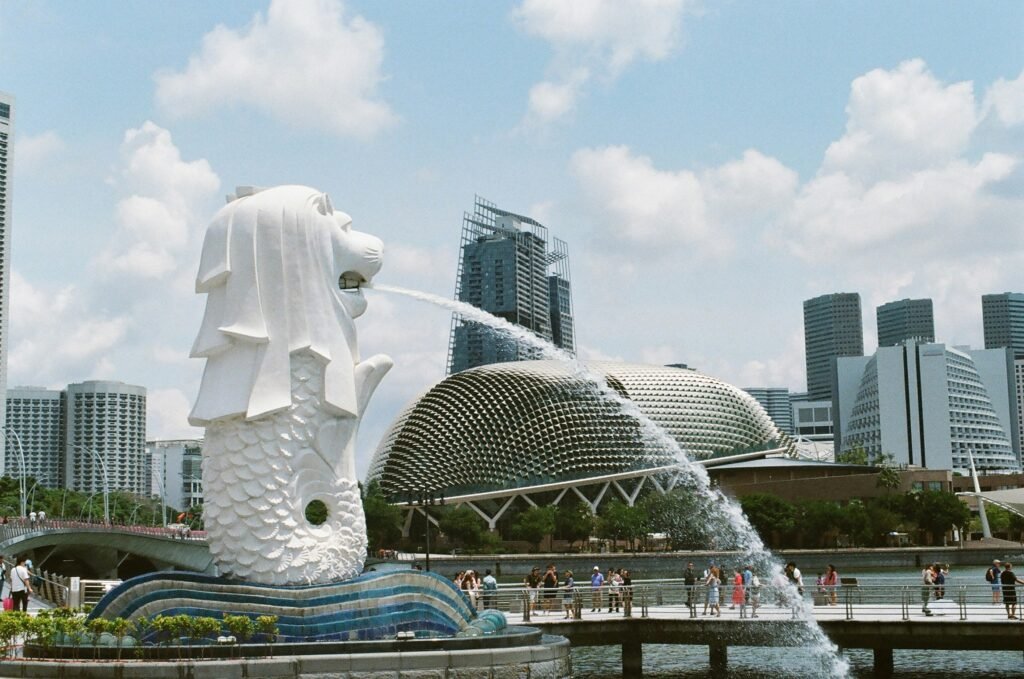
Leading Image Credit: Jisun Han on Unsplash
Future Now Green News is a forward-thinking media platform dedicated to spotlighting the people, projects, and innovations driving the green & blue economy across Australia, Asia and Pacific regions. Our mission is to inform, inspire, and connect changemakers through thought leadership and solutions-focused storytelling in sustainability, clean energy, regenerative tourism, climate action, and future-ready industries.