


WITH ASEAN facing a $120 billion annual cleantech investment shortfall and Australia committing $22.7 billion to clean energy innovation, Victorian startups have unprecedented opportunities in Foreign Direct Investment (FDI) and Asia-Pacific partnerships. Here’s what investors, government, and cleantech founders revealed at last week’s Victorian Cleantech Cluster event.
The transition to clean energy isn’t happening without cleantech startups and scale-ups leading the charge.
From renewable energy and circular economy solutions to mobility, agriculture tech, carbon markets, and built environment innovations (responsible for 40% of global emissions), these cleantech companies need serious funding. And as the cleantech investment landscape shifts, it’s time to look beyond Australia to cleantech opportunities in neighboring ASEAN markets.
The Victorian Cleantech Cluster (VCC), with over 200 members since launching in 2019, is sparking these conversations across government, industry and startup ecosystems.
Victorian Cleantech Investment Event: From Seed to Scale
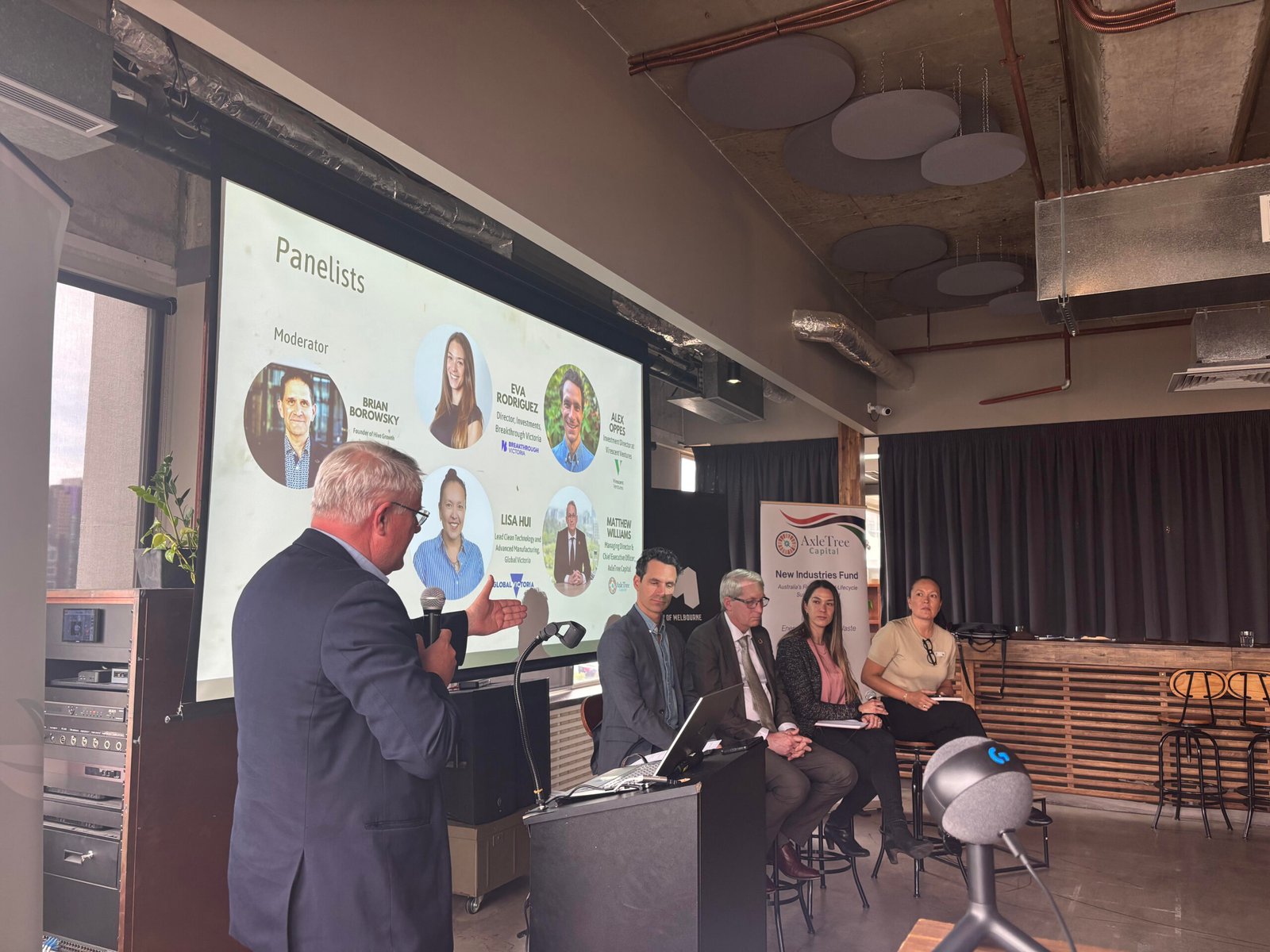
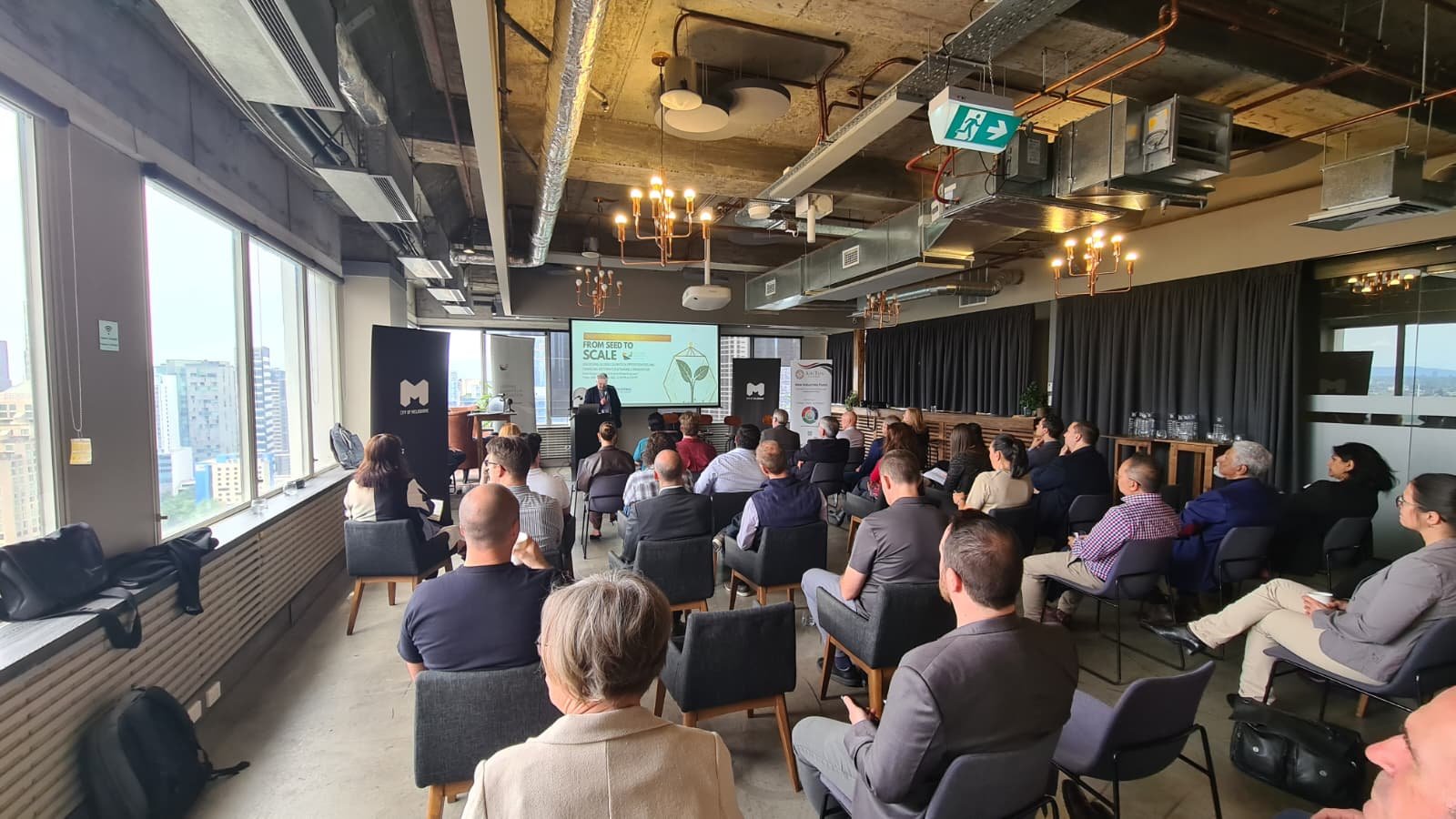
VCC’s Melbourne panel discussion From Seed to Scale: Unlocking Global Cleantech Opportunities and Financing Victoria’s Sustainable Innovation drew 80+ attendees at last Friday’s 28 November event. VCC chair and co-founder and director of Earth Systems, Nigel Murphy, opened the conversation and introduced moderator Brian Borowsky, founder of Hive Growth, followed by insights from panelists Eva Rodriguez (Breakthrough Victoria, Director of Investments), Lisa Hui (Global Victoria, Lead of Clean Technology and Advanced Manufacturing), Matthew Williams (AxleTree Capital, Managing Director and CEO), and Alex Oppes (Virescent Ventures, Investment Director). Sponsored by City of Melbourne and Earth Systems, the cleantech investment forum focused on what venture capital and impact investors are actually looking for in Australian cleantech startups and what founders should focus on.
Clean technology contributes more than AU$31bn to the Australian economy each year, supporting more than 65,000 jobs across 1500+ organisations. (VCC)
The message was clear: Victoria’s cleantech ecosystem has incredible support right now – patient capital, strategic advice, government advocacy – across both public and private finance sectors. But cleantech founders need to know how to navigate the funding landscape.
The panel traced the cleantech funding pathway from early-stage seed investment through to deployment at scale, and the mindset shift founders need as they move from “building for fun” (as MC Brian Borowsky put it) to “Project Finance land” (Matt Williams’ addition).
Key Themes for Cleantech Investment Success:
🌿 Cleantech collaboration isn’t optional – Deep partnerships across government, investors, and industry are non-negotiable if Victoria wants to build world-class cleantech companies and projects.
🌿 Government as cleantech customer – Government must be enabler, facilitator, AND early customer in a fast-moving cleantech ecosystem. Think interdepartmental coordination across Global Victoria, Invest Victoria, and Austrade for cleantech export support.
🌿 Strategic cleantech sector focus – Victoria needs deliberate prioritization of which cleantech sectors to support for a globally competitive, investment-ready cleantech hub.
🌿 Cleantech talent beats technology – Startups that underinvest in team capability and leadership slow their own growth, no matter how strong the underlying cleantech innovation is.
🌿 Patient capital for cleantech remains challenging – Let’s just say it: finding the right cleantech funding at the right stage remains difficult in Australia’s venture capital landscape.
What Cleantech Investors Look For in Australian Startups
Eva Rodriguez from Breakthrough Victoria clarified cleantech investment: Australia is not your only source of capital.
Her key takeaways for cleantech startups seeking funding:
- Victorian universities are goldmines for cleantech talent and deep tech opportunities – Breakthrough Victoria’s University Innovation Platform is supporting this cleantech innovation pipeline
- Venture capital investment appetite is shifting from SaaS to deeptech and cleantech
- The cleantech team matters most. Startups need to clearly demonstrate “why you?” in an increasingly competitive global cleantech investment landscape
- Victoria’s cleantech sector needs better storytelling around success stories
- Think beyond equity – consider tailored capital stack approaches for cleantech projects, including debt financing
- Find complementary partners when scaling cleantech innovations globally
Matthew Williams from AxleTree Capital highlighted how they’re bringing patient capital to the “missing middle” of Australia’s cleantech investment ecosystem through their New Industries Fund, covering the whole lifecycle of energy, water, and waste cleantech projects.
ASEAN Cleantech Market: Why Victorian Startups Need Asia-Pacific Strategy
Here’s what became obvious at the cleantech investment event: innovation should be designed for applications beyond Victoria and Australia from day one. Victorian cleantech founders are well-placed to tackle global challenges with climate solutions.
Australia’s cleantech sector advantage in the Asia-Pacific region comes from a coordinated national clean energy approach, established regulatory frameworks for renewable energy, and concentrated government cleantech support. Meanwhile, ASEAN countries struggle with policy fragmentation, regulatory inconsistencies, and heavy reliance on international financing to close substantial cleantech investment gaps. That’s where Australian cleantech companies can play a vital link.
Eva Rodriguez reinforced this cleantech internationalization message: There are unprecedented opportunities for Australian cleantech in Foreign Direct Investment (FDI) and to “go out” into neighboring ASEAN cleantech markets. Vietnam, Thailand, Indonesia – these clean energy markets operate differently. Attend local cleantech expos, connect with on-the-ground Australian and local industry associations, build real partnerships in ASEAN cleantech ecosystems.
Nigel Murphy, VCC chair and co-founder / director of Earth Systems – which implements environment, water and sustainability solutions on global cleantech projects – with offices in Australia, China, Laos, Vietnam, Senegal, Côte d’Ivoire, Rwanda, and the UK – just returned from an Asia regional cleantech trip. Nigel agrees: You have to See it, to Be It. He’s actively promoting Australian cleantech entry into Asia because FDI and partnership strategies work.
Cleantech Investment Data: Australia vs ASEAN Funding Landscape
The Australian government is backing cleantech innovation with significant capital. Minister for Climate Change and Energy Chris Bowen:
“Australia’s climate change target is a big green light to local and international investors. The $22.7 billion ‘Future Made in Australia’ agenda makes clear our commitment to a clean energy and advanced manufacturing future.”
Foreign Direct Investment (FDI) is a critical pathway for securing cleantech financing and strengthening supply chains for clean energy technologies.
Australia saw $9 billion in total capital investment committed to large-scale renewable energy projects in 2024 (public and private cleantech funding combined).
ASEAN’s Massive Cleantech Investment Gap: ASEAN requires an estimated $150 billion annual clean energy investment by 2030 to meet Paris Agreement climate targets. They’re only attracting around $30 billion annually in cleantech funding. That’s a $120 billion cleantech investment shortfall.
The 8th ASEAN Energy Outlook shows annual power sector investment alone needs approximately $56 billion from 2023-2030, but actual international renewable energy investment was only around $43 billion in 2022.
In 2024, Vietnam, the Philippines, and Indonesia attracted $4.6 billion in clean energy investment – a $1.1 billion increase in cleantech funding from the previous year. Not bad, but nowhere near the cleantech capital needed.
China currently leads public cleantech investment in ASEAN, investing over $2.7 billion in clean energy across Indonesia, Philippines, Thailand, Malaysia, and Vietnam between 2013 and 2023.
What This Means for Victorian Cleantech Startups: Australia’s per-capita cleantech investment is significantly higher than ASEAN’s (26 million people vs 700 million). Our $22.7 billion government cleantech commitment represents a more concentrated, structured approach compared to ASEAN’s fragmented national clean energy policies. Australian cleantech companies are better positioned with established venture capital networks and government support.
But ASEAN has the scale, the cleantech investment need, and the hunger for climate solutions. That’s the opportunity for Victorian cleantech export and FDI partnerships.
Lisa Hui from Global Victoria’s new clean technology and advanced manufacturing division (a non-paid service under Jobs Skills Industries and Regions) is making cleantech internationalization easier – they have dedicated cleantech teams in 23 Global Victoria investment and trade offices globally to support Australian cleantech startups going international.
The Path Forward for Victoria’s Cleantech Industries
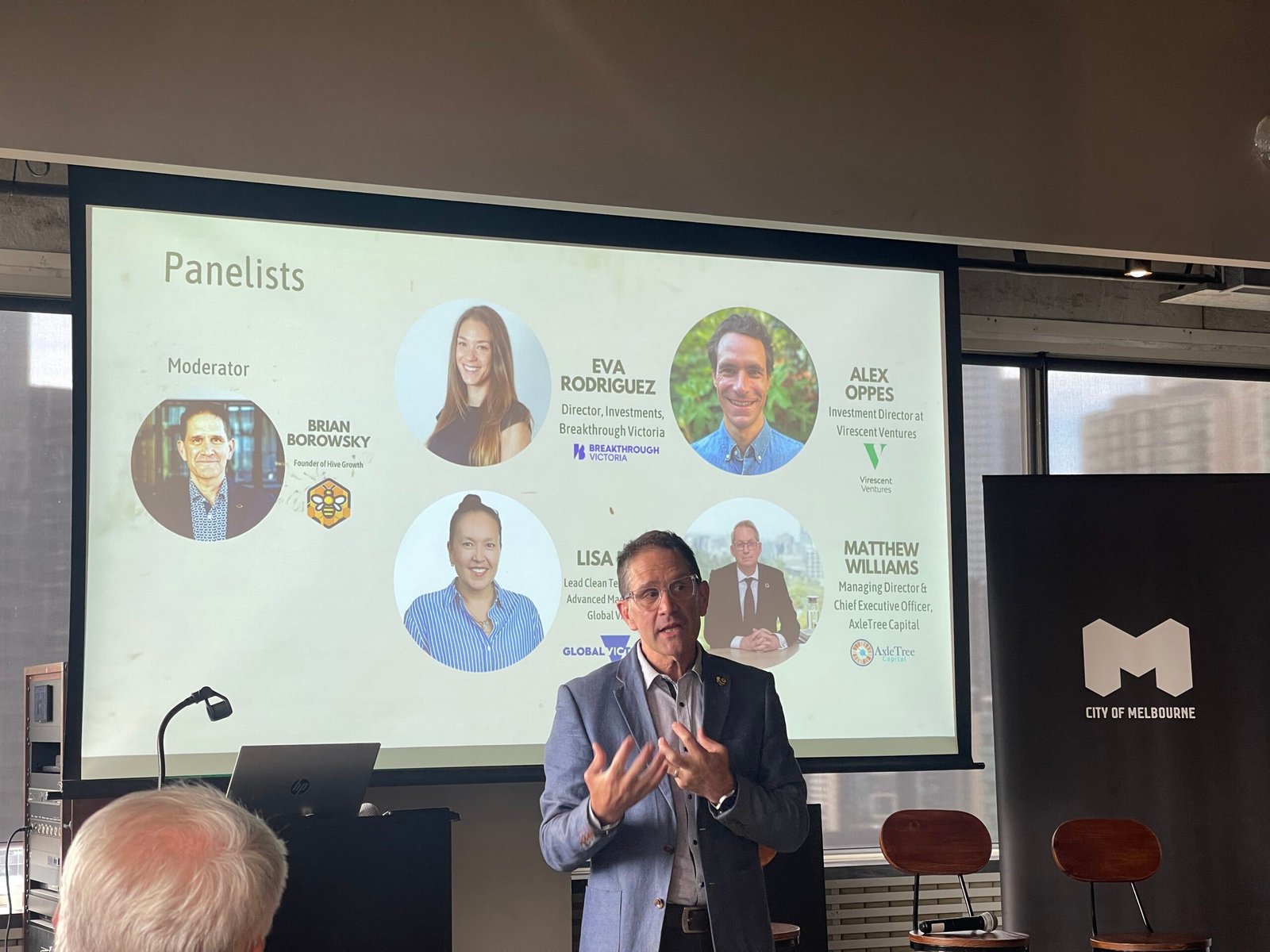
As MC Brian Borowsky, Hive Growth founder, closed the cleantech investment event:
“If Victoria wants to build the leading cleantech ecosystem in Australia, we need to keep talking, keep collaborating, keep building, and start mapping the actors, skills, and capabilities (and capital) across the system. Friday felt like another strong step in that direction, and it’s exciting to be shaping where this goes next as we design the 2026 VCC program.”
The time is now for Victorian cleantech startups. The patient capital support is here. The ASEAN cleantech opportunities are massive. Victorian cleantech founders just need to be bold enough to seize them at home and abroad.
___________________________________________________________________
About Victorian Cleantech Cluster: VCC is Victoria’s leading cleantech industry association supporting 200+ cleantech startups, scaleups, investors, and ecosystem partners in renewable energy, circular economy, mobility, agtech, carbon markets, energy storage, and built environment innovation.
Cleantech Sectors Covered: Renewable energy (solar, wind, hydro, geothermal), battery storage and energy management, waste management and recycling, water technology, electric vehicles and charging infrastructure, biofuels and biogas, green hydrogen, carbon trading and farming, critical minerals (lithium, nickel).
Sign-up for Victorian Cleantech Cluster membership.
More information on Asia regional opportunities and financing your Australia cleantech projects:
– City of Melbourne – Melbourne Climate Network
_____________________________________________________
Future Now Green News is a forward-thinking media platform dedicated to spotlighting the people, projects, and innovations driving the green & blue economy across Australia, Asia and Pacific region. Our mission is to inform, inspire, and connect changemakers through thought leadership and solutions-focused storytelling in sustainability, clean energy, regenerative tourism, climate action, and future-ready industries.