

Solar is no longer niche. It’s mainstream infrastructure.
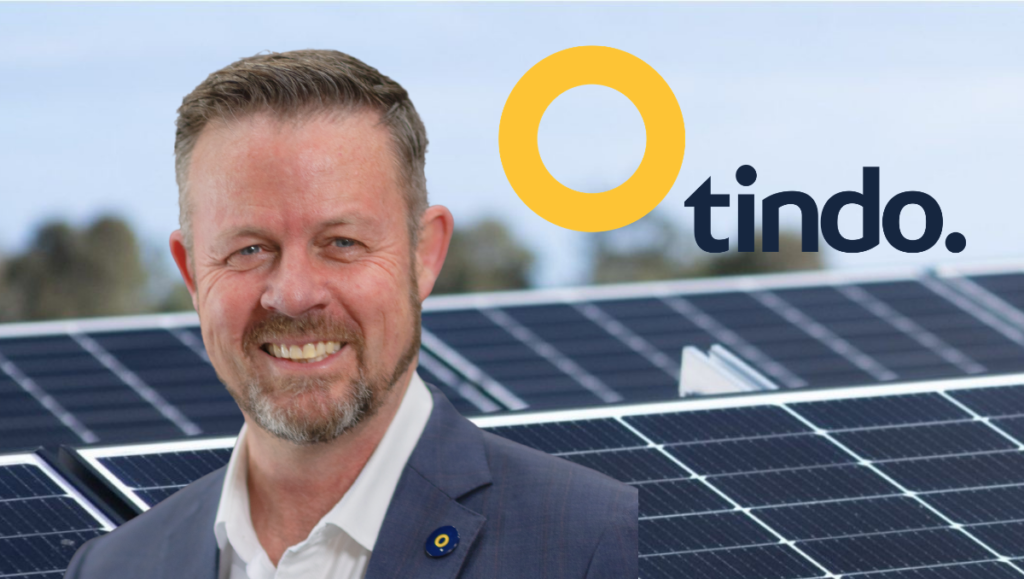
FNGN interviews Australian-Made Tindo Solar CEO Richard (Rich) Petterson, securing Australia’s solar energy with a futuristic Gigafactory.
TINDO SOLAR (Adelaide, SA) is currently the only company manufacturing solar panels on Australian soil. Founded in 2011, Tindo Solar was established with the goal of creating high-quality solar solutions designed to withstand Australia’s diverse and challenging conditions of dry high temperatures, cyclone winds, and Icey snow caps. Tindo secured $34.5 million in 2025 through the Australian Government’s Solar Sunshot Program, administered by the Australian Renewable Energy Agency (ARENA).
The funding is designed to help expand Tindo’s manufacturing facility at Mawson Lakes, South Australia, increasing production from 20MW to 180MW per year. This Manufacturing Production Credit will help Tindo compete with cheaper imported panels, and support a feasibility study into a future 1GW gigafactory.
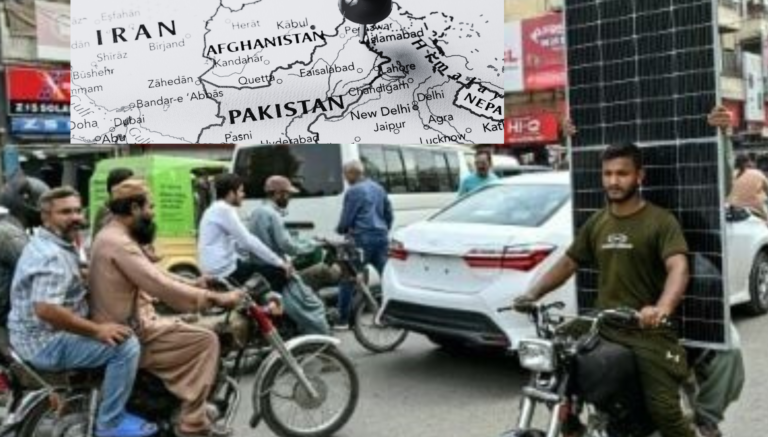
Currently, over 90% of solar panels sold in Australia are made in China, a situation not unique to Australia since China manufactures around 75% of the world’s solar modules. The federal government’s $1 billion Solar Sunshot program is actively trying to change this by incentivising domestic manufacturing, which is roughly 1%.
Australia is leading worldwide for per capita electricity generation from solar as of 2025.
Approximately 42% penetration of residential roof top solar equates to ~4.0–4.3 million of Australian households. To put it into context; Australia generates roughly 260–280 TWh of electricity per year, with solar now accounting for 19.6% (46.7 TWh) of national electricity production. Of that, rooftop solar across residential, commercial, and industrial small-scale systems contributed approximately 30,178 GWh — representing around 12–15% of the country’s total electricity supply. Commercial and industrial (C&I) / Factory/Manufacturing solar uptake remains a growing but secondary segment.
But more Chinese manufacturing is coming:
Chinese manufacturer Sunman has announced it will build a 500 MW per annum solar module production facility in the Hunter Valley, NSW, after securing AUD 171 million in combined federal and state government funding. Once established, it would be the largest solar panel manufacturer in Australia.
Sydney-based startup SunDrive has opened a solar manufacturing pilot production and commercialisation facility in Kurnell, NSW SunDrive Solar, focusing on breakthrough copper-based cell technology, having secured up to AUD 25.3 million from ARENA to scale and commercialise its technology.
FN: Congratulations on securing $34.5 Mil.
What does this Grant mean for Tindo Solar – not only the obvious fiscal injection, but also the Government’s support for Australia-Made. Should governments mandate “Australian-made” solar in public projects?
Richard Petterson: The $34.5 million grant from ARENA allows us to expand the production capacity of our Mawson Lakes factory to 180MW per year and employ an extra 50 people. We’ll also be developing our supply chain with domestic manufacturers. On top of that the ARENA grant funds a feasibility study for our ‘Gigafactory’ plan for a new facility that can produce 1GW of panels per year. We believe that government procurement should support a growing domestic solar PV industry.
FN: What percentage of your business is residential vs commercial vs utility-scale?
Richard Petterson: Our market is weighted 90% residential and 10% commercial. It’s the right mix for us considering we produce high-quality solar modules that tend to be demanded by homeowners, rather than the bulk-buying approach in the utility and commercial market. Our sales have also been impacted by the home battery scheme, which is helping to lift our residential sales.
FN: Can Australia realistically compete with Chinese manufacturing on price?
Could the government be implementing higher anti-dumping penalties – or tariffs on imported panels, or would that hurt adoption? Is there a cut-off saturation point in place?
Richard Petterson: Tindo has competed with Chinese industry for 15 years and we have done that by focusing on value for money. By concentrating on a high-performing, high-resilience module built for the harsh Australian environment, we sell a product that delivers the lowest overall cost-of-energy over time because our panels perform better. In one respect we compete with Chinese manufacturers, but we concentrate on a segment where we have an advantage.
We’re often asked about anti-dumping, but we treat that as the job for government, while we focus on making a product that has strong demand because it’s fit for purpose in the Australian environment.
FN: Is relying on imported solar technology a sovereign risk?
Richard Petterson: Yes, but there’s an element of that in any imported product. In the current fuel crisis we can see the reliance on foreign oil and what happens when the supply chain is disrupted. We think the government’s focus on sovereign manufacturing – and particularly domestic manufacturing of renewables hardware – is good because it focuses on energy security. Supporting a domestic renewables industry is a distinct shift in the risk profile of our energy system, where we try to meet future needs and start to derisk our energy system.
FN: Recent report reveals a growing weak spot in Australia’s rooftop solar boom, with nearly 50% of major system failures linked to faulty inverters and underperforming batteries. As adoption accelerates, concerns are rising over how quality-control issues continue to slip through despite existing Clean Energy Council standards and rebate safeguards.
What’s really happening in the market?
Richard Petterson: We have been in the manufacturing, installation and servicing industry for a long time and because of our equipment, system design and installation standards, we don’t have these problems. The CEC standards and guidelines are excellent but the numbers you quote suggest that poor installations and equipment are slipping through.
FN: You have 440 W white back sheet panel, and the other one’s a 475 W, all-black panel. Tell us about these products?
There’s talk of scaling production. Are you considering overseas manufacturing or assembly in places like Vietnam or India to be price competitive with China?
Richard Petterson: The 440W Walara N‑type panel uses 16 busbars and M10+ cells. Our 475W ‘black’ panel uses black busbar technology. They are in the top echelon of solar panel efficiency and output. As for scaling, we’re not looking at offshore manufacturing – we have plans for a Gigafactory that produces 1GW of panels per year. The Gigafactory will operate at a scale that brings down our cost of goods, increases our output and expands our addressable market. The Gigafactory will absolutely be located in Australia and will employ more than 200 people.
FN: Tindo claims a “zero defect” process and very low failure rates. How do you verify that?
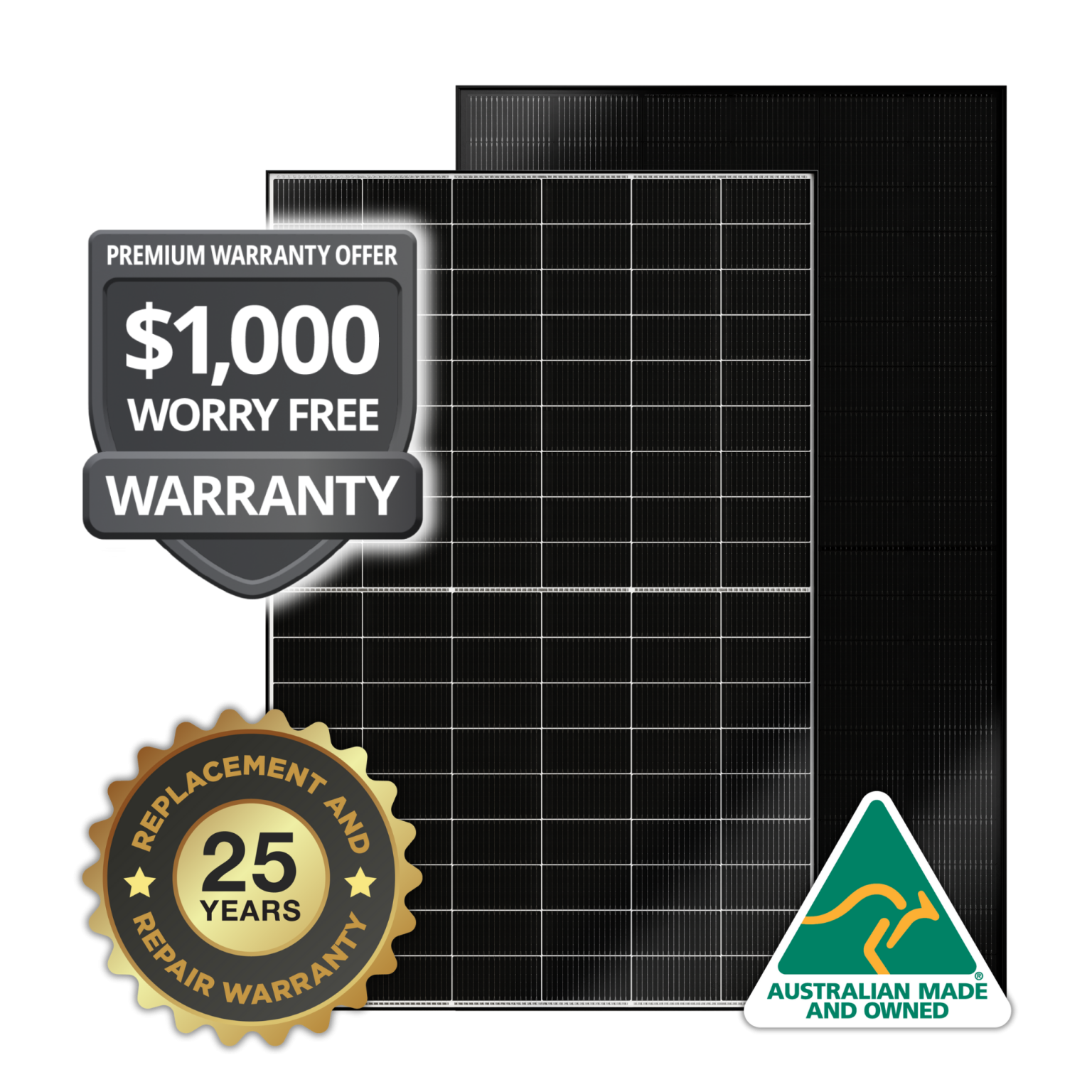
When you purchase Tindo N-Type solar panels, you’re not only covered by our comprehensive 25-year warranty but also eligible for our Premium Warranty Offer. The first of its kind in the Australian solar PV market, the $1000 Premium Warranty Offer is in addition to the comprehensive 25-year product warranty on all Tindo solar panels, that covers parts, transport, removal and reinstallation, should a Tindo solar panel malfunction.
Richard Petterson: The zero-defect manufacturing systems relies on every Tindo panel being engineered, manufactured and tested in Adelaide using top quality components and processes. Tindo products are then validated against Australian conditions. This approach delivers extraordinary field performance and durability. We have had a Tindo panels being independently assessed since 2016 at the Desert Knowledge Australia Solar Centre, which demonstrates consistent high performance against others in the market.
FN Australia has one of the highest rooftop solar adoption rates in the world—so why hasn’t it gone even further mandating all factories to have solar?
Covering less farming land – couldn’t we do more with less. Australia’s tyranny of space.
Korea has mandated parking lots for solar; Japan is halting ground mounted solar support replacing the priority to installing on 12,000 unused rooftops of factories and warehouses – and the Netherlands, generated 14% electricity from solar, over taking coal-fired power and is the highest solar uptake in the EU. They install panels on car parks, commercial lakes, sheep grazing fields, strawberry farms, disused churches, train stations, and airfields — essentially any surface that isn’t being fully used.
Richard Petterson: There is always more than can be done. Tindo focuses on high quality, resilient solar panels that perform in the harshest conditions and are particularly robust in humid and salt-mist environments. We are also research partners with AgriPV innovations and solar panel-roofing advances.
FN Has the Government residential Battery rebate helped you sell more Panels?
Richard Petterson: The home battery rebate has been a hit with homeowners. We sold the most panels we’ve ever sold, last month. It was the best month ever.
FN: Is Australia’s rooftop solar boom becoming a future waste/recycling crisis? In China they crush them up and make cement. What’s Tindo’s solution – the Stewardship of built-in circularity?
Richard Petterson: We have had recycling partnerships in the past but the commercial model for recycling has been difficult. We have always pushed a ‘re-use’ strategy where we take decommissioned Tindo panels, check them for damage and test them for performance. Our philosophy is that we build a product that lasts, and then we can re-use it – it doesn’t have to go to landfill.
FN: Will future panels become lighter, more efficient, and building-integrated?
Richard Petterson: Yes, panels are becoming more powerful over time with more KW per Kilo per panel today than was ever the case. Tindo’s first solar panel in 2011 produced 240W – our current panel is 440W. Solar cells are more efficient, although some panels are pushing the boundary by using thinner and thinner glass which can also be vulnerable to hail. We like to think we get the balance right – strength and efficiency while not compromising resilience.
What’s next after silicon? Perovskites? Tandem cells?
Richard Petterson: Silicon has been the powerhouse of solar panels for more than 30 years. There’s been lots of investment into it making silicon a reliable and optimisable source of solar power. Perovskites is the next generation because it’s lightweight and cheap to produce, but the downside is currently a lack of longevity. I’m sure with the R&D going into Perovskites, we’ll start to see better technology being produced. Tandem cells – Perovskites and silicon – are being developed and companies are adopting the technology. We’re partnering with a tandem cell project at the moment.
Best solar innovation in the next 5 years?
Richard Petterson: Opportunity to create lightweight panels that improve the handling at installation and will also aid commercial installations where so often there has to be extra work on strengthening roofs to accept the solar systems.
Most overhyped clean-tech trend?
Richard Petterson: Hydrogen energy.
One myth Australians believe about solar?
Richard Petterson: That it will solve all their power requirements. Many customers end up using more power because they think the power is free – households often increase overall power usage when they get solar.
What keeps you awake at night?
Richard Petterson: It’s the end of April and in Adelaide it’s 30 degrees – 7 degrees higher than average.
If you weren’t running Tindo, what would you be doing?
Richard Petterson: I’d still be involved in the water industry which I believe is heavily aligned with renewable energy – it’s all about the human footprint and managing natural resources.
Check out and signup for any of our 6 training programs: FNGN CLIMAX©MEDIA COMMS ACADEMY
Future Now Green News is a forward-thinking media platform dedicated to spotlighting the people, projects, and innovations driving the green & blue economy across Australia, Asia and Pacific region. Our mission is to inform, inspire, and connect changemakers through thought leadership and solutions-focused storytelling in sustainability, clean energy, regenerative tourism, climate action, and future-ready industries.