

25+ Years in China, Building Energy for All. Especially for the Farmers Who Need it Most
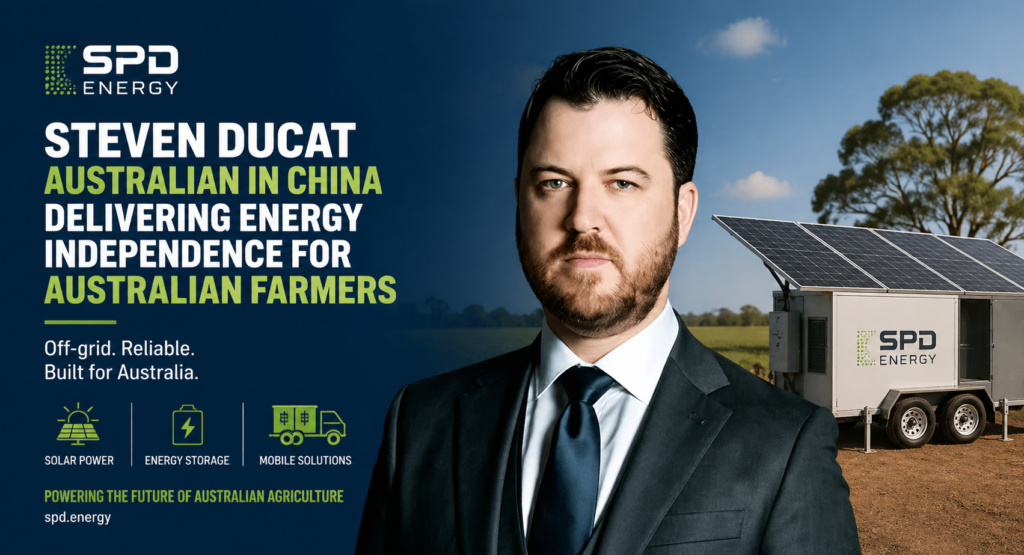
STEVEN DUCAT is not a man who does things by halves. Australian born, with 25 years on the ground in Foshan City, Guangdong, South China, Steven has built something of an empire. One that is powered entirely by renewable energy, and with an almost stubborn conviction that energy access is a right, not a privilege – regardless of whether you live in a city, a desert, or somewhere so remote it doesn’t appear on most maps.
As founder, CEO and ‘disruptor’ of SPD Energy, Steven operates at the frontier of solar, wind and hybrid power systems, advanced power management and conditioning, energy storage and smart grid solutions.
His credentials extend well beyond the boardroom: he holds an advisory role to China’s New Energy Authority and serves as Vice President of China’s equivalent of Australia’s CSIRO — the China Research Centre. He is also a committee member of the CHAFTA Forum, a non-profit registered in Australia dedicated to promoting and developing trade under the China-Australia Free Trade Agreement.
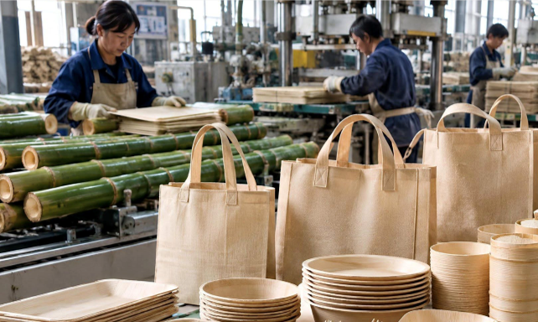
From his manufacturing base in Foshan with a notable workforce of 75% women, SPD Energy supplies energy systems across Central Asia, Afghanistan, Iraq, Turkey and Syria – with over 80% of his business flowing from the Middle East.
Yet it is Australia – specifically regional Australia – that occupies a particular corner of his heart.
FNGN Editor caught up with Steven on a call to China.

“First and foremost, what is dear to my heart are Australian primary producers. The Farmers. They get the raw deal. They are out there tied to their land, tied to the weather, tied to everything — and they get the rawest brunt of everything.”
Steven’s frustration is precise and well-informed. When you total the solar farms and wind farms, factor in the negotiations, the overspend on transmission and distribution infrastructure, and the systemic disincentive to invest in maintenance and upgrades — you arrive at a rural energy landscape that is, in his assessment, fundamentally landlocked.
Working alongside Farmers for Climate and former CEO Natalie Collard, Steven sought to understand what it would actually take to unlock reliable energy supply for rural farming districts. Drawing on decades of off-grid project experience across the Middle East, he saw the parallel immediately. Australia’s conditions are not so different. The R&D and commercialisation frameworks he had refined over years in some of the world’s most challenging environments were directly transferable.
The question he set himself was characteristic in its practicality:
“How do you now make the numbers stack up for farmers, if you don’t connect to grid — from what they already have? They have some sort of tractor, a ute that can pull three and a half ton, a light truck, and land.”
His answer: a multi-purpose, 24/7 mobile energy design, requiring minimal capital expenditure, one that can function as an energy solution on the farm, and as a revenue-generating asset when it isn’t. A Swiss Army knife of energy infrastructure, if you like.
While some Australian companies are already positioning mobile 5-megawatt solar arrays for rapid deployment in remote or industrial settings, Steven’s concept layers in additional technical features not yet seen on this side of the world. He has drawn directly from units he designed and deployed in Iraq and Syria, supplying up to 50 to 100 MW of energy storage to large factory areas completely disconnected from any grid, across hundreds of units, over many years. Only he design for Australia – and developing countries without grid connection – is scaled down fit-for-purpose, which is totally transportable by the eg: Farmer. It’s a modular system for flexibility of technology breakthroughs and minimal capital.
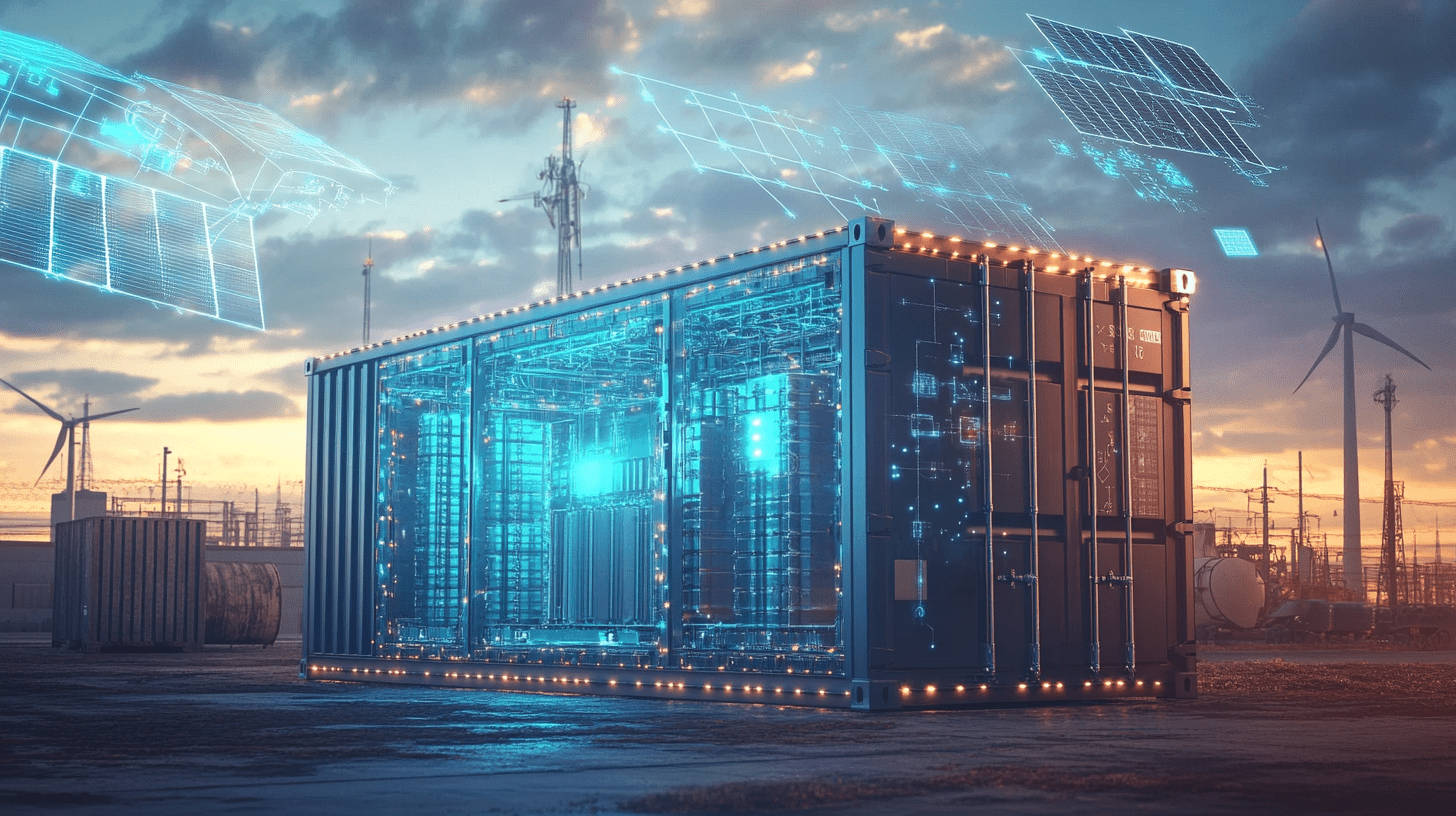
Image SPD: Large scale off-the-grid renewable energy battery- deployed throughout Middle East.
The specific challenge for Australia’s farming context is making the technology as safe and foolproof as possible.
Farmers don’t lack capability (their hands-on, tacit technical knowledge is, as Steven readily acknowledges, extensive and deeply practical) – but because they shouldn’t need to become certified electricians to access reliable power.
Steven is currently active on the Central Highlands Development Corporation in Emerald, Central Queensland, where he is pioneering pilot projects that can install a mobile 5 MW solar array on a farm without requiring external permission or certification to wind standards, because the unit packs down when high-speed winds arrive. Crucially, the residual energy can be retailed to the public in high traffic locations or can be moved around their farming lots which are on different titles, which currently the Australia energy polices do not allow. Designed to easily be driven and moved, it can also serve as a reliable power supply for remote, centralised pop-up retail, throwing a genuine lifeline to local farming communities, cottage industries, and debt-laden fresh graduates searching for somewhere to plant themselves and contribute.
Editor: when working on my Applied Social Science degree some years back, I researched the deeply troubling suicide rates among remote farming communities, and what practical intervention might look like.
My modest ‘idea’ was a mobile ‘Coffee n Chat’ truck. A simple, moveable meeting point to combat isolation.
Steven’s vision encompasses that and then some. It is the same instinct, scaled up by several orders of magnitude, and wrapped in a technical solution with genuine commercial legs.
Steven has five children, a factory to run, governments to advise, and projects across multiple continents. He has no intention – and frankly no time – to return to Australia full-time any time soon.
Which is perhaps fitting. The best solutions to Australia’s rural energy problem, it turns out, are being quietly engineered from a factory floor in southern China, by an Australian.
Follow Steven Ducat’s vision for farmers, and his published articles, as this story develops.
Future Now Green News is a forward-thinking B2B media platform spotlighting the people, projects, and innovations driving the green and blue economy across Australia, Asia, and the Pacific – informing, inspiring, and connecting climate changemakers through bold storytelling and thought leadership in future-ready industries.
CONTRIBUTORS WELCOME: reach out to our FNGN Editor: editor@futurenowgreennews.com