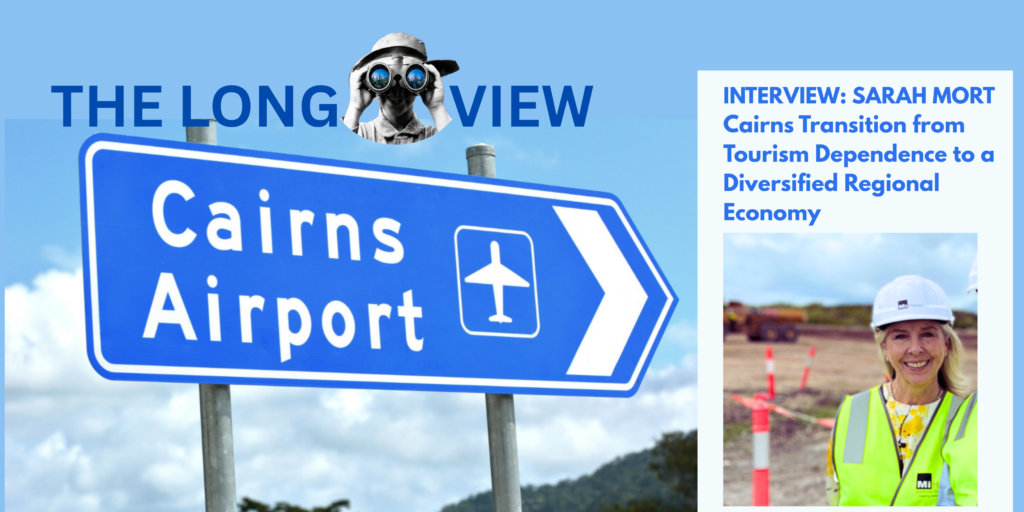

SARAH MORT: 2 Cyclones. 20 Years. 140+ Properties Developed. “We’ve Physically Run Out of Land.” SkyHaven’s A$60M Cairns Airport Bet on FIFO Housing
INTERVIEW: This week we interview Cairns-based Sarah Mort, co-founder and director of B-Corp MiHaven Group. In my 25+ years of interviewing people across Australia and Asia, Sarah stands out as one of the most resilient and intriguing frontier women I’ve met.
FNGN’s first question actually sums up our entire interview:
FNGN: From Sydney and Hong Kong boardrooms, to Cairns: what does remote Regional Australia teach you that Big Cities Can’t?
SARAH MORT: Trust. A mutually supportive community of engagement. And with our ‘For-profit for good’ structure of MiHaven with B Corp certification – in particular our training and employment programs we started in 2011, and our disability housing projects – we feel we are at grassroots to contribute to our community, and of course the economy. A Win -Win.
When you think of Australia’s vast landscape, the east coast of Brisbane, Sydney, Melbourne, and Adelaide and Perth to the west.
In one pocket of regional Australia in Far North Queensland, a buzzing frontier in the making – Cairns – transitioning from a tourism-dependent economy to a more diversified regional success story.
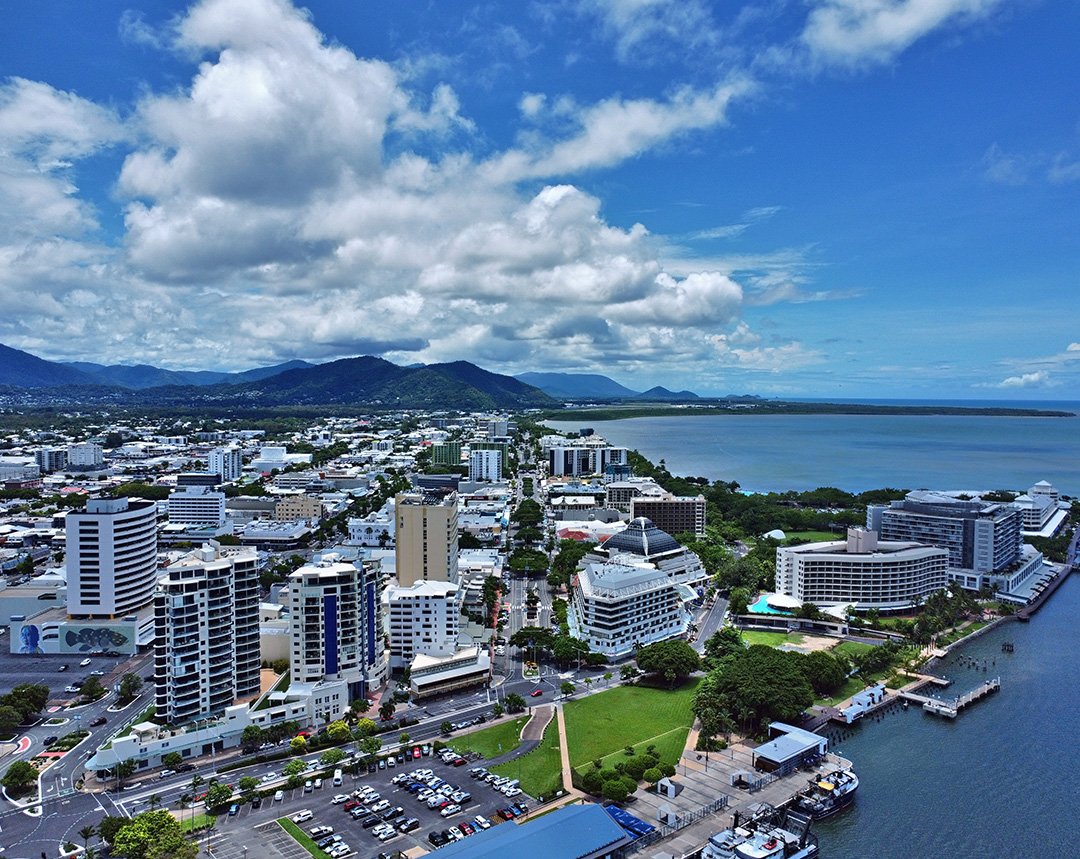
Image: The Cairns Harbour accommodating Cruise Ships, Visiting Ocean Sailing Yachts, and Great Barrier Reef Local Tours
Originally from Melbourne, Sarah holds an Honours bachelor’s degree in Town and Regional Planning (University of Melbourne), a postgraduate degree in Urban Economics (UTS), and is a Graduate of the Australian Institute of Company Directors. After 20 years in Cairns, she feels right at home. Sarah’s true-grit determination and optimism have carried her through two devastating Cairns’ cyclones, which has ultimately, further propelled her genuine passion, business-smarts and commitment to local community – through her Business with Purpose mantra.
On a good day, Cairns swells by around 15,000 people, while the 2025 census counted 178,000 permanent residents. Many of them aren’t tourists. They are aircraft engineers on three-month contracts, surgeons and nurses on month-on, month-off rotations, mining and defence and marine contractors. Almost none are looking for a permanent home. Sarah Mort, with business partner (and life partner) James Mort – co-founders and directors of B-Corp MiHaven Group – believe they have found the place to house them: at the airport’s own back paddock.
Cairns Airport is currently the only airport of its size in Australasia without onsite accommodation, and with SkyHaven, we will now be better placed to attract skilled workers and grow their businesses to meet increasing demand delivering long term economic value to the region
says Cairns Airport CEO Richard Barker
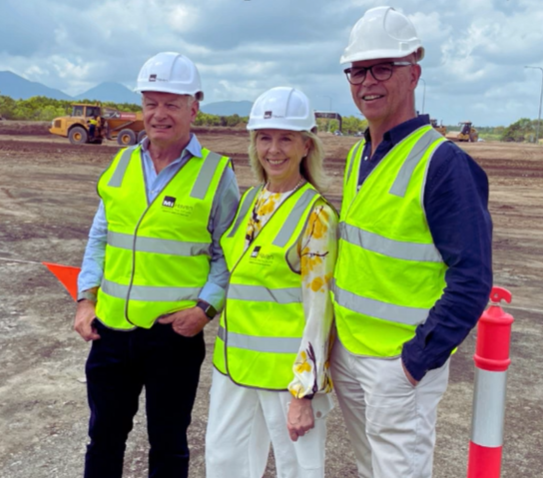
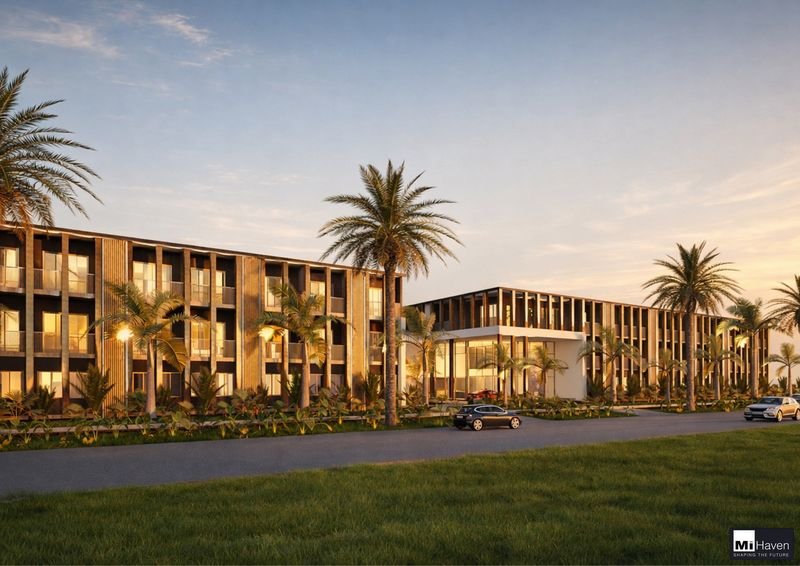
As aircraft engineers, surgeons and construction crews rotate through Far North Queensland, developers Sarah and James Mort says SkyHaven is the answer to the region’s accommodation crunch – sitting right beside the Cairns runway – transitioning from a tourism-dependent economy to a more diversified regional success story. Roughly, a A$60 million investment with 186-unit development at Cairns Airport, construction began recently on the 3 rd. of September with the pouring of concrete foundations – which was a great milestone.
It is being built in two stages (98 rooms, then 88), and Mandala Hotels & Resorts will operate it, with the Commonwealth Bank as the lead financier. It is the first major private commercial accommodation project to break ground in Cairns since 2018.
Sarah and James Mort, as members of Advance Cairns, participated with the business community advisory council for The Far North Queensland regional development report, “Thinking the Cairns Roadmap 2035 in 2025; founded Cairns RTO social enterprise delivering training and employment for Aboriginal and/or Torres Strait Islander and non-Indigenous locals; founded a registered NDIS provider for Specialist Disability Accommodation, developing more than 50 properties across Far North Queensland; they also partner with not-for-profit, community-based organisations, and are now driving their SkyHaven short term accommodation development at Cairns Airport.
When there’s a will, there’s a way. From a bike ride to a business case.
The idea started with Sarah’s business partner and life partner, James, riding with colleagues, including Cairns Airport CEO Richard Barker. Post-COVID migration had roughly doubled Cairns’s property prices, and MiHaven’s own build-to-rent and student accommodation projects no longer stacked up.
We’ve now got an absolute crisis,” James confided. “We’ve physically run out of land
Barker pointed to underused land in the airport’s business precinct. Sarah and James Mort secured a long-term option over the site on a 50-year lease. Airport leases there had rarely run beyond ten years, and the deal sidestepped what she calls the freehold blockage in Australian development.
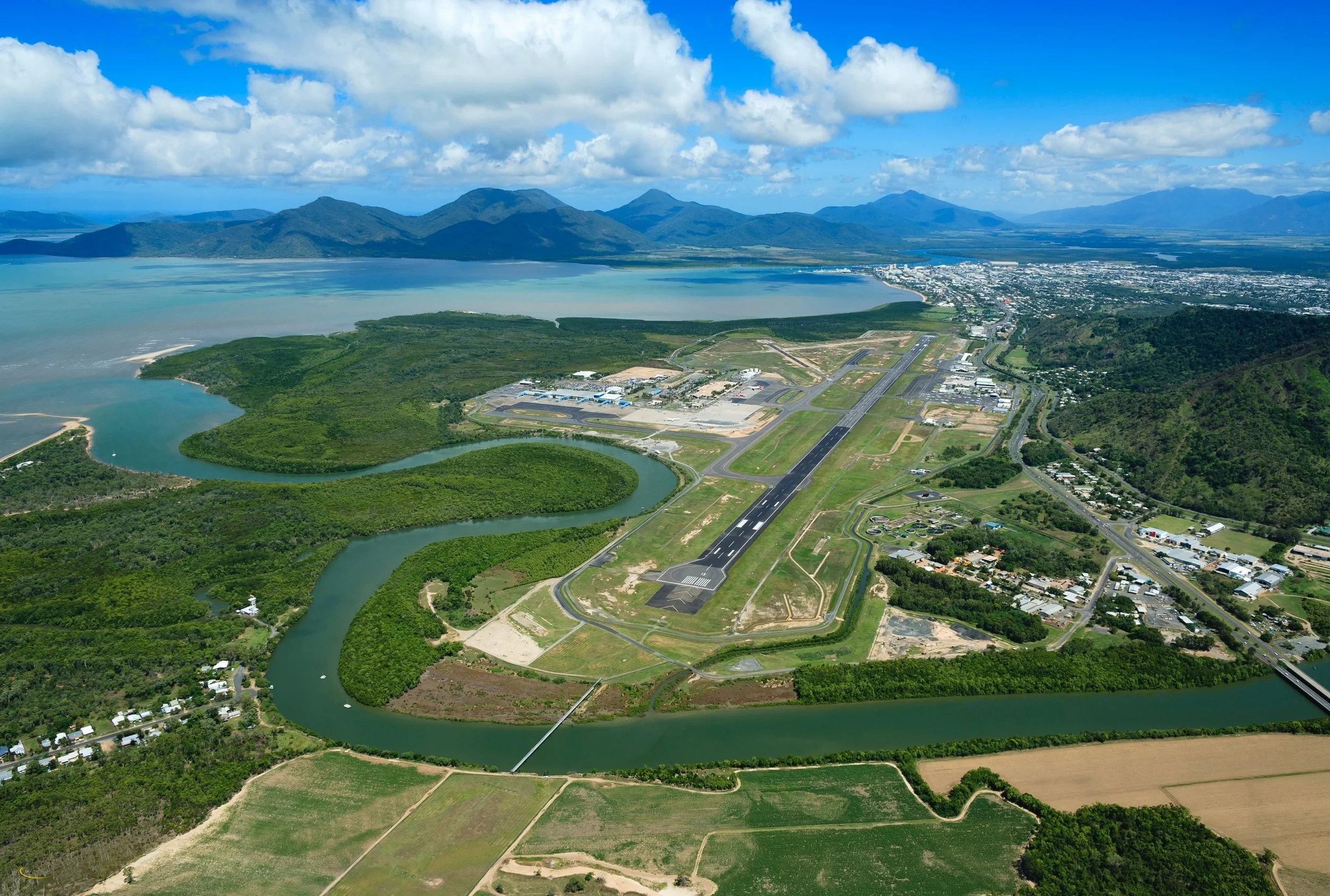
Sarah then went looking for demand. Aircraft maintenance firms told her that a workforce of more than 400 includes about 40% flown in from places like Ireland, Poland and Canada. They were housing engineers in Airbnb’s on the northern beaches, then running a fleet of about 20 cars to ferry them to work.
As aircraft engineers, surgeons and construction crews rotate through Far North Queensland, developers Sarah and James Mort says SkyHaven is the answer to the region’s accommodation crunch – sitting right beside the Cairns runway – transitioning from a tourism-dependent economy to a more diversified regional success story.
Sarah says,
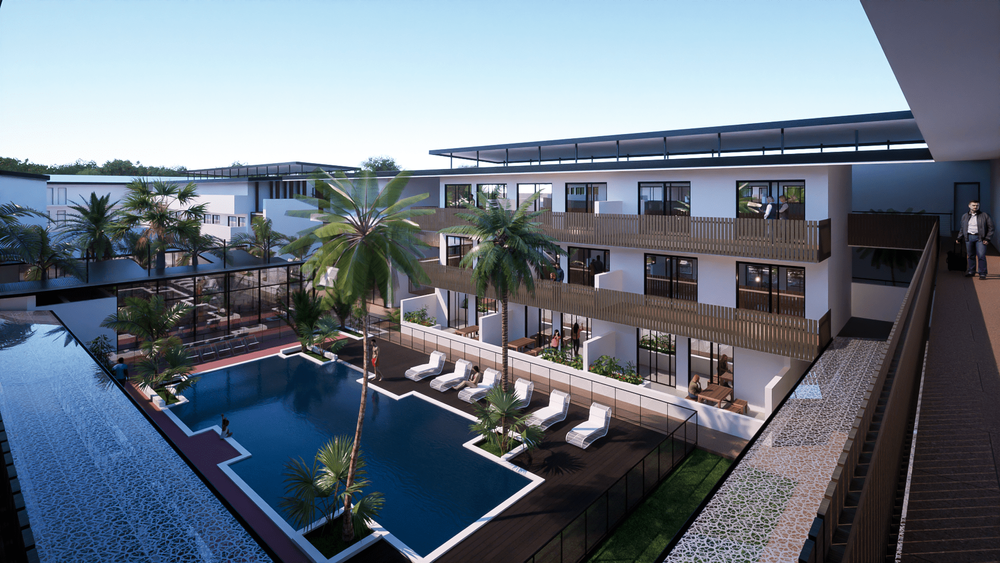
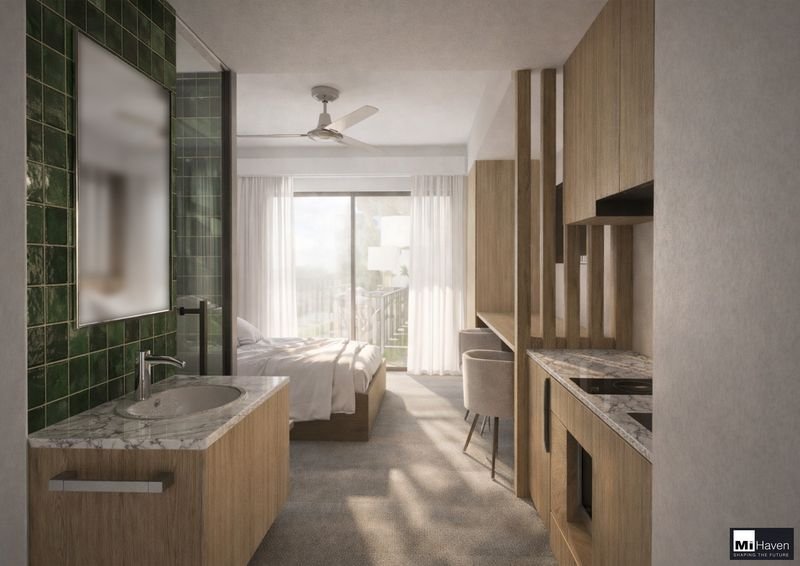
At 25 to 40 square metres, with a kitchenette, laundry on every floor, pools, gymnasium, meeting rooms and barbecues outside.
“Airline crews, like all of us, are much healthier,” she says. “They want to be able to prepare their own food.”
Cairns A$1bil Hospital + 2032 Olympics + NRL PNG + Renewable Energy Projects
Health is the biggest customer. Sarah notes that Cairns Hospital brings in about 100 extra locums, surgeons and nurses a month, and the state has legislated a A$1 billion hospital precinct expansion that she says will bring about 800 additional workers a day from late next year to 2031. The hospital has locked in a three-year contract for 20 rooms. SkyHaven is a couple of kilometres from the precinct.
Other demand comes from the aviation, mining, marine and superyacht sector, defence and federal police, and NRL-driven PNG travel plus transit airline passengers, airline crews and disruptive flights. Sarah also points to Cairns’ role as a training base ahead of the 2032 Olympics.
With manufacturing and research skills and tropical expertise, the region is also well-positioned to develop and implement cost-effective and resilient green energy solutions: $4bn – in renewable energy projects planned, committed to or under construction in Cairns and Far North Queensland. 100 businesses – operating in the renewable energy sector providing employment for 700 people and generating $100m/year in turnover. 250 Jobs – for near term construction created by the 157-megawatt Kaban wind farm.
With increasing demand – is 186 rooms enough?
MiHaven / SkyHaven concept started at about 90 rooms and doubled up. Sarah calls the staging a lesson from her time at Multiplex as Project Development Manager for the Wharf at Woolloomooloo Sydney, where a planned 100-room-plus W Hotel couldn’t find an operator, and was halved.
“A hundred rooms is just not the economy of scale,” she says. “Our business model proved 186 keys was ideal”.
Projected Occupancy Rates: Sarah says short stays are airport-proof against the wet season because FIFO traffic runs all year, whereas tourist hotels can fall to 60% occupancy. SkyHaven’s modelling assumes 68% in year one, stabilising at 75%, against an 80% average for Cairns’s hotels last year. She argues that being conservative suits investors.
Due Diligence in Financing
Financing in regional remote community areas with existing, and possible future, climate change disasters, pose a challenge. However, Cairns located in Far North Queensland coastline holds unique natural attractions and untapped community investment opportunities while transitioning from a tourism-dependent economy to a more diversified regional success story.
Sarah says the hardest part was equity.
“The Commonwealth Bank lifted its debt appetite to 60% non-recourse at a time when other lenders were avoiding construction, and we turned down private equity. Then the Middle East conflict froze investors for two or three months. Because the original deal had been structured under one lease, a bank valuer had to value the whole project at once – so this made it challenging to close the funding for stage 1 to accelerate the projects commencement. After negotiation, the airport agreed to split the leases, so each stage could be valued and funded alone”.
MiHaven raised about $12 million in equity for stage one and is now raising about $12 million for stage two. She says the bank valuation came in at $68 million against a $60 million cost.
Stage 1 opening targeted for mid- 2028.
Fuel shocks and freight: how is regional Queensland exposed?
The Strait of Hormuz disruption has hit building costs. She says Cairns sources roughly 90% of its supplies from Brisbane, “so you’ve got to truck everything up.” The bank agreed to a separate fuel line item, plus a contingency of around $650,000 that goes back to investors if unused. Sarah’s quantity surveyors modelled a worst case of a 10 to 15% increase, and she says some prices are now easing, including a 6% fall in one building item “yesterday.”
On the region’s resilience, Sarah says there’s “no easy fix, and the answer is to be smart. You just adjust.”
The airport’s own planning scheme meant no state referral required, and she describes a development approval was achieved in about two weeks.
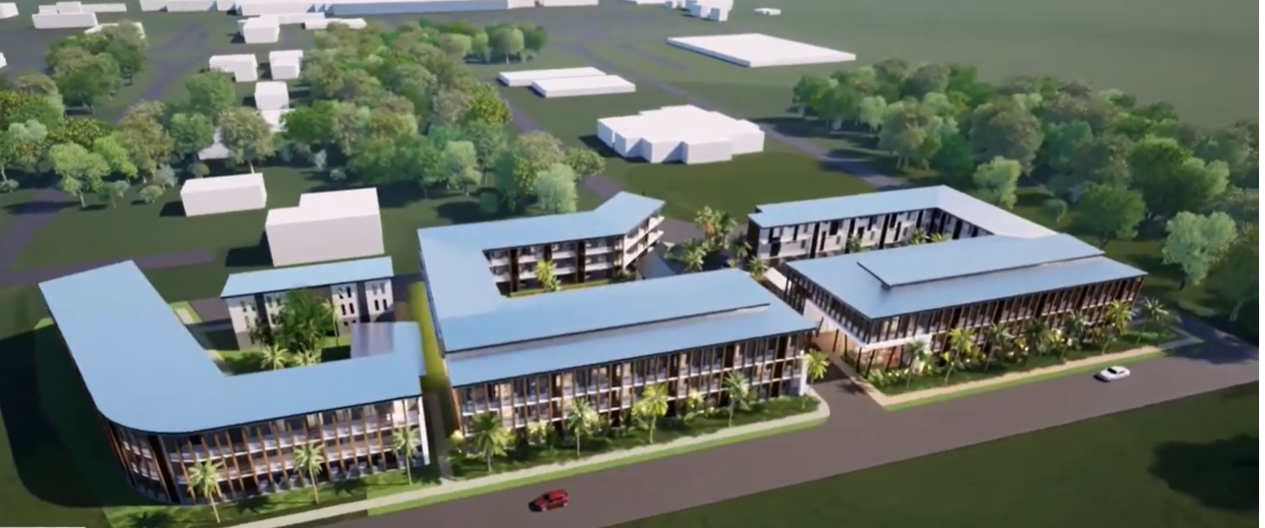
Despite room for seven storeys, SkyHaven is three storeys, which she says takes so much risk out of building. It also suits MiHaven Constructions, which is Sarah and James company building the project. The project is currently about five days ahead of programme and on budget, with opening targeted for mid-2028. SkyHaven has also been designed with more disability-accessible suites than the building code requires, with respite stays in mind.
The building has an angled form, designed by MiHaven’s in-house architects, intended to cut heat in the internal garden and pool area by about five degrees. Clearly, we are Cyclone Code compliant, and incorporating building materials that combat inherent tropical mould.
Where the model strains
Getting tradespeople is a bigger worry than materials. Sarah says Brisbane is a “honeypot” because of the 2032 Olympics, and that staging was partly about stretching a thin local workforce. She says MiHaven built its own apprenticeship pipeline. Its training arm delivered about 90% of teaching face-to-face and achieved roughly 65% completion rates, against a national average she puts at about 35%. It wasn’t about profitability, she says, and was acquired by a Brisbane company this year, though it still trades currently under its MiHaven name.
Saying ‘no’ is the hardest discipline
“We tend to overcommit and want to help everybody,” Sarah says.
MiHaven walked away from Northern Australia Infrastructure Facility financing because it would have required tier-one construction accreditation, which she estimates at two more years of compliance and another $300,000. She credits their business partner, veteran venture capitalist Roger Allen as the “wise sage” who asks whether their ROI stacks up- not just money, but also for our life-work balance and has always pushed Sarah and James to continue to scale-up and grow their business enterprise in Far North Queensland. They also travel across Australia, Asia and Europe to stimulate their architectural curiosity to bring back home and create and adopt new design ideas.
Housing, culture and the next 40 years
Asked for one policy change to fix housing supply, Sarah says, there isn’t one.
A cultural shift away from focussing on the idea that wealth can only come from owning property, is needed. Pointing to the European renting model, and to her13 nieces and nephews in their twenties and thirties who many happily share houses – perhaps a Community Land Trust (CLT) is worth exploring more.
Under a Community Land Trust (CLT) model, a community-run, not-for-profit organisation owns the land beneath a home, while the resident household owns the dwelling or holds a long-term lease on it. Because this removes land costs from the price of housing, CLTs can make homes more attainable and secure. This model is actually growing in momentum in Australia targeted at the retirement sector – you acquire and own the property and pay an annual ground lease for the land; it’s a great model whereby the retirees can cash out of the family home, downsize and be left with funds to continue to live a comfortable lifestyle.
Sarah’s take on Cairns is optimistic
“Having spent 20 years here, including through two severe cyclones at Mission Beach, Cairns is still at its beginnings. My fear is getting the city’s “bones” wrong over the next 40 years. I’ve seen it in Sydney and Melbourne”
Sarah’s aim is for Cairns to become “The most dynamic regional tropical city in the world”.
We are blessed with natural beauty of the Great Barrier Reef, a UNESCO World Heritage Site and one of the 7 Wonders of the World, plus Cairns has direct flights with international air carriers of Singapore airlines, Air New Zealand, Air Niugini (Port Moresby), Cathay Pacific (Hong Kong – seasonal), Fiji Airways, Jetstar (Tokyo, Osaka, Bali, Christchurch), Qantas operates selected regional and international connections- as well as domestic carriers. In the past, Japanese heavily invested in Cairns. I believe we are on another cyclical transition with more domestic and Asian investment partnerships.
When asked what’s her advice to other business owners – particularly for women in challenging environments and jobs – it’s perseverance and resilience, a strong belief in your purpose with passion, and shared burdens by forming collaborative partnerships, while accepting an early exit if the numbers fail.
And other times, especially when the vision is grand like SkyHaven, stay strong as the bumps and setbacks can be very hard to sustain and you have to keep committed and focused on the long-term outcome, requiring you to be agile with the ability to think outside the box sometimes – to get the deal down.
“The journey is never what you expect!”
Further Reading – Backgrounders:
MiHaven – https://www.mihaven.com.au/
SkyHaven – https://www.mihaven.com.au/skyhaven
Advance Cairns “Thinking the Cairns Roadmap 2035 in 2025- https://www.advancecairns.com/roadmap2035/
Cairns Airport – https://www.cairnsairport.com.au/
Cairns Hospital Master Plan Development – https://www.health.qld.gov.au/system-governance/health-infrastructure/current-activity/cairns-hospital-campus-master-plan
Check out and sign up for any of our 6 Media Communications training modules: FNGN CLIMAX©MEDIA COMMS ACADEMY
Future Now Green News is an independent forward-thinking digital media platform dedicated to spotlighting the people, projects, and innovations driving the green & blue economy across Australia, Asia and Pacific region. We inform, inspire, and connect change-makers through thought leadership and solutions-focused storytelling in sustainability, clean energy, regenerative tourism, climate action, and future-ready industries.