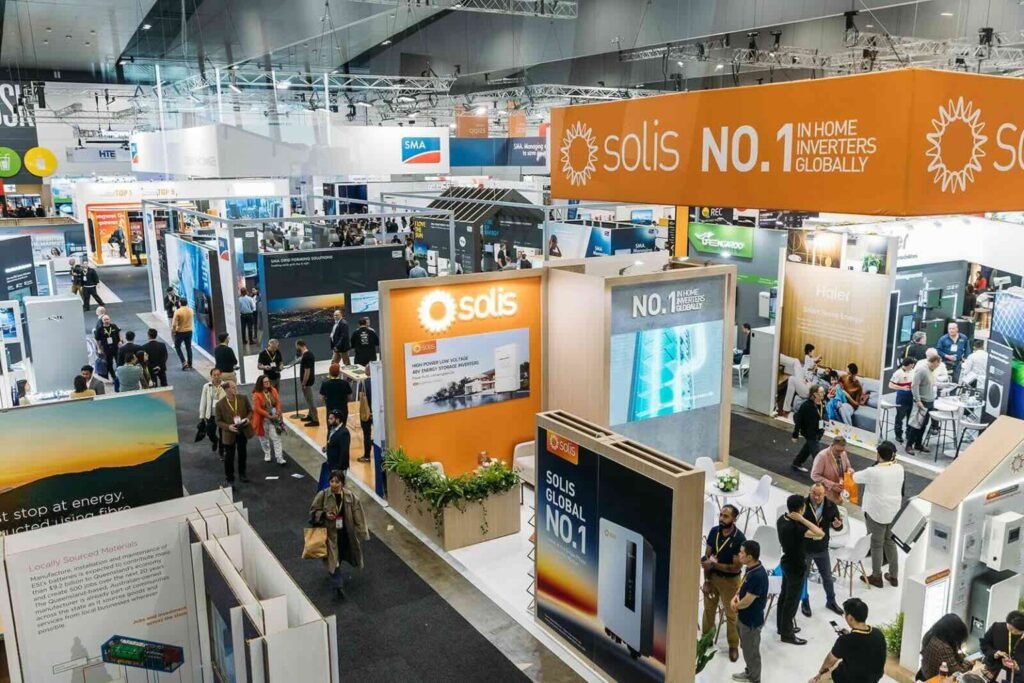

International exhibitors, battery megaprojects and billions in potential investment signal a rapidly expanding Australia–Asia clean energy market.
Australia’s transition to renewable energy is attracting growing international attention, and the scale of that interest was on display last week as more than 22,000 industry professionals gathered in Melbourne for All Energy Australia 2026. Held at the Melbourne Convention and Exhibition Centre on 28–29 October, the event brought together more than 490 national and international exhibitors, over 500 speakers and representatives from across the renewable energy, battery storage, electric vehicle, hydrogen and energy infrastructure industries.
Organised by RX Global in partnership with the Clean Energy Council, the event has evolved from a largely solar-focused trade show into one of the Asia-Pacific region’s major business platforms for the clean energy transition.
But the significance of this year’s gathering extended beyond technology demonstrations. International participation, investment opportunities and Australia’s growing demand for energy infrastructure highlighted the country’s position as an increasingly important destination for clean energy capital, manufacturing partnerships and technology transfer.
Asia’s growing presence in Australia’s energy transition
One of the notable features of the 2026 exhibition was the strong international representation, particularly from Asian technology manufacturers and solution providers.
South Korea established a government-backed pavilion featuring eight companies presenting technologies to Australian buyers, supported by one-to-one export consultations.
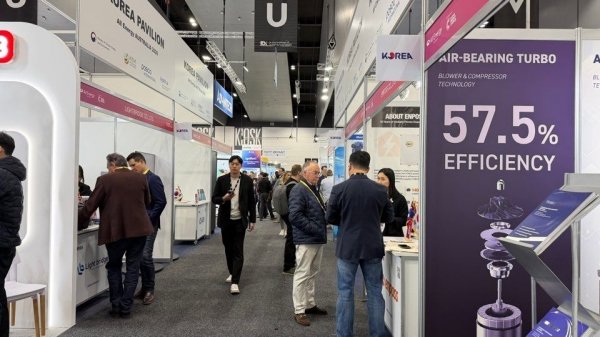
IMAGE: The Korean pavilion was supported by KOTRA, Korea’s trade and investment promotion agency. Eight Korean green-tech businesses participated.
The participating businesses showcased solutions spanning hydrogen production and charging, artificial intelligence-powered building energy management, waste-heat recovery, gas separation membranes and energy efficiency. The Korean pavilion demonstrated how international governments are using industry exhibitions to facilitate commercial relationships, introduce domestic companies to overseas markets and establish potential export partnerships.
China also maintained a substantial presence through its established renewable energy and battery manufacturing businesses.
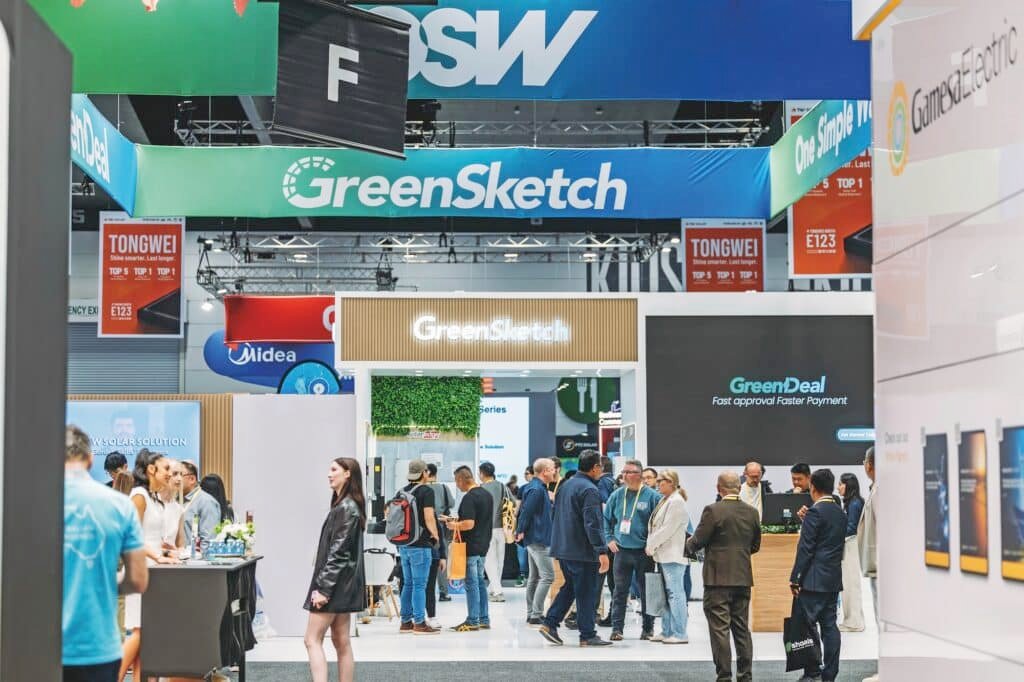
Companies including GoodWe, Fox ESS, Sungrow and HiTHIUM showcased technologies spanning solar inverters, residential and commercial battery systems and large-scale energy storage. Chinese manufacturer HiTHIUM, headquartered in Xiamen, has established an international footprint extending across Europe, the Middle East and North America. Its participation reflects the growing importance of Chinese battery manufacturing capabilities in global energy storage markets.
The international competition is significant.
Australia needs substantial investment in storage, grid infrastructure and renewable generation, while manufacturers from across Asia are seeking new markets for their technologies. For Australian businesses, the opportunity is to move beyond equipment procurement towards deeper commercial relationships, including local manufacturing, research partnerships, project development and technology servicing.
Battery storage emerges as a major investment opportunity
Battery energy storage was arguably the dominant technology theme across the exhibition.
Australia’s expanding renewable energy generation is creating an increasingly urgent requirement for storage capacity, particularly as solar and wind generation fluctuate and electricity demand continues to grow.
According to figures reported by pv magazine, nine large-scale battery projects representing 2.3 GW of power capacity and 7.1 GWh of storage capacity commenced operation during the first half of 2026. A further 13 projects, representing 1.6 GW and 6.5 GWh, reached financial close during the same period.
These developments illustrate the scale of the emerging market
Battery systems are increasingly important for storing surplus daytime solar generation, releasing electricity during periods of higher demand, improving grid stability and making better use of existing renewable energy infrastructure.
The residential market is also expanding. More than 550,000 residential battery systems had reportedly been installed in the 15 months following the launch of the Australian Government’s Cheaper Home Batteries program.
While household batteries attracted considerable attention, the longer-term investment opportunity extends to commercial and industrial storage, grid-scale battery projects and integrated renewable energy systems.
The investment opportunity: capital is available, but certainty matters
Australia has ambitious renewable energy targets and a substantial pipeline of proposed generation and storage projects.
According to Australian Energy Market Operator figures cited by pv magazine, 80.9 GW of new generation and storage projects are currently in the development pipeline.
Australia is targeting an 82 per cent renewable energy share in the National Electricity Market by 2030.
However, the challenge is no longer simply attracting investment into solar and wind generation. The country must also deliver the transmission networks, grid connections, storage capacity and regulatory arrangements needed to support that expansion.
The Hon. The Hon. Jackie Trad – a former Queensland politician and current Chief Executive Officer of Clean Energy Council highlighted the importance of investment certainty during discussions at the event.
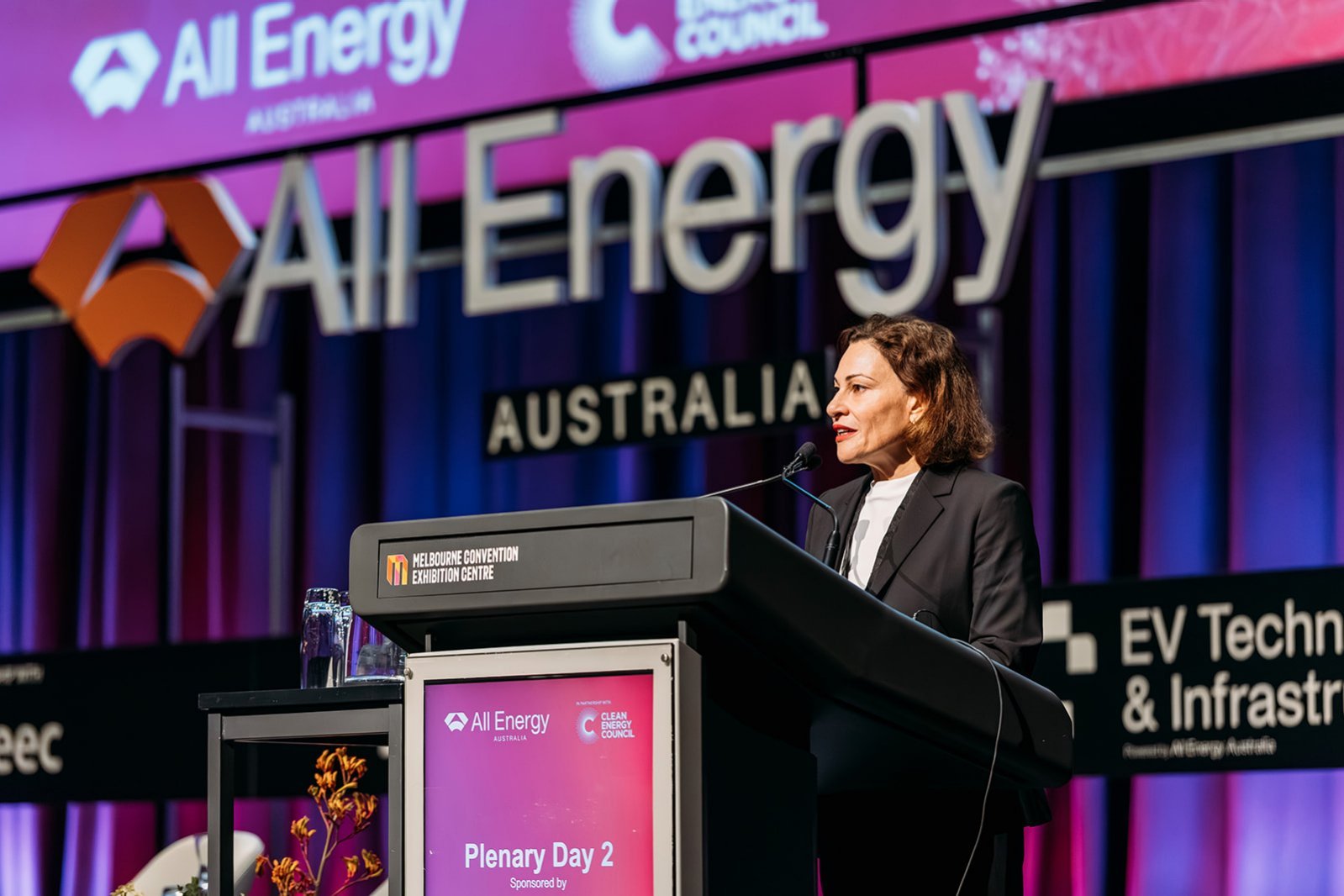
The message was clear:
International investors need consistent government policy, predictable approvals and confidence that the infrastructure required to connect projects will actually be delivered.
This is particularly important for overseas investors considering long-term commitments to Australian renewable energy developments. The scale of the opportunity is substantial, but the development pipeline should not be confused with committed investment or projects already under construction.
Australia’s next opportunity: commercial and industrial energy
Another important development discussed at the exhibition was the potential growth of commercial and industrial solar installations. Changes to the eligibility threshold for the Small-scale Renewable Energy Scheme, increasing the system capacity limit from 100 kW to 1 MW, are expected to improve the economics of qualifying mid-sized installations.
The expansion of financial incentives through Small-scale Technology Certificates could reduce upfront costs for eligible systems by approximately 20 per cent. This creates opportunities for manufacturers, installers, energy consultants, project financiers and technology providers targeting businesses that want to reduce electricity costs and improve energy security.
Warehouses, manufacturing facilities, shopping centres, hotels, agricultural businesses and data centres are among the sectors with potential to benefit from integrated solar, battery storage and energy management systems.
For Australian SMEs, the market also offers opportunities to partner with international manufacturers and bring new technologies into local applications.
Beyond solar: the infrastructure challenge
All Energy Australia’s expanded Grid and Network zone reflected a major shift in the industry’s priorities.
Around 50 additional exhibitors were included in the expanded zone, highlighting technologies for grid modernisation, network integration and electricity management. The development is significant because renewable energy generation alone cannot deliver a reliable transition. Australia must upgrade ageing infrastructure, expand transmission capacity and improve the ability of electricity networks to manage decentralised generation and variable renewable supply.
Electric vehicle charging infrastructure, energy management software, artificial intelligence and demand-response technologies are also becoming increasingly important.
These sectors offer opportunities for international collaboration, particularly with Asian economies that have developed significant manufacturing and technology capabilities in electrification and digital energy systems.
From exhibition floor to regional partnerships
The Australian Renewable Energy Agency (ARENA), Austrade and the Clean Energy Regulator were also represented at the Australian Government booth, providing opportunities for businesses to discuss funding and regulatory pathways for renewable energy projects.
The presence of government agencies alongside international manufacturers and Australian project developers reinforces the importance of connecting technology suppliers with investment, policy and commercial opportunities.
For Australia, the next stage of the energy transition will require more than importing equipment. It will depend on building a competitive domestic industry, developing skilled workforces, supporting innovation and establishing international partnerships that deliver long-term economic value.
For Asia-Pacific businesses, Australia’s energy transition represents an expanding market for investment, technology deployment and commercial collaboration.
The question is whether Australia can translate the interest generated at major industry events into viable projects, stronger domestic capabilities and lasting regional partnerships.
With COP31 opening in Türkiye on 9 November, the focus of international climate discussions is once again shifting towards implementation.
All Energy Australia 2026 offered a practical snapshot of that challenge: the technologies and investment interest are growing, but delivering the infrastructure, policy certainty and commercial partnerships needed to accelerate the transition remains the critical task.
For Australia and its regional partners, the clean energy investment race is well underway.
Check out and sign up for any of our 6 Media Communications training modules: FNGN CLIMAX©MEDIA COMMS ACADEMY
Future Now Green News is an independent forward-thinking digital media platform dedicated to spotlighting the people, projects, and innovations driving the green & blue economy across Australia, Asia and Pacific region. We inform, inspire, and connect change-makers through thought leadership and solutions-focused storytelling in sustainability, clean energy, regenerative tourism, climate action, and future-ready industries.