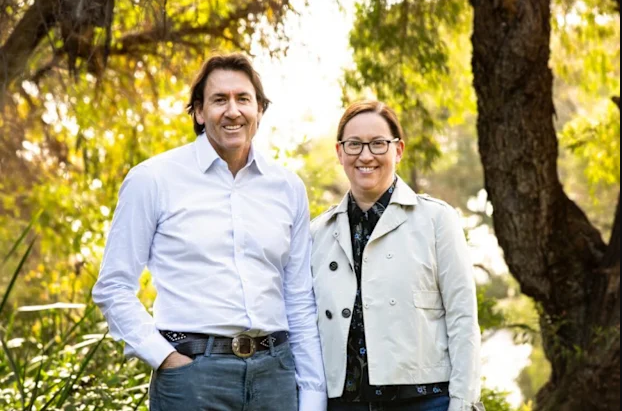
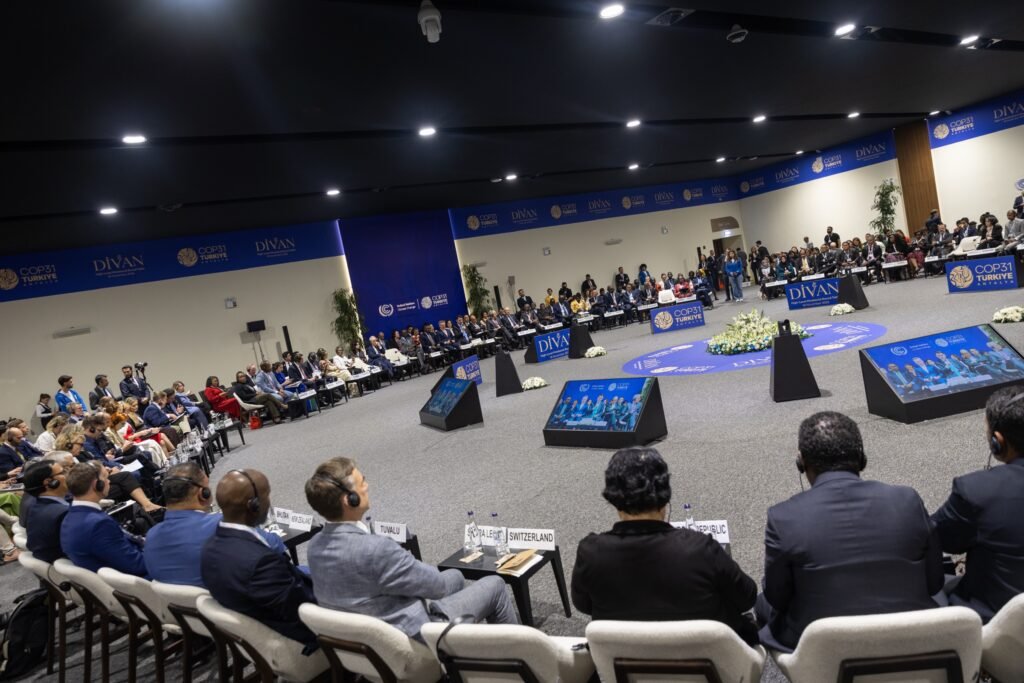

COP 31 Host Türkiye, President Murat Kurum, and COP31 President of Negotiations Australia Chris Bowen
Eleven years after the Paris Agreement, the world faces an uncomfortable reality: the ambition to limit global warming to 1.5°C is increasingly beyond reach. Yet at COP31, the United Nations Climate Change Conference taking place in Antalya, Türkiye from 9 to 20 November 2026., world leaders are reluctant to declare the target lost, raising difficult questions about the future of international climate action. Diplomats and climate negotiators are confronting the widening gap between political commitments and the physical reality of a warming planet.
When nearly 200 countries signed the Paris Agreement in 2015, limiting global warming to 1.5°C above pre-industrial levels became the defining ambition of international climate diplomacy. It was more than a symbolic number. It represented a critical threshold beyond which the risks to ecosystems, food security, communities and economies would increase significantly.
Now, eleven years later, that ambition is under extraordinary pressure.
The question is no longer simply how to achieve 1.5°C, but how governments respond to the likelihood that the threshold will be breached.
Scientists warn that without substantially faster reductions in greenhouse gas emissions, global warming could reach approximately 2.6°C by the end of the century. Such a trajectory would represent a significant failure to deliver on the Paris Agreement’s central ambition. Yet there is little appetite among governments to formally replace the 1.5°C target with a higher figure, whether 2°C or 2.5°C.
For many countries, changing the target risks sending the wrong message: that governments can simply adjust their ambitions when progress becomes politically or economically difficult.
Rachel Cleetus, director of the climate programme at the Union of Concerned Scientists, argues that the debate should move beyond negotiating another number.
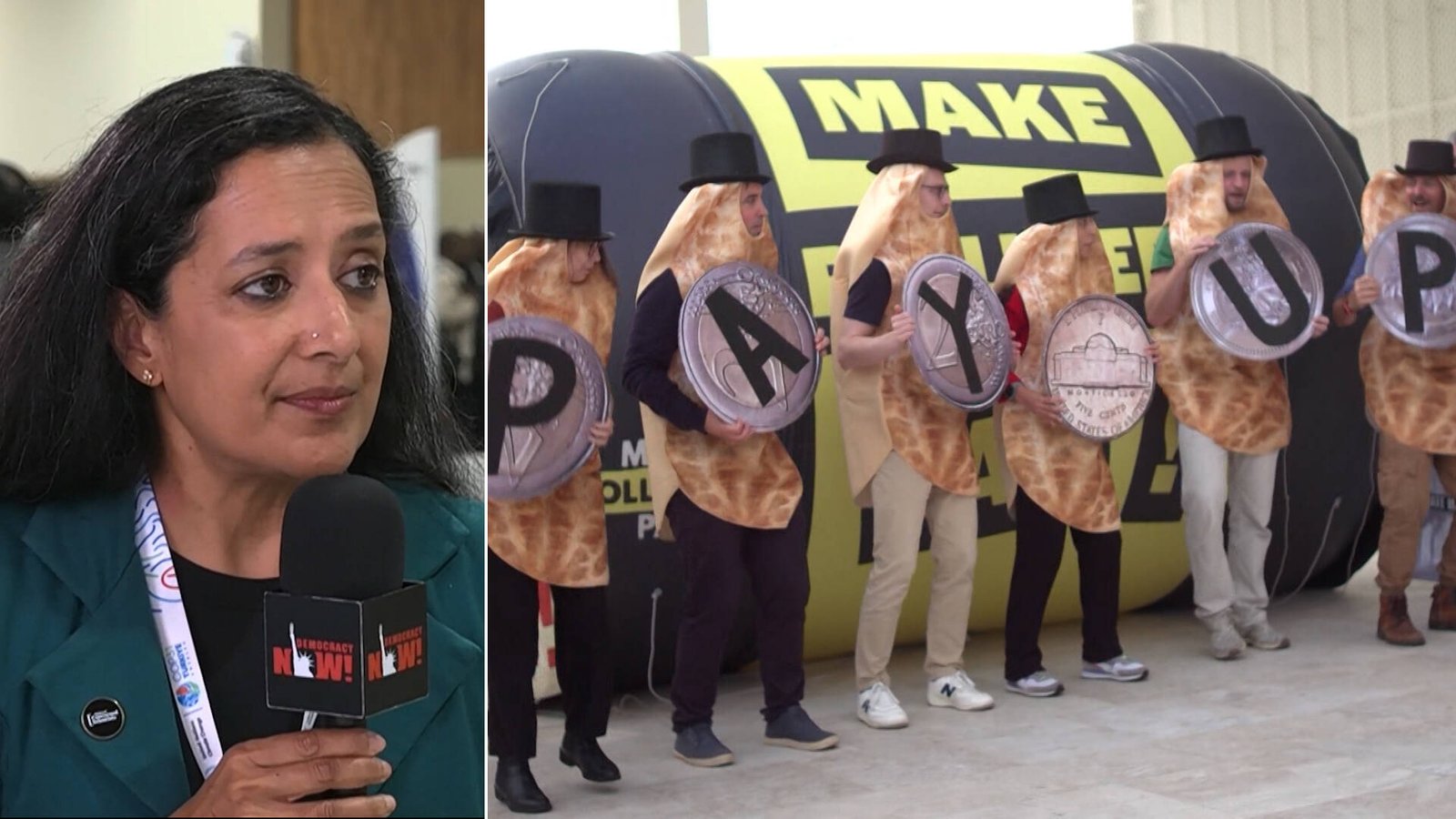
“I don’t think it’s a question of replacing 1.5,” she said. “There is no new number. We are now in the unsafe zone.”
Her comments reflect a growing concern that international climate negotiations risk becoming preoccupied with preserving political language rather than confronting the consequences of inadequate action.
Australia acknowledges the reality
Australia’s Climate Change and Energy Minister Chris Bowen has been among those confronting the difficult arithmetic.
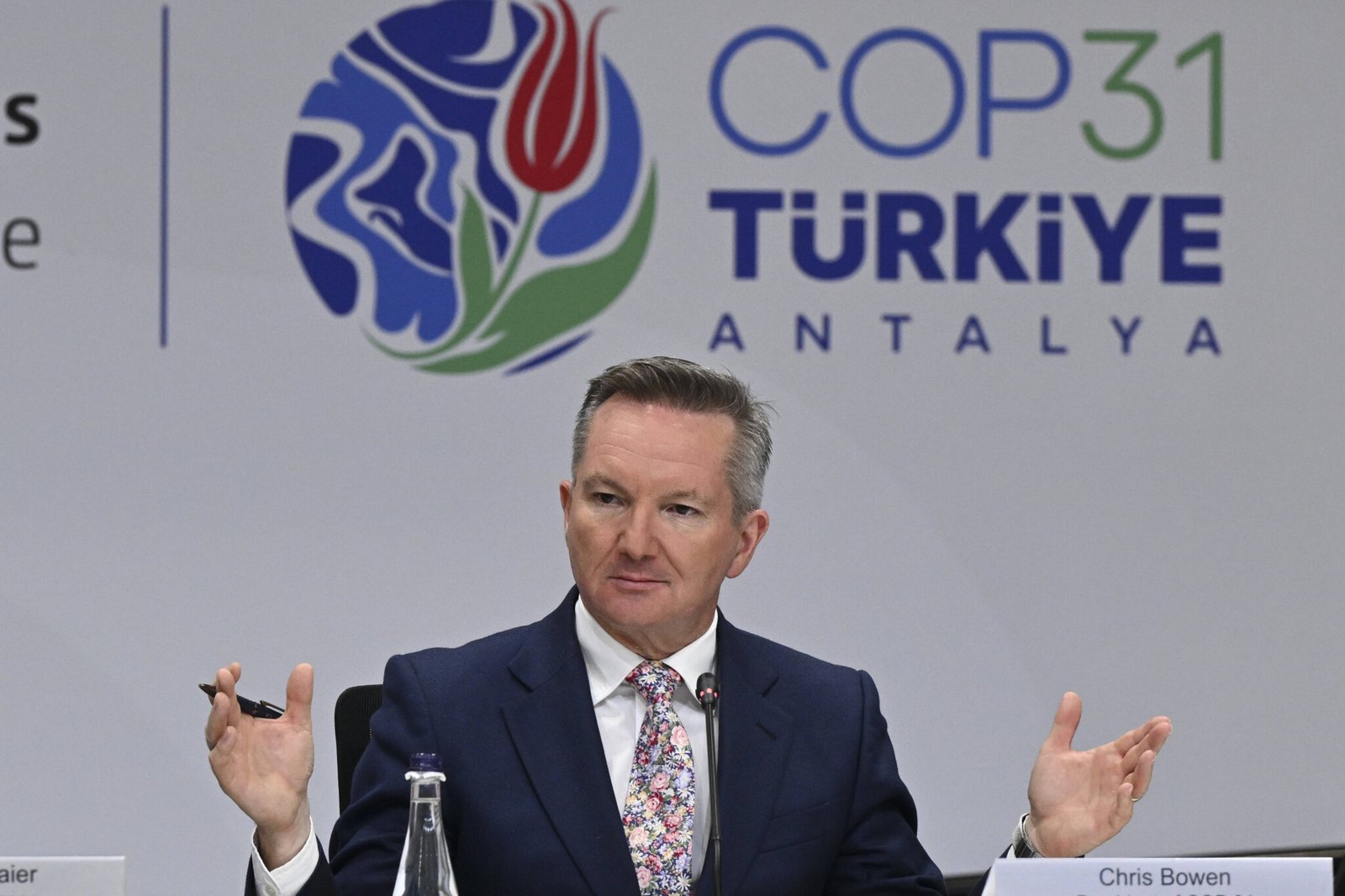
“The world has no chance of holding to 1.5 degrees,” Bowen said.
His statement is significant for Australia, a country increasingly exposed to extreme heat, bushfires, floods, drought and threats to its internationally recognised natural assets, including the Great Barrier Reef.
Australia also occupies an important position in the regional energy transition. Its continued dependence on fossil fuel exports, alongside its ambitions to become a major renewable energy and clean technology supplier, places it at the centre of the debate about how quickly the Asia-Pacific can decarbonise.
The challenge is particularly complicated across Asia, where rapidly growing economies continue to balance industrial development, energy security, employment and rising electricity demand.
China has become a global powerhouse in renewable energy manufacturing, particularly solar panels, batteries and electric vehicles. Meanwhile, countries including Indonesia, Vietnam and India face the challenge of reducing coal dependence while meeting the energy requirements of expanding populations and industries.
For Australia’s neighbours, the transition is not simply an environmental issue. It is also about investment, infrastructure, economic competitiveness and access to affordable energy.
The danger of moving the goalposts
Palau’s Ambassador to the United Nations, Ilana Seid, also rejected the idea of introducing a replacement target.
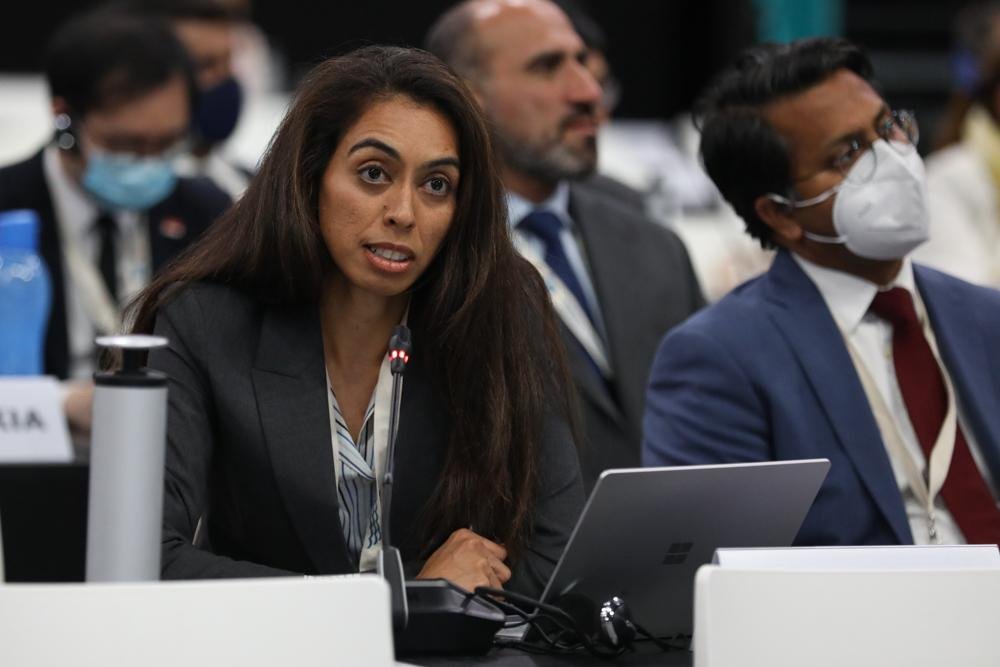
“We don’t think that there’s a new target,” she said. “We still have a Paris Agreement target of 1.5, and so we are still continuing to say that’s the target.”
For vulnerable island nations across the Pacific, the distinction is far from academic.
Rising sea levels, coastal erosion, saltwater contamination of freshwater supplies and increasingly destructive storms threaten communities, infrastructure and, in some cases, the long-term habitability of entire islands.
For these nations, allowing the international community to quietly abandon 1.5°C could be interpreted as accepting a future in which their survival is increasingly compromised by emissions generated elsewhere.
The concern is that resetting the target could normalise higher levels of warming and weaken the urgency of national emissions commitments.
However, retaining 1.5°C on paper does not guarantee that governments will deliver the policies and investment needed to achieve it.
Climate impacts are already being felt
The consequences of rising global temperatures are no longer distant projections.
Across recent years, extreme weather events have demonstrated the vulnerability of communities and economies to a changing climate. Wildfires have devastated landscapes from Canada to Indonesia. Flooding and landslides have destroyed homes and infrastructure, while extreme heat has placed enormous pressure on public health systems.
Europe has also experienced increasingly dangerous heatwaves, with research estimating tens of thousands of heat-related deaths during the 2024 summer.
In Nepal, glacier instability and glacial lake outburst floods have highlighted the growing risks facing mountain communities. In Brazil, devastating floods and landslides have exposed the vulnerability of cities, agriculture and transport infrastructure to extreme rainfall.
These events are not isolated environmental stories. They have economic consequences, affecting insurance markets, food production, supply chains, tourism, public infrastructure and national budgets.
For businesses and investors, climate risk is becoming a financial and operational consideration rather than simply a corporate sustainability issue.
Beyond the 1.5°C debate
COP31 presents an uncomfortable test for international climate diplomacy.
The Paris Agreement remains the framework through which countries have committed to limiting global warming. Its 1.5°C ambition should not be casually discarded. But neither should governments use its continued existence as a substitute for meaningful action.
The priority must now be accelerating emissions reductions, transitioning energy systems, protecting biodiversity, investing in climate resilience and supporting communities already experiencing the consequences of climate change.
For Australia and the wider Asia-Pacific, the stakes are particularly high. The region contains some of the world’s most climate-vulnerable communities, alongside major economies with the capacity to accelerate clean energy investment and technological innovation.
The uncomfortable truth emerging from COP31 is that retaining the 1.5°C target and achieving it are two very different things.
The world may not be ready to officially abandon the ambition established in Paris in 2015. But the climate does not negotiate, and it does not recognise diplomatic language.
The question now is whether governments will act on the reality of a warming world – or continue to defend a target that their policies are failing to deliver.
Check out and sign up for any of our 6 Media Communications training modules: FNGN CLIMAX©MEDIA COMMS ACADEMY
Future Now Green News is an independent forward-thinking digital media platform dedicated to spotlighting the people, projects, and innovations driving the green & blue economy across Australia, Asia and Pacific region. We inform, inspire, and connect change-makers through thought leadership and solutions-focused storytelling in sustainability, clean energy, regenerative tourism, climate action, and future-ready industries.