
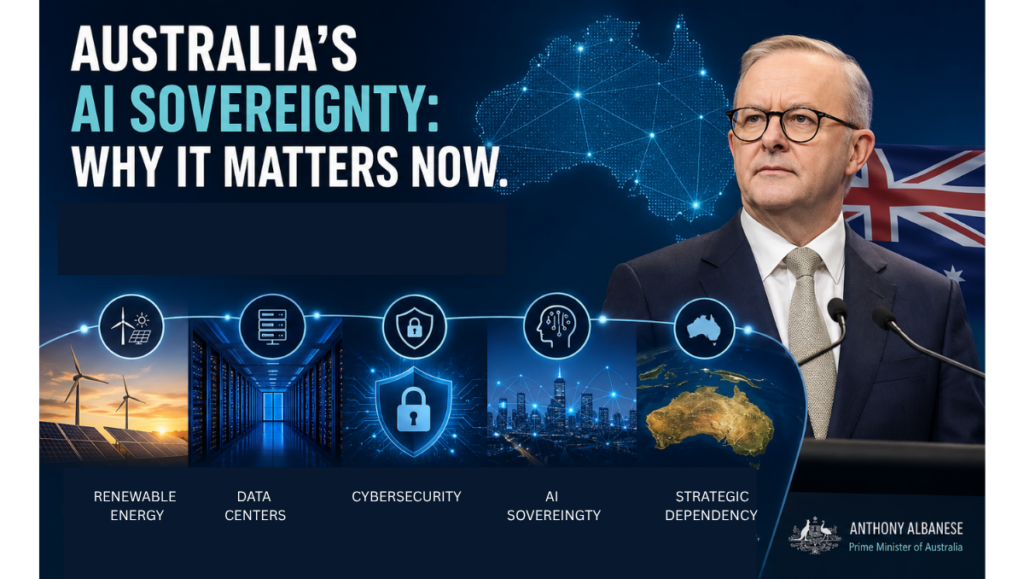

The intersection of AI sovereignty + renewable energy infrastructure + cybersecurity + Data Centres + Australia’s strategic dependency.
I AM HOOKED on Person of Interest TV streaming series. Why? Because it began over a decade ago, and is remarkably farsighted. What starts as a story about Big Brother surveillance, evolves into something that is far more relevant today: ‘a machine’ that does not just watch us – it also predicts behaviour, influences decisions and increasingly shapes the narrative.
The series examines AI governance, mass surveillance, predictive analytics, algorithmic decision-making and the enduring tension between security and privacy. More than a decade later, these are no longer futuristic concepts—they sit at the heart of debates over AI sovereignty, cybersecurity, data centres and national resilience. Science fiction? Increasingly, it’s public policy.
Is AI literally controlling society: or more importantly, who’s controlling the AI systems that increasingly shape what we see, what we know and how we decide.
Australian Prime Minister Anthony Albanese’s recent address at the University of Sydney Ulumni where he studied Economics – “AI in Australia’s Interests”, highlighted that:
 “Australia has a once-in-a-generation opportunity to become a global AI leader”.
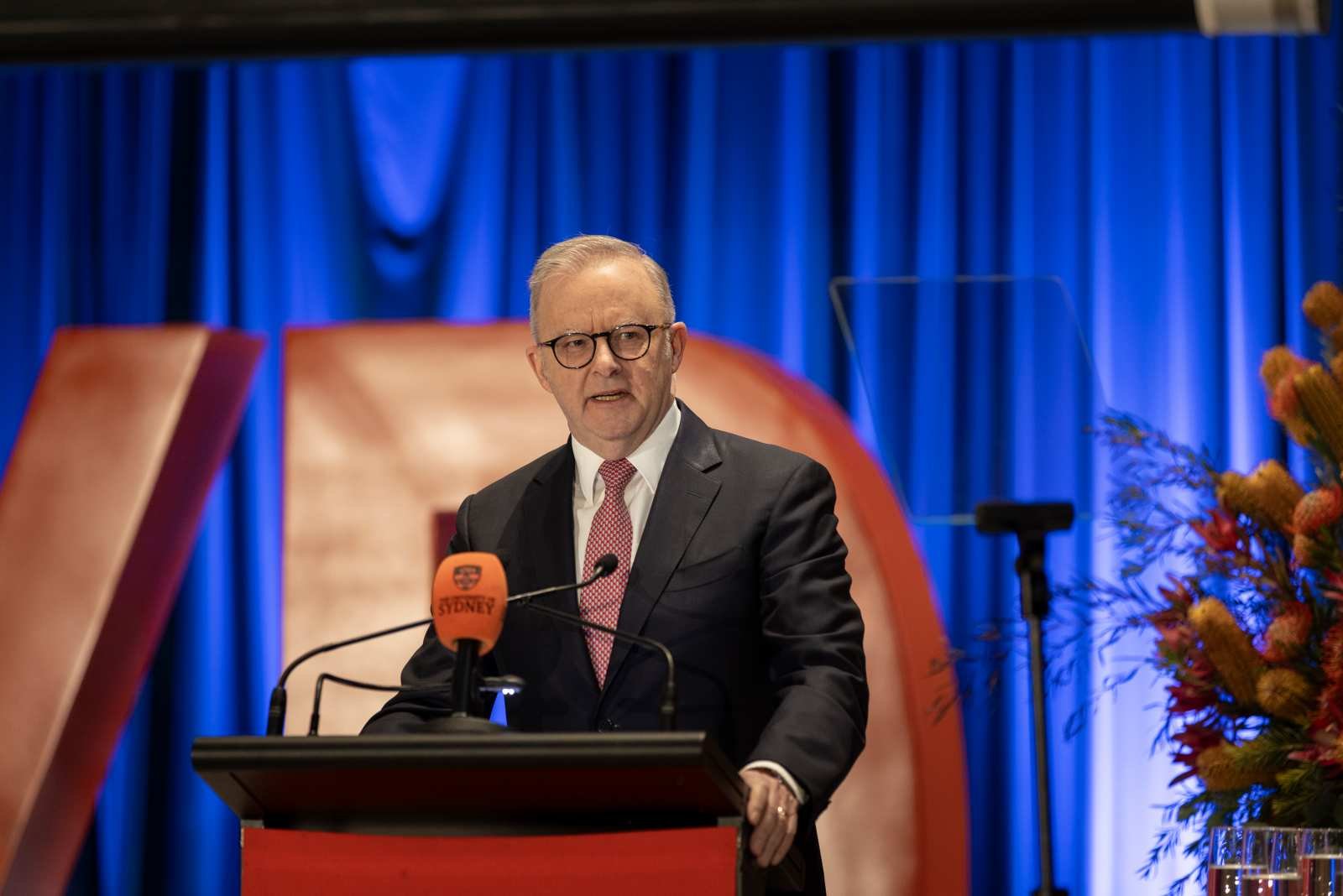
He argued that AI must be developed “on Australia’s terms”, with safeguards protecting national interests, copyright, jobs and critical infrastructure.
The Government has announced a national AI framework, Australian AI Standards, and a dedicated government AI Office to coordinate policy, while encouraging major technology companies to invest in Australia, build sovereign capability and expand local data centres powered by renewable energy.
Australia’s AI ambition: opportunity or dependency?
Australia’s public investment of around AU$300 million over the past five years has focused largely on AI policy development, responsible AI, research programs, business grants, AI safety and standards. But this investment has not built the large-scale AI foundations now defining global competition: supercomputers, hyperscale data centres, sovereign AI cloud capacity and advanced AI infrastructure.
So how does Australia become a global AI leader? The reality is that much of the world’s AI infrastructure is currently being built in the United States, China and increasingly the Middle East.
The global AI infrastructure race
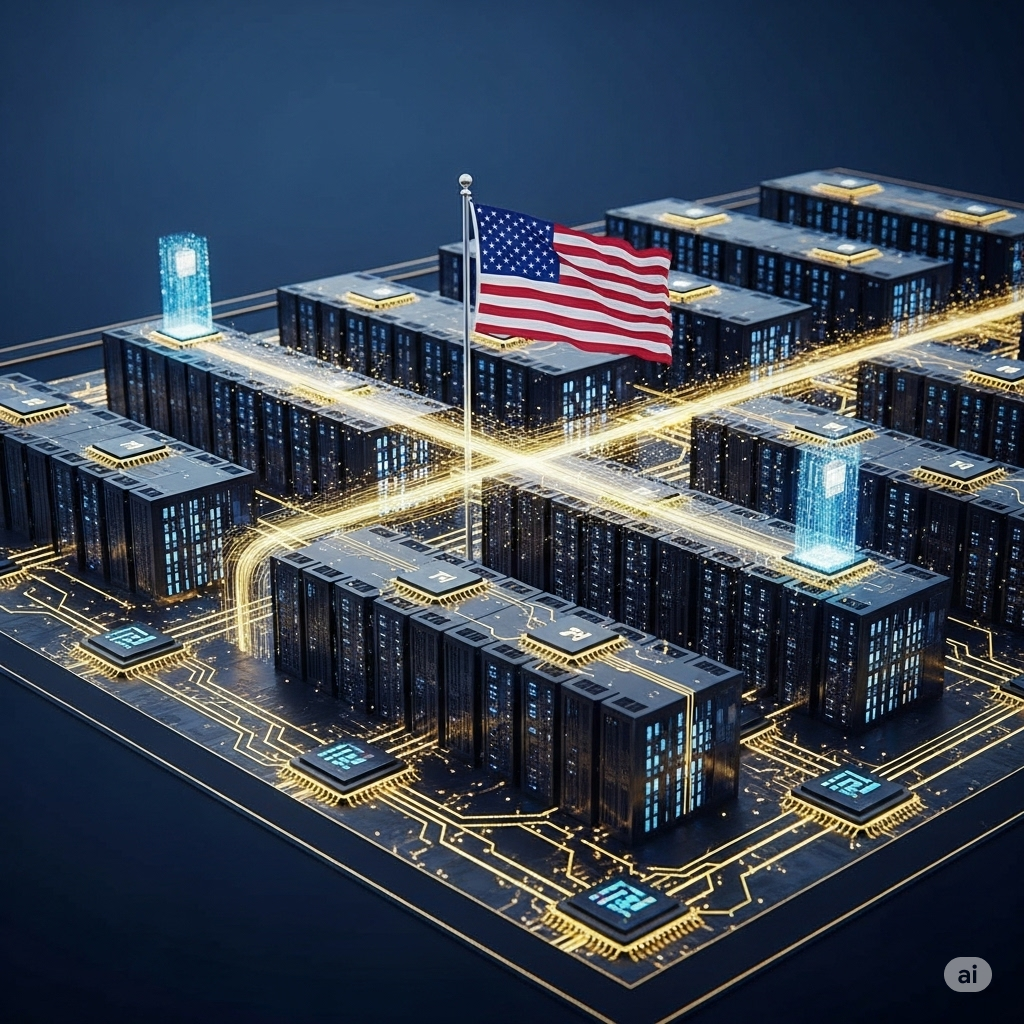
Global AI investment is projected to exceed US$3 trillion in 2026, propelled by mega-programs such as the United States’ US$500 billion (approximately AU$760 billion) Stargate AI infrastructure initiative. The Stargate Project is a joint venture led by SoftBank Group and OpenAI, with Oracle and Abu Dhabi investment fund MGX as initial investors, aiming to build the physical and digital foundations of next-generation AI.
This includes:
- hyperscale AI data centres housing hundreds of thousands of advanced AI chips;
- semiconductor and computing infrastructure;
- energy generation and transmission to power AI facilities;
- high-speed fibre and networking;
- cloud platforms for training and deploying AI models;
- AI research and commercial applications;
- cybersecurity and national security capabilities; and
- workforce development.
The question for Australia is: how can we assure sovereignty of our data and critical systems if the underlying AI infrastructure is increasingly owned offshore?
Momentum is building, but the plan is unfinished
The core ask is government-first. ATSE recommends an incremental $5 billion in government investment over five years, structured around Australian Government-owned “AI factories” built in partnership with state and territory governments, giving 5–7 AI factories as the centrepiece — government-funded hubs with high-performance compute.
The logic is that public money is the trigger, not the total. That $5 billion government investment is projected to attract an additional $27–49 billion in private capital — a roughly 6–10x multiplier. Government involvement is seen as necessary to trigger large-scale private sector investment in the first place; without the public anchor, ATSE doesn’t expect the private capital to mobilise at scale on its own.
The downside case if government doesn’t act: without decisive government action, the GDP impact could be limited to around $85 billion, leaving up to $160 billion of potential value unrealised.
Private capital is already moving, but on foreign terms. Amazon has announced it will expand its Sydney and Melbourne data centres at a cost of $20 billion, and Microsoft committed $5 billion to Australian data centres in 2023 — real money, but from US hyperscalers, not sovereign infrastructure. ATSE frames this as the risk: without strategic public investment, Australia risks sending its comparative advantages offshore and becoming dependent on foreign technologies, infrastructure and governance models, losing control — which loops back directly to your opening sovereignty question.
Australia’s Department of Industry, Science and Resources forecasts that Australian data centre capacity could roughly double this decade, with projected investment reaching around AU$26 billion by 2030.
However, analysts point to a missing piece: a clear national strategy for building sovereign compute and AI training capability, rather than simply hosting infrastructure owned and controlled elsewhere.
Comparable middle powers including the UK, Canada, Japan and South Korea are already investing in domestic computing capability and AI programs.
Without a stronger strategy, Australia risks becoming a permanent customer of someone else’s technology stack and paying for access to a capability it never built.
The economic opportunity
The Australian Academy of Technological Sciences and Engineering (ATSE) report , “Unleashing Growth: Australia’s AI Investment Blueprint” (Nov 2025); found that Australia has invested more than ten times less per capita than leading economies in the foundations of AI sovereignty.
These foundations include:
- AI talent pipelines;
- computing infrastructure;
- sovereign models and datasets;
- fit-for-purpose regulation; and
- regional-scale “AI factories”.
ATSE estimates that a major investment push across the AI ecosystem could increase Australia’s GDP by 6–8%, adding an estimated AU$160–235 billion by 2034.
AI sovereignty meets energy security
Australia’s approach to AI sovereignty must also be viewed alongside its approach to cybersecurity in the energy transition. For technologies such as EVs, wind turbines, battery energy storage systems (BESS), solar inverters and critical infrastructure, cybersecurity risks remain a major policy challenge.
Former Cyber Security Minister Clare O’Neil warned in 2024 that increasingly digitised energy networks using smart inverters, IoT sensors and connected systems, mean one compromised component could potentially affect an entire network.
“We can’t continue to build critical infrastructure with technology we don’t trust. Cybersecurity and energy policy are now intrinsically linked.”
Australian industry and investors are increasingly calling for cybersecurity checks to become as routine as electrical safety testing — with independent testing, verification and continuous monitoring from secure-by-design development through to supply-chain audits and compliance with standards such as IEC 62443 and ISO/SAE 21434.
Rather than relying solely on manufacturers’ claims, governments and asset owners are moving towards independent certification to identify vulnerabilities before deployment.
This debate is already playing out in Australia’s clean energy sector. The challenge for Australia is balancing energy transition speed with cybersecurity resilience.
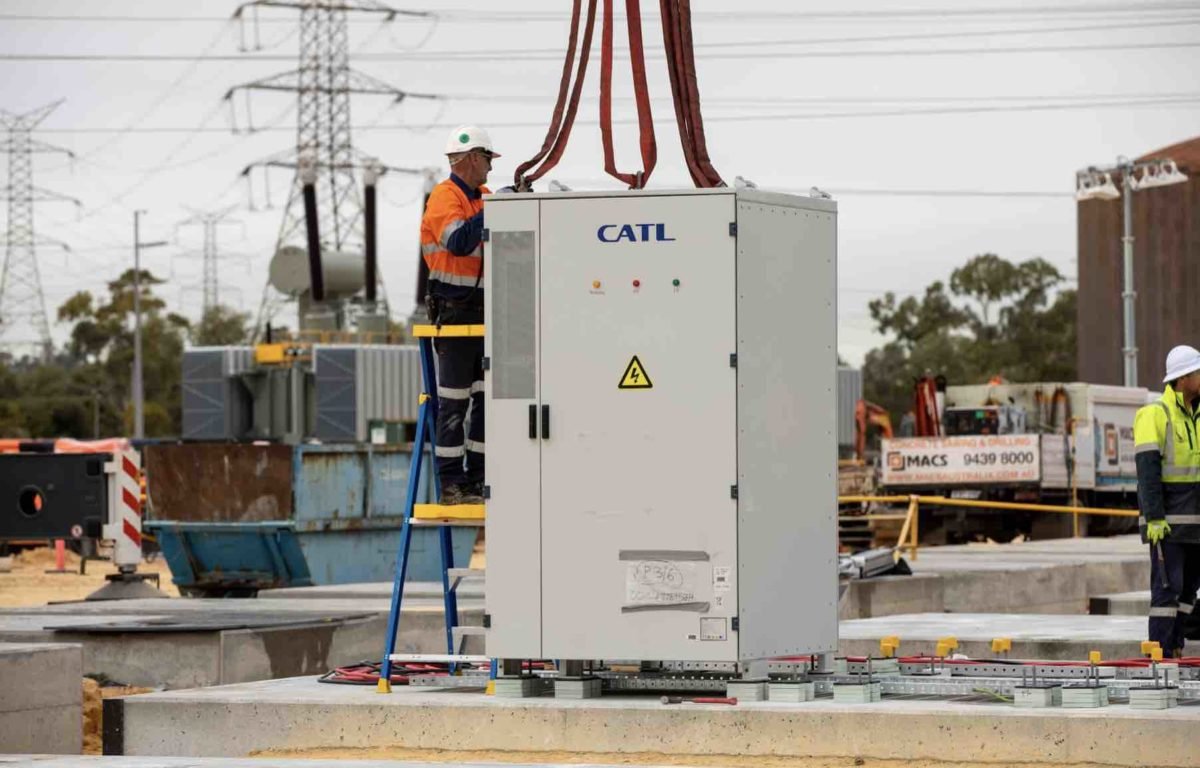
The Western Australian Government has awarded contracts worth more than A$1 billion to Chinese battery giant **Contemporary Amperex Technology Co. Limited (CATL) to supply battery energy storage systems for two of the nation’s largest grid-scale battery projects.
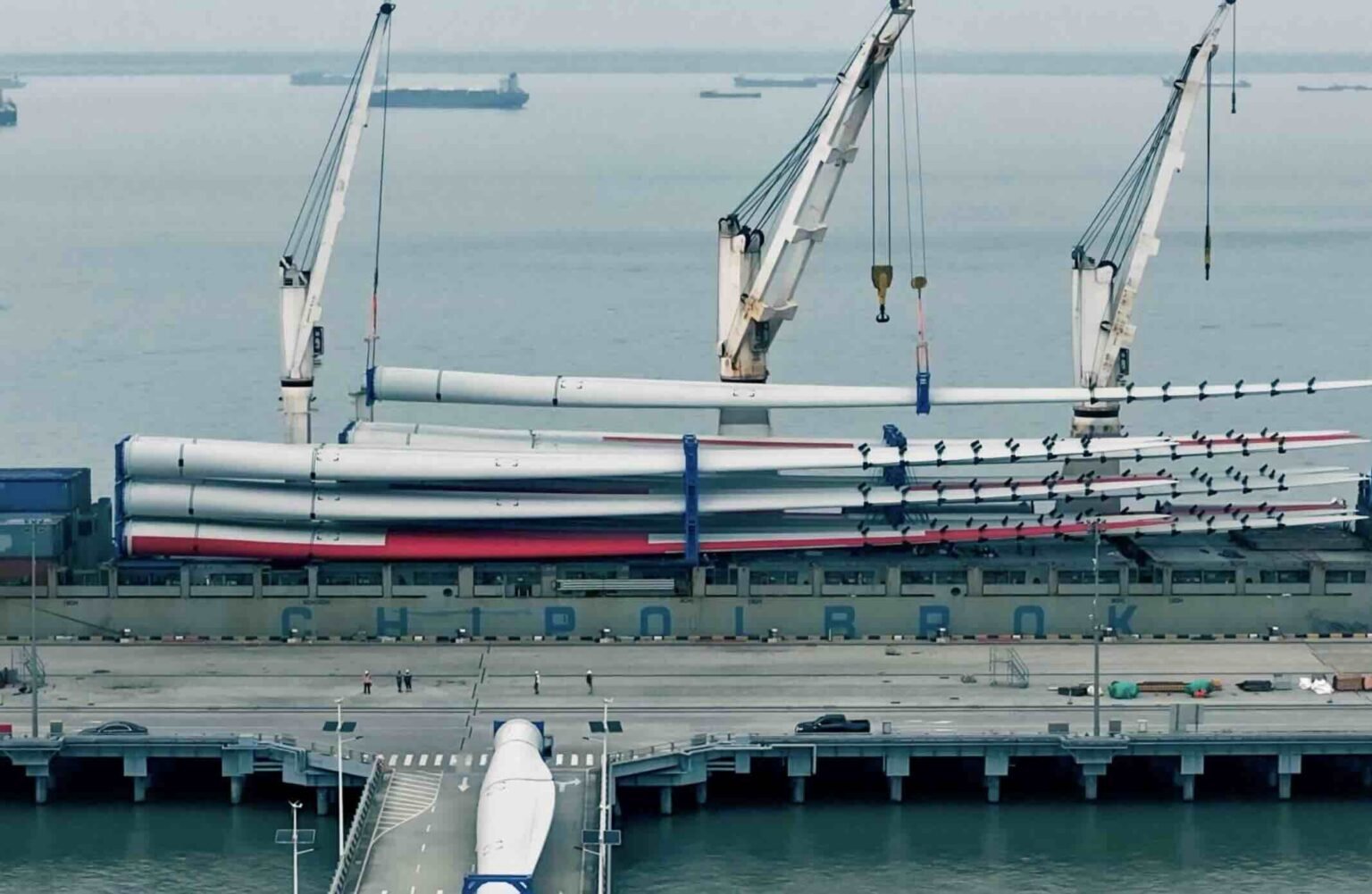
Chinese battery manufacturer CATL is deeply embedded in Australia’s BESS market, while Western Australia Fortescue partnering with Envision has selected Chinese-manufactured wind turbine technology, including some of the largest turbine blades deployed in Australia at approximately 89 metres. For Fortescue, the technology supports its Green Energy and Metals (GEM) strategy to decarbonise mining operations and develop green hydrogen and green products.The reason is practical: China currently dominates global clean energy manufacturing, offering scale, price competitiveness and delivery capability that few alternatives can match.
Australia’s updated Critical Infrastructure Risk Management Program Rules will also expand oversight of AI, supply chains and legacy technology, with implementation rolling out across 2027 and 2028.
A two-speed global economy
AI is reshaping the world economy in two distinct ways.
First, it is transforming the existing economy — improving productivity across industries through automation, better decision-making and efficiency gains.
Second, it is creating an entirely new AI economy: foundation models, applications, data centres, specialised chips and digital infrastructure.
Countries that shape both sides of this equation will capture the greatest economic value.
Why “sovereign” is the operative word
AI sovereignty is not about Australia building a local rival to the world’s largest frontier AI laboratories.
It is about ensuring Australia — and its regional partners — retain enough talent, computing power, data capability and governance expertise to capture value from AI rather than simply renting access from others.
The argument is not about rejecting global partnerships. It is about ensuring Australia has enough capability, resilience and bargaining power.
How does Person of Interest play out?
Perhaps the greatest lesson from Person of Interest is that technology itself is not the only issue.
The bigger question is: who designs it, who governs it, who benefits from it, and who controls the infrastructure behind it?
The investment gap is real and documented.
But ultimately, the defining question for Australia is whether it helps build the AI systems shaping its economy, security and national identity — or whether it becomes dependent on those built elsewhere.
Sources: ATSE, “Unleashing Growth: Australia’s AI Investment Blueprint” (Nov 2025); Department of Industry, Science and Resources; Australian Strategic Policy Institute (The Strategist); Australian Academy of Science; SafeAI-Aus policy tracker. https://www.atse.org.au/media/vkll0utx/251210-unleashing-growth-australias-ai-investment-blueprint.pdf
Check out and signup for any of our 6 Media Communications training programs: FNGN CLIMAX©MEDIA COMMS ACADEMY
Future Now Green News is a forward-thinking media platform dedicated to spotlighting the people, projects, and innovations driving the green & blue economy across Australia, Asia and Pacific region. Our mission is to inform, inspire, and connect changemakers through thought leadership and solutions-focused storytelling in sustainability, clean energy, regenerative tourism, climate action, and future-ready industries.