
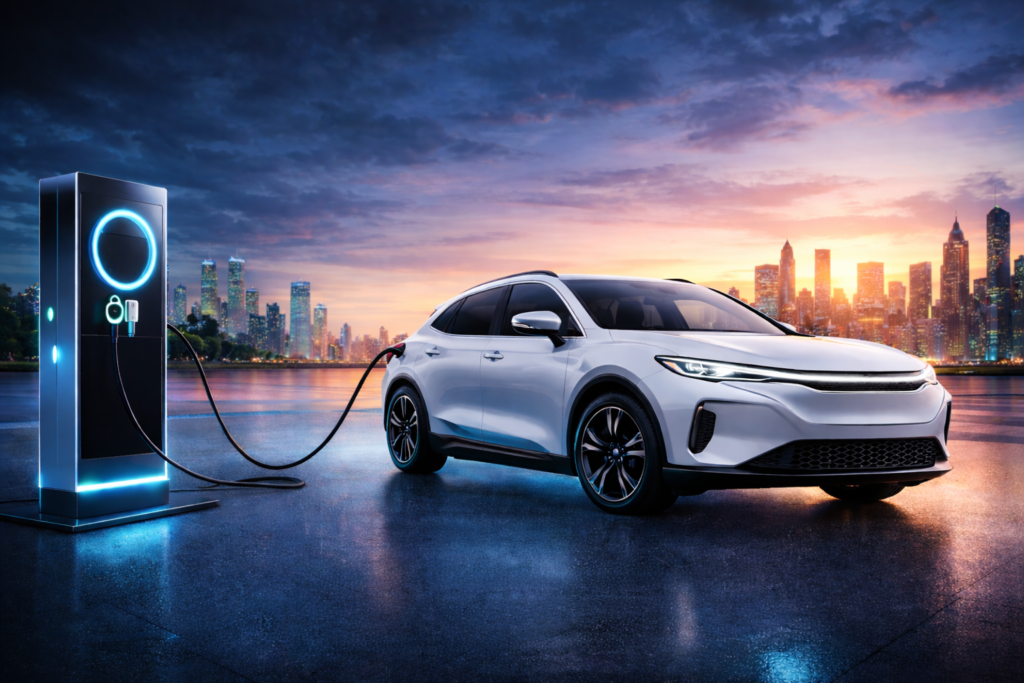

SOMETIMES the energy transition doesn’t arrive through policy, persuasion or a neatly packaged marketing campaign.
Sometimes it arrives through failure.
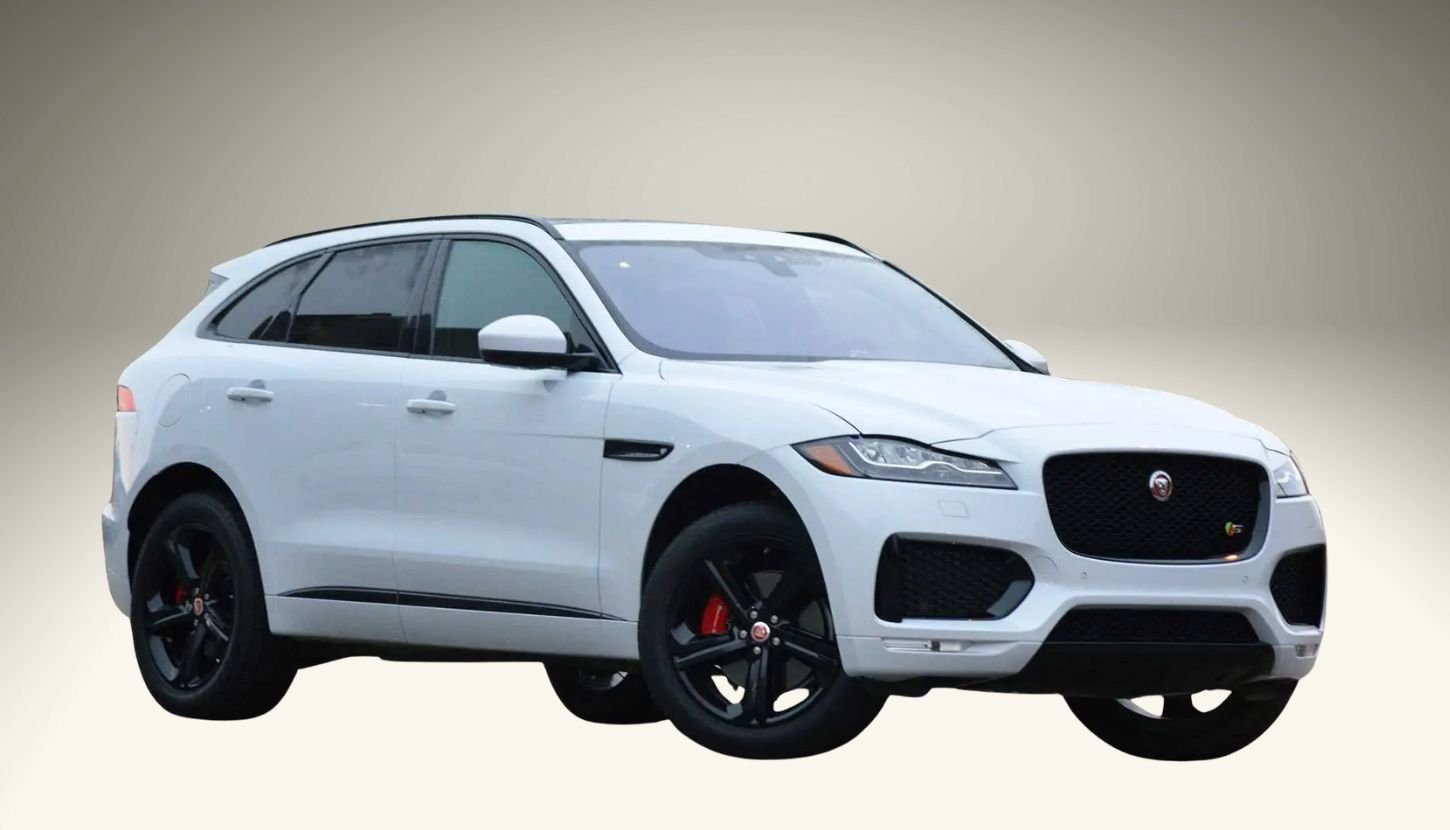
In my case, it was a diesel Jaguar F-Pace that finally gave up before reaching 200,000 kilometres, after a string of expensive mechanical visits and replacement parts tied to what many owners now recognise as a common issue with that engine.
The experience was more than inconvenient. It was draining… and not in ways Jaguar’s engineers intended.
There’s a particular kind of fatigue that comes from returning to the same problem, being told it has been fixed, and finding yourself back where you started, only poorer. That was before an encounter with a dealership in Melbourne’s eastern suburbs that raised further questions about how these issues are handled.
The Jaguar went.
That decision had nothing to do with environmental ideals. It was practical. I had had enough. And so had the car…. it died a premature death.
The moment perception starts to shift
Late last year I found myself at Everything Electric Melbourne, an event designed to showcase electric vehicles and the infrastructure building around them.
The striking thing was not the technology on display but rather the behaviour of the crowd.
People were there to check for themselves, they weren’t there to be convinced, because much of the EV debate still plays out in abstract terms — range, charging networks, upfront cost — while the experience of the product sits somewhere else entirely.
That gap came into focus during a panel discussion on the pace of Australia’s EV transition.
The real barrier isn’t engineering
“The issue now is not technological,” said Bjorn Siem from the Electric Vehicle Council. “It’s psychological.”
It is a line that could easily be dismissed as industry optimism. The data, though, supports it.
The Electric Vehicle Council’s 2025 ownership survey, conducted with the University of Sydney and drawing on around 1,800 Australian EV owners, shows a consistent pattern: many of the concerns that dominate the conversation before purchase fall away after it. Range anxiety drops. Concerns about charging ease. Even cost perceptions begin to shift once people actually live with the vehicle.
The barrier, in other words, is no longer whether the technology works. It is whether people trust that it does.
Technology is moving faster than the narrative
One of the more curious aspects of the EV debate is how far behind the public conversation now sits.
Battery technology is improving quickly, charging speeds are increasing, and the range of available models has expanded significantly in a short period.
BYD has promoted battery developments capable of adding substantial range in minutes under optimal conditions, while some models now claim ranges approaching or exceeding 1,000 kilometres. Those numbers need to be treated carefully — they are based on controlled testing cycles, not the variability of real-world driving. Speed, terrain, temperature and driving style all influence outcomes. Independent Australian testing has already shown that actual range can fall short of official figures.
But focusing too heavily on the headline number misses the point. Most drivers do not need 1,000 kilometres of range. They need a vehicle that comfortably handles daily use, with enough flexibility for occasional longer trips. For a growing number of Australians, that threshold has already been crossed.
The economics are changing quietly — and then suddenly
The survey data is less ambiguous when it comes to running costs. Seventy per cent of EV owners reported reducing fuel costs by more than 60 per cent. Nearly three-quarters spend less than $300 per year on maintenance.
That reflects a mechanical reality rather than a marketing claim. Electric vehicles remove many of the components that drive servicing costs in internal combustion engines: no oil system to maintain, fewer moving parts, less routine servicing.
For many households, the financial case becomes clearer after ownership begins, not before.
And then the world intervened.
Since US and Israeli strikes on Iran began on 28 February, the closure of the Strait of Hormuz has sent shockwaves through global oil markets.
Brent crude surged to around $120 a barrel as the conflict deepened and markets began pricing in the risk of sustained disruption.
In Australia, analysts estimated petrol prices could jump by around 40 cents a litre (enough to add roughly $24 to a standard 60-litre fill).
Sydney’s average regular unleaded price has risen nearly a dollar per litre from its February low, with diesel now averaging above $3.22 a litre.
Prime Minister Albanese moved to halve the fuel excise by 26 cents a litre, a relief measure that critics noted barely covered the price rise of the previous two weeks alone.
For the EV owner, this is the counterfactual made vivid. Every time someone drives past a bowser showing $2.50 a litre — or worse, finds it out of stock — they are looking at a cost they are no longer paying.
Charging happens at home
Public charging infrastructure continues to attract attention, but it is not how most EV owners actually operate.
According to the survey, 93 per cent of owners charge at home, and most had done so within the previous week. Rather than relying on external refuelling stations, cars become part of the household energy system — charged overnight, often without much thought.
The connection becomes more interesting when paired with solar. The survey found that 80 per cent of EV-owning households also have rooftop solar, allowing vehicles to run, at least in part, on self-generated energy.
It is a different model of consumption, and one that becomes structurally insulated from the kind of supply shock now playing out in real time.
A subscription that is paying for itself
Alternative ownership models were already gaining traction before the conflict. Subscription offerings from AGL Energy bundle registration, insurance, servicing and roadside assistance into a single monthly cost (reducing exposure to resale risk and unexpected maintenance).
For novated users, the subscription cost can also cover regular maintenance, tyres and consumables under its standard inclusions, while charging costs remain separate. The appeal is obvious. For businesses or employees wanting to move into an EV without taking a punt on resale, servicing surprises or the usual ownership headaches, it turns the question from “Should I buy this car?” into “Why not try it properly for a while?”
In a market still wrestling with myths, that kind of low-friction entry point is not just commercially clever. It is strategically smart.
That proposition looks especially good right now.
When fuel costs surge by a dollar a litre, the savings embedded in an EV subscription become something more than a convenience calculation. For a driver who previously spent $250 to $300 a month at the bowser and now charges overnight, largely powered by rooftop solar generated during the day, the subscription is not just covering its own costs — it is coming out ahead. The arithmetic has shifted in a way that no amount of brand messaging could have manufactured.
The Hormuz crisis did not create that case, but it has made it impossible to ignore.
The persistence of doubt
Despite this, hesitation remains.
Misinformation continues to circulate, particularly around battery safety, charging reliability and long-term ownership costs. Some of it is outdated. Some of it reflects genuine uncertainty in a market still finding its footing.
Resale value is a legitimate concern. There have been cases of sharp depreciation, particularly among early or premium EV models, and changes in new vehicle pricing have affected the second-hand market. But the data is not uniform — some vehicles have held their value better than expected, and concerns about battery degradation have often been overstated relative to real-world performance.
The subscription model addresses some of this directly: instead of committing to ownership, drivers can spend time with the vehicle and make a judgment based on experience.
Which is where the conversation increasingly leads.
CHECK OUT ‘EV SHIFT ACCELERATES AS COSTS FALL AND CHARGING JUMPS’
Experience changes the conversation
The most consistent insight from both the survey and the event was how quickly perceptions shift once people spend time with an EV. Concerns that feel significant beforehand tend to diminish through use.
That was evident at Everything Electric as people were working things out for themselves.
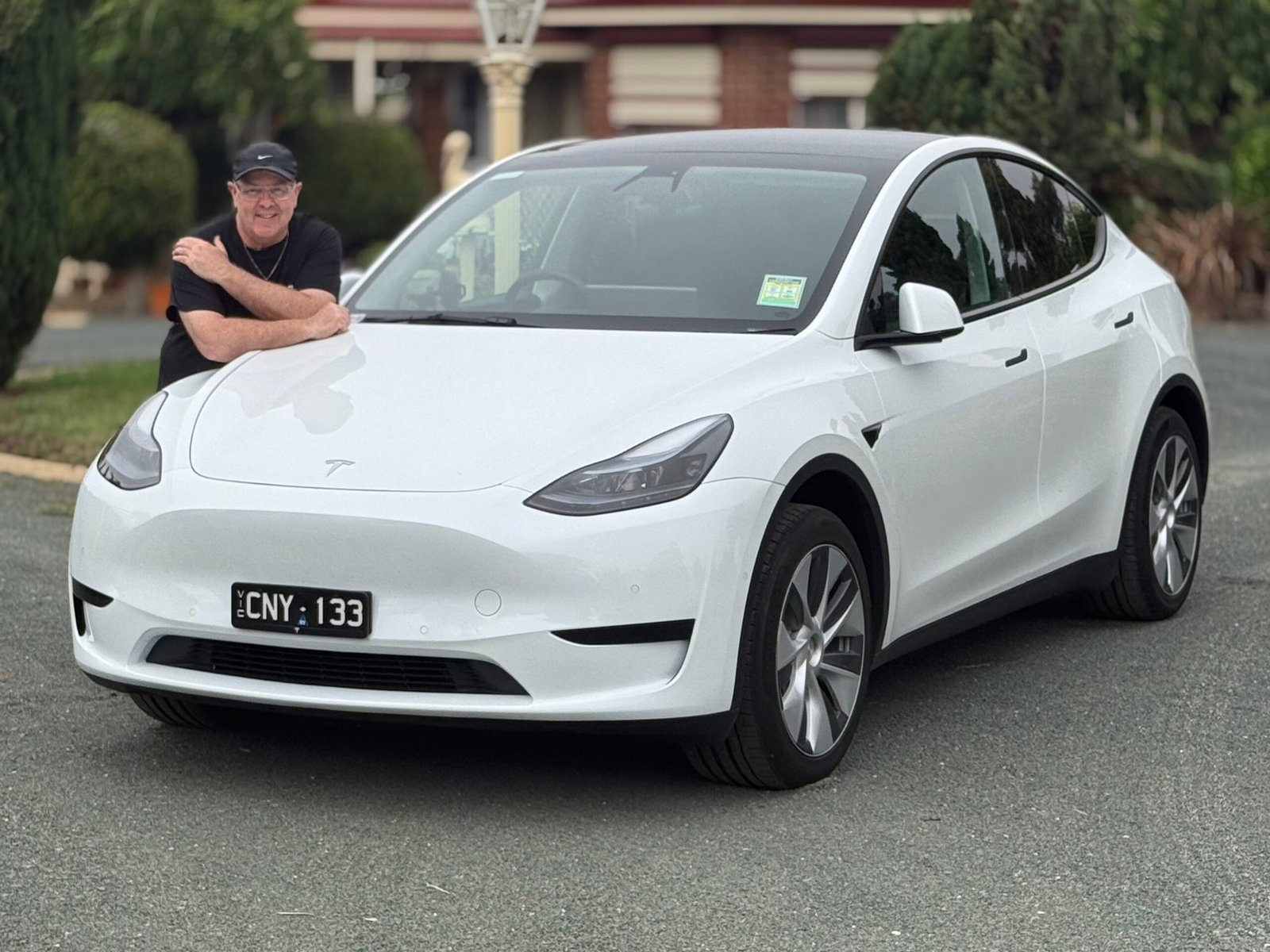
After the experience of owning a diesel SUV that delivered more problems than performance, that shift felt less like a leap and more like a correction. And with petrol now a geopolitical commodity — rationed at some regional stations, subject to wartime excise relief, and tied to a conflict that the IEA has described as the greatest global energy security challenge in history — the correction feels overdue.
A quieter kind of transition… until it isn’t
The energy transition is often framed as a major disruption. In practice, much of it is incremental: People change vehicles, adjust routines, and they stop visiting petrol stations.
And then, after a while, it becomes normal.
What the events of the past month have clarified is that the real disruption was always on the other side of the equation. Not the grid, not the charging infrastructure, not the range. The disruption was a global supply chain built on a single chokepoint, and the assumption that it would hold.
For those who made the switch before the bowser hit $2.50, the timing looks, in retrospect, considerably better than they knew.
Future Now Green News is a forward-thinking B2B media platform dedicated to spotlighting the people, projects, and innovations driving the green & blue economy across Australia, Asia and Pacific region. Our mission is to inform, inspire, and connect changemakers through thought leadership, investigative journalism and storytelling in sustainability, clean energy, regenerative tourism, climate action, and future-ready industries.