

The Textile industry contributes 8% of global emissons.
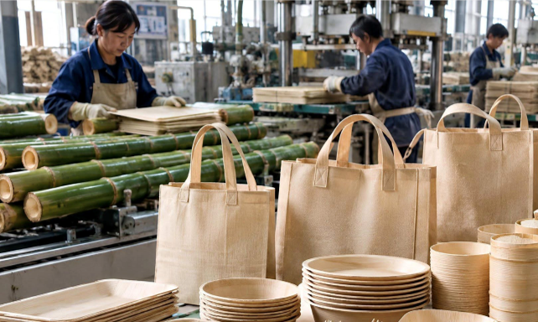
The global textile industry produces 600bil metres of fabric a year – 92mil tons with 87% going to landfill, and 79tril liters of water – and almost all of it is dyed using processes that are water-intensive, chemical-heavy, and emissions-generating.
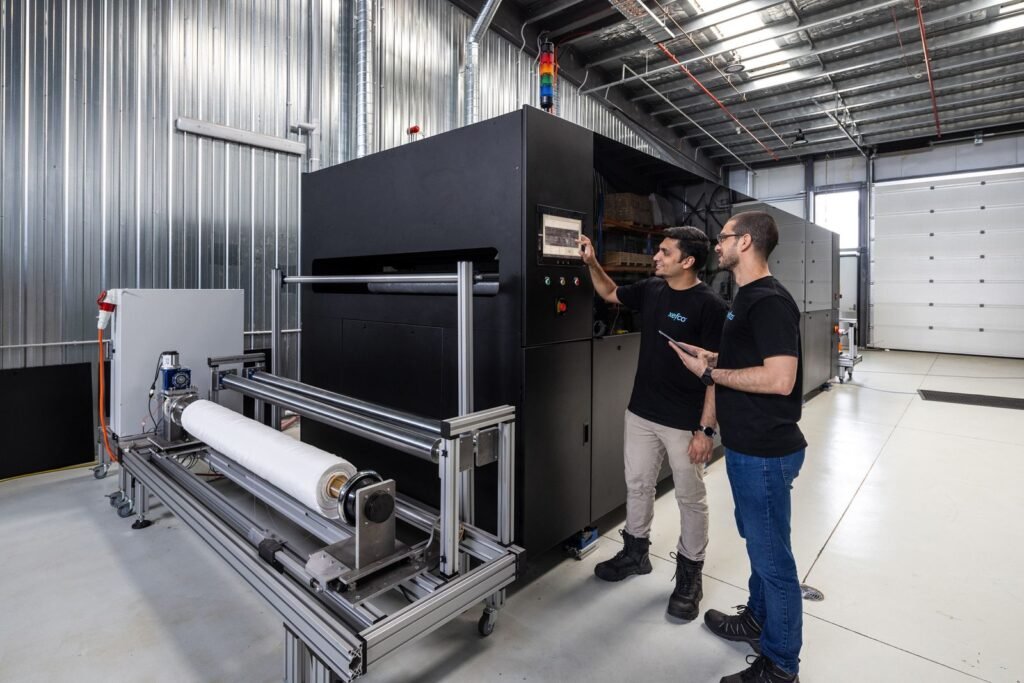
Xefco just changed that. 97% fewer chemicals. 90% less energy. 94% fewer emissions. Zero wastewater.
This milestone is backed by a $5M Australian Government Industry Growth Program grant — and 12 commercially committed units with a strong global pipeline. CEO Tom Hussey and the team have built something genuinely world-first, manufactured in Geelong, scaling globally.
XEFCO is explicitly positioning Ausora® as a manufacturing-scale system, designed for integration into existing textile production lines rather than replacing entire factories. That approach is critical for adoption in regions like Southeast Asia, where textile infrastructure is already deeply embedded and highly cost-sensitive.
Indonesia’s role in this rollout is also strategic.
The country is one of the top global textile and garment exporters, supplying major international brands. It also faces increasing domestic pressure around industrial wastewater discharge and energy consumption in manufacturing zones. A system that removes wastewater entirely while reducing energy demand could materially alter compliance and operating costs for mills.
Beyond the environmental metrics, the broader implication is competitive.
Textile manufacturers adopting lower-impact dyeing technologies could gain preferential access to export markets where carbon reporting and sustainability disclosures are becoming mandatory. Europe’s regulatory tightening on supply chain emissions, along with evolving procurement standards from global fashion brands, is accelerating that shift.
Xefco’s manufacturing base in Geelong, Victoria, also reflects a broader narrative in Australian advanced manufacturing.
Exporting deep-tech industrial systems rather than raw materials or traditional goods is an Australian first. Xefco company is part of a growing cohort of climate-focused engineering firms attempting to commercialise breakthroughs in energy, materials, and process innovation.
While the company has not publicly disclosed full customer identities or pricing structures for the Ausora® system, it has indicated strong international demand across multiple textile-producing regions. The Indonesia deployment is understood to be the first of several commercial rollouts as production capacity scales.
Still, the real test will be sustained industrial performance. Textile manufacturers operate on thin margins, and any new system must compete not only on sustainability metrics but also on uptime, maintenance complexity, and cost per metre of fabric produced.
For now, the shift is symbolic as much as technical. A sector long criticised for its environmental footprint is beginning to see commercially viable alternatives that do not rely on incremental efficiency gains alone, but on re-engineering the process itself.
If systems like Ausora® can deliver consistently at scale, the implications extend beyond textiles. They point to a broader transition in industrial manufacturing—where decarbonisation is achieved not through offsets or optimisation, but through redesign.
More About XEFCO
Future Now Green News is a forward-thinking B2B media platform dedicated to spotlighting the people, projects, and innovations driving the green & blue economy across Australia, Asia and Pacific region. Our mission is to inform, inspire, and connect changemakers through thought leadership, investigative journalism and storytelling in sustainability, clean energy, regenerative tourism, climate action, and future-ready industries.