
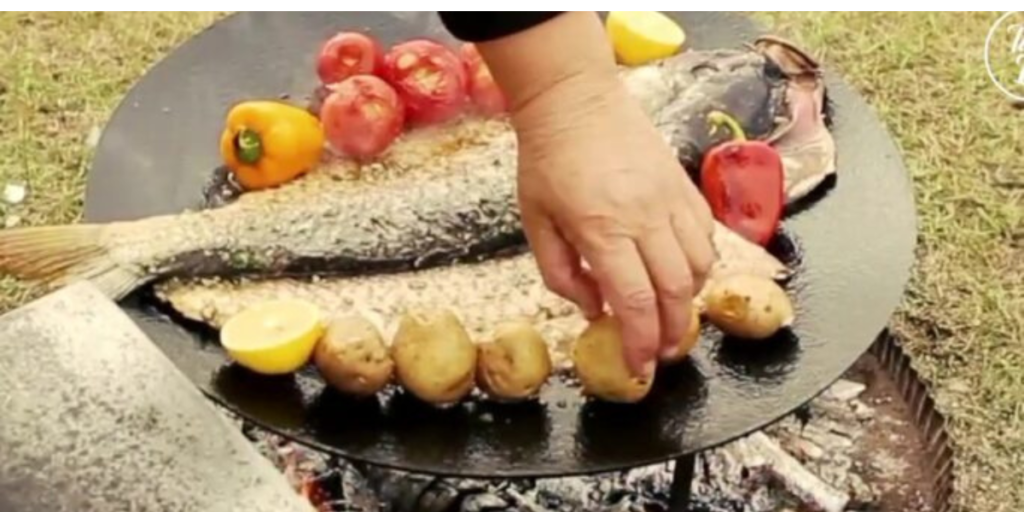

New Commercial Carp Harvesting could transform a crisis into an opportunity- and Jobs.
IN AUSTRALIA, carp are still widely viewed as biologically toxic, commercially useless and culturally undesirable. Why Are Australian’s fish-bias?
In countries such as Poland, Croatia, Hungary, Serbia and China, carp farming and processing support regional economies, fisheries, restaurants and export industries.
Carp were first introduced into Australia the 1800s, but it was only with “the Boolarra strain” that populations exploded in the basin in the early 1970s, propelled by floods. For decades, carp have been cast as the environmental villain of the Murray–Darling Basin.
The population of Carp are now at an all-time high of around 375 million fish, accounting for approximately 90% of the entire fish biomass in the Murray-Darling Basin. Studies estimate carp impacts cost the Australian economy between $11.8 million and $500 million per year, covering water quality, ecological damage, and downstream infrastructure costs.
The invasive fish became the convenient face of muddy rivers, disappearing native species, toxic algal blooms and catastrophic fish kills. In Australian politics and media, “killing carp” evolved into shorthand for “saving the river.”
But a growing number of scientists, ecologists and commentators argue the national debate risks dangerously oversimplifying a far deeper ecological collapse.
One of the strongest recent critiques came from writer Roy Palmer, CEO of Seafood Consumers Association, in his article “Carp, the last fish swimming: The myths of the Murray-Darling Basin”. Palmer argues carp are increasingly blamed for environmental destruction largely caused by humans themselves.
 The reality is that carp did not remove the snags and trees that provided vital habitat,” Palmer wrote. “They did not cut down the forests… [or] introduce the excessive nutrients, synthetic fertilisers, and pesticides that now choke our waterways.”
“The last fish swimming”
Palmer’s phrase — “the last fish swimming” — captures a grim ecological reality.
When rivers become degraded, simplified and unstable, resilient invasive species often dominate. Carp tolerate warm, muddy, oxygen-poor water conditions better than many native fish. Those conditions are becoming increasingly common across sections of the Basin as climate extremes intensify. In other words, carp may not simply be destroying the system. They may also be exposing how damaged the system already is. That distinction matters because public policy built around a single villain can create false expectations.
Killing carp does not automatically restore wetlands. It does not rebuild floodplain forests. It does not reconnect rivers. It does not reverse decades of over-allocation of water. And it does not solve climate instability.
It is an uncomfortable argument because it shifts responsibility away from an invasive species and back onto governments, water management systems, industrial agriculture and decades of ecological degradation.
And increasingly, evidence suggests Palmer may be right.
The carp herpesvirus “solution”
At the centre of Australia’s anti-carp strategy sits one of the world’s most ambitious biological control proposals: the planned release of Cyprinid herpesvirus-3, commonly called carp herpesvirus or CyHV-3.
The virus has been researched for years under the National Carp Control Plan as a possible large-scale biological weapon against carp populations across the Basin.
Supporters argue the virus could reduce carp numbers dramatically — potentially by more than 60 per cent in some waterways — and provide long-awaited relief for native ecosystems.
The logic is simple: less carp equals healthier rivers
But critics argue the herpesvirus proposal risks becoming ecological theatre — a highly visible intervention that may fail to address the underlying causes of river decline.
Mass carp die-offs could create enormous cleanup problems, oxygen depletion and secondary fish kills. Millions of rotting fish across floodplains and riverbanks could become both an environmental and logistical nightmare.
More importantly, opponents ask a larger question:
Why destroy a biomass that could instead become an industry?
From “pest fish” to food economy
Across Europe and Asia, carp are not regarded as worthless pests.
They are food.
In Greece and parts of Eastern Europe, carp has long been part of traditional cuisine, particularly during religious fasting periods when seafood replaces meat. Carp dishes are baked, grilled, smoked or prepared in rich tomato and herb-based recipes.
In countries such as Poland, Croatia, Hungary, Serbia and China, carp farming and processing support regional economies, fisheries, restaurants and export industries.
Yet in Australia, carp are still widely viewed as biologically toxic, commercially useless and culturally undesirable. That perception is beginning to change.
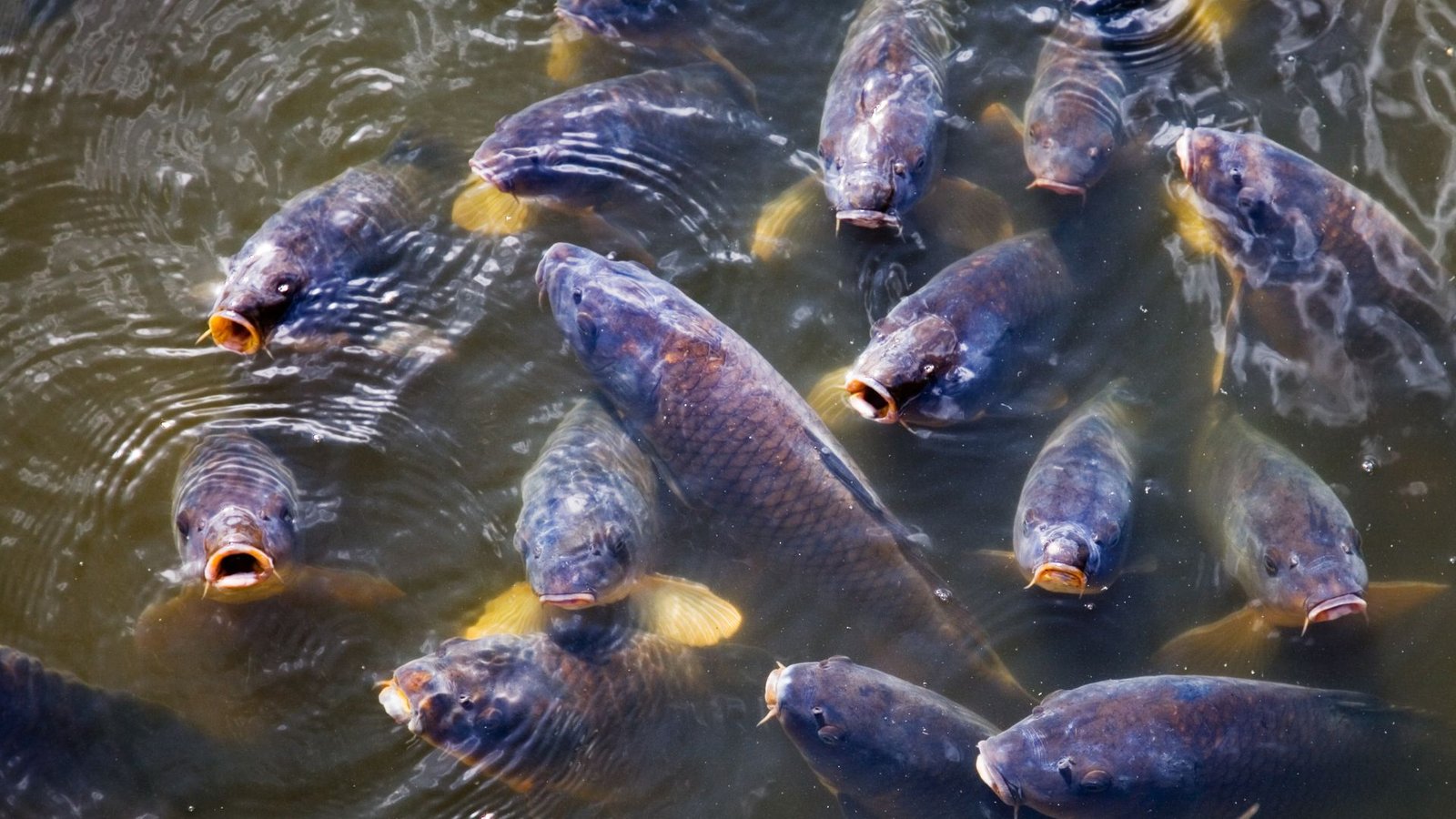
The Carp itself is high in protein and omega oils. Properly handled, bled and processed, carp can be transformed into value-added food products. Supporters of commercial harvesting argue that if Australia can market oysters, sardines and even invasive deer meat, it can also reposition carp.
What Actually Makes More Economic Sense is Higher-Value Uses
- Fish meal / aquaculture feed — processing carp into pellets for domestic aquaculture (e.g. prawn farms) avoids the export logistics problem entirely
- Organic fertiliser — already happening at small scale, but processing capacity is the bottleneck
- Pet food — low-value but high-volume, though again processing infrastructure doesn’t currently exist at scale
- Human consumption domestically — innovators like Southern Kuya and Coorong Wild Seafood are already demonstrating that carp utilisation is a viable regional industry, positioning it as a premium “wild-caught” product
A growing number of chefs, food entrepreneurs and sustainability advocates now argue Australia is ignoring a major circular-economy opportunity.
Famed Australian Fish-chef Josh Niland, philosophically promotes all fish as a source of protein, Omega 3, and a clean food source that is abundant in Australia:
- use the whole fish
- reduce waste
- elevate undervalued species
- create commercial value from abundant fish stocks
Instead of spending enormous sums trying to wipe carp out through disease, why not harvest and process them?
The industries Australia could build
A commercial carp harvesting industry could potentially support:
- regional fishing jobs
- fish processing facilities
- smoked and packaged seafood products
- fertiliser production
- pet food manufacturing
- aquaculture feed
- collagen and fish-oil extraction
- organic soil enhancers
- multicultural food markets (Greek, Eastern European, Asian cuisines)
In some communities, commercial netting operations already remove carp from waterways for fertiliser and bait products. But critics say Australia has never seriously invested in scaling a full carp-utilisation industry. The challenge may be cultural as much as ecological.
Carp thrive because the system is broken
Carp are undeniably invasive and destructive.
But many river scientists now argue they thrive precisely because the Basin itself has already been fundamentally altered.
The Murray–Darling system is no longer a naturally functioning river ecology. It is one of the world’s most engineered river systems — shaped by dams, irrigation networks, weirs, regulated flows and large-scale agricultural extraction.
Native fish populations in parts of the Basin have declined catastrophically over more than a century.
Scientists attribute this decline not solely to carp, but to:
- habitat destruction
- removal of woody debris (“snags”)
- altered flood cycles
- cold-water pollution from dams
- pesticide and fertiliser runoff
- salinity
- declining wetland health
- excessive water extraction
- climate-driven drought and warming temperatures
In this context, carp become less the original cause than the biological opportunists of ecological collapse.
They survive because so much else no longer can.
The Basin debate is now a climate and economic debate
The future of the Murray–Darling Basin is increasingly tied not just to ecology, but to regional economies and climate adaptation.
Extreme swings between drought and flood are reshaping river dynamics. Floodwaters that temporarily rejuvenate wetlands can also trigger enormous carp breeding explosions.
Meanwhile, rising temperatures intensify evaporation, worsen algal blooms and reduce dissolved oxygen levels.
This is why many scientists are now arguing for a systems-based recovery approach rather than a species-war mentality.
That means:
- restoring environmental flows
- reconnecting wetlands
- replanting riparian vegetation
- reducing agricultural runoff
- rebuilding native fish habitat
- modernising irrigation efficiency
- integrating Indigenous water knowledge
- creating sustainable regional industries
And perhaps most controversially: treating carp not merely as waste — but as a harvestable resource.
Beyond “kill carp”
None of this means carp should be ignored. Population control remains essential.
But there is growing debate over whether Australia should spend billions poisoning, diseasing and disposing of carp – or instead build industries that remove the fish while creating regional jobs and economic value.
The carp herpesvirus proposal may still become part of Australia’s environmental toolkit. But it is not a silver bullet. Because carp did not engineer the Murray–Darling Basin. Humans did.
And unless Australia shifts its focus from simply “killing carp” toward rebuilding ecological resilience, while also exploring commercial harvesting, processing and circular-economy opportunities, the country risks missing both an environmental and economic opportunity.
As Roy Palmer’s article ultimately suggests, carp may not be the central story of the Murray–Darling Basin at all.
They may simply be the last survivors of it.
Read more about Seafood Consumers Association Contact Roy Palmer to get involved.
Future Now Green News is a forward-thinking B2B media platform spotlighting the people, projects, and innovations driving the green and blue economy across Australia, Asia, and the Pacific – informing, inspiring, and connecting climate changemakers through bold storytelling and thought leadership in future-ready industries.
CONTRIBUTORS WELCOME: reach out to our FNGN Editor: editor@futurenowgreennews.com