
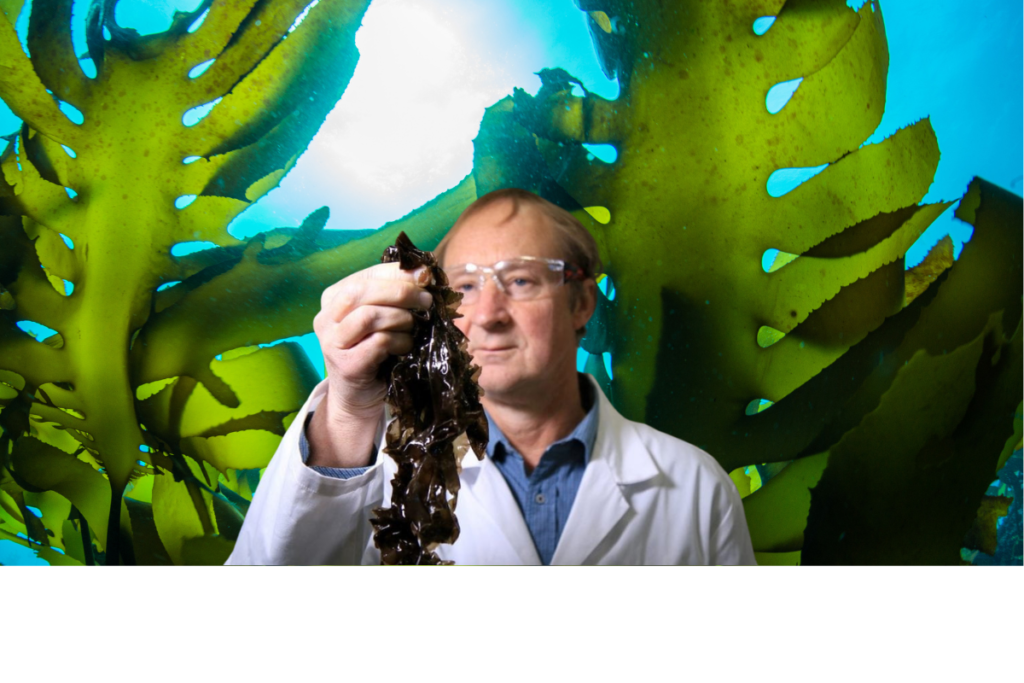

IN NEW ZEALAND’S cold tidal waters coastline, grows a red seaweed that Māori communities have harvested, eaten and valued for centuries … known as karengo.
Karengo is a native species from the Porphyra and Pyropia family and have long been part of Māori food traditions, medicinal practices and coastal cultural life. Today however, this once largely overlooked marine resource is entering a new economic and scientific era — one that could transform New Zealand’s aquaculture sector and potentially ignite difficult legal and political questions around Indigenous ownership, intellectual property and commercialisation.
The Cawthron Institute, one of New Zealand’s leading science organisations, is now undertaking world-leading research into karengo’s nutritional and bioactive potential. Conducted in partnership with the Singapore Institute for Food Biotechnology Innovation, and backed by a fresh round of Catalyst Strategic funding, the research aims to position karengo as a future high-value export product for global food, health and biotechnology markets.
Globally, seaweed is increasingly viewed as one of the planet’s next major “blue economy” industries. Rich in protein, antioxidants, vitamins and bioactive compounds, seaweeds are attracting attention from pharmaceutical companies, nutraceutical firms, food manufacturers and climate-focused investors searching for sustainable alternatives to land-intensive agriculture.
Asia already dominates the sector. China, Japan and South Korea collectively produce millions of tonnes of edible seaweed annually, while Singapore is aggressively investing in future food biotechnology and marine innovation to reduce food import dependency and build intellectual property leadership in emerging sectors.
New Zealand’s karengo industry, by contrast, remains embryonic. Yet scientists believe the species could hold unique commercial advantages due to the country’s cooler waters, biodiversity profile and premium “clean green” export branding.
But beneath the excitement surrounding innovation and export growth sits a far more complex question: who owns the value of traditional biological knowledge?
The issue reaches directly into one of New Zealand’s most sensitive constitutional foundations — the Treaty of Waitangi.
Signed in 1840 between the British Crown and Māori chiefs, the Treaty guaranteed Māori “full exclusive and undisturbed possession” of their lands, forests, fisheries and other taonga — treasured resources of cultural and economic significance.
For many Māori communities, karengo is not simply another commercial crop. It is part of mātauranga Māori — traditional Indigenous knowledge systems developed and protected across generations.
The challenge emerges when traditional biological resources intersect with modern intellectual property systems.
If researchers isolate valuable bioactive compounds from karengo and patents are later granted for pharmaceuticals, supplements, food ingredients or biotechnology applications, who should benefit financially? The research institution? Private investors? The Crown? Or Māori communities whose traditional knowledge helped preserve understanding of the species over centuries?
Those questions are not theoretical.
Globally, disputes over “biopiracy” — where corporations or institutions commercialise Indigenous biological knowledge without equitable benefit-sharing — have intensified over recent decades. International examples involving turmeric in India, quinoa in South America and Amazonian medicinal plants have fuelled growing scrutiny over how traditional knowledge is used within global patent systems.
New Zealand itself carries unresolved historical tensions around marine ownership.
The foreshore and seabed controversy of the early 2000s remains one of the country’s most politically divisive Indigenous rights disputes. In 2004, legislation vested ownership of the foreshore and seabed in the Crown despite strong Māori opposition, sparking nationwide protests and permanently reshaping Māori–Crown political relations.
While the law was later partially repealed and replaced, many Māori groups continue to argue the underlying issues of customary ownership and resource sovereignty remain unresolved.
Against this backdrop, any future commercialisation of karengo-derived intellectual property could trigger broader national debates over Indigenous consent, benefit-sharing and marine governance.
Importantly, the Cawthron Institute has publicly acknowledged the cultural significance of karengo and incorporated Māori perspectives within the research process. The institute’s work is not being presented as exploitative extraction. Rather, it reflects a growing international movement towards more collaborative science models involving Indigenous communities.
Yet inclusion alone may not resolve future legal complexities.
Current intellectual property laws in most Western jurisdictions generally protect “novel inventions” rather than ancient traditional knowledge. This creates a structural tension where Indigenous communities may culturally safeguard knowledge for centuries but still lack automatic legal ownership over modern commercial applications derived from that knowledge.
Some legal scholars argue new frameworks are urgently needed to protect Indigenous biological heritage in the age of biotechnology and synthetic biology. Others warn that without clear legal reforms, countries risk repeating colonial-era patterns where Indigenous resources are commercialised globally while traditional custodians receive little long-term economic benefit.
The stakes are rising quickly.
The global seaweed industry is forecast to exceed tens of billions of dollars in coming decades as demand accelerates for sustainable proteins, marine bioplastics, pharmaceuticals, methane-reducing livestock feeds and functional food ingredients.
For New Zealand, karengo may become far more than a niche coastal food. It could evolve into a strategic bioeconomy asset linking aquaculture, climate innovation, export growth and Indigenous enterprise.
But as science moves from shoreline harvesting to laboratories, patents and global supply chains, one question may become increasingly unavoidable:
Can a nation commercialise the future of a traditional Indigenous resource without first resolving who truly owns its past?
Future Now Green News is a forward-thinking B2B media platform spotlighting the people, projects, and innovations driving the green and blue economy across Australia, Asia, and the Pacific – informing, inspiring, and connecting climate changemakers through bold storytelling and thought leadership in future-ready industries.
CONTRIBUTORS WELCOME: reach out to our FNGN Editor: editor@futurenowgreennews.com