


Australia helped invent one of the world’s greatest medical technologies. Now, Asia is helping shape what comes next.
Asia’s Med-Tech Innovation Snapshot
- AI drug discovery (Hong Kong/China) – Surgical robotics (China) – Regenerative medicine (Japan)
- AI diagnostics (Singapore, China, South Korea) – Biomedical manufacturing (Hengqin)
- Cochlear (Australia)
IN 1978, Melbourne surgeon Laureate Professor Graeme Clark AC developed the world’s first multi-channel cochlear implant—an innovation that has since restored hearing to more than 700,000 people worldwide. Today, Cochlear operates across the Asia-Pacific, with four of its six global manufacturing facilities located within the region and offices spanning Australia, China, Hong Kong, India, Japan, South Korea, Malaysia, New Zealand and Singapore.
Australia enters this new era with significant strengths of its own
The invention of the multi-channel cochlear implant by Professor Graeme Clark transformed hearing healthcare worldwide and laid the foundation for one of Australia’s most successful medical technology companies.
It is a powerful example of Australian research evolving into a regional innovation business.
Following the Federal Government’s recent response to the Ambitious Australia review into research, development, and innovation (RD&I) system, Cochlear President and CEO Dig Howitt welcomed reforms designed to strengthen Australia’s innovation system.

This is a strong first step for organisations investing in Australian R&D. Lifting the R&D Tax Incentive cap sends an important message that Australia wants to attract and retain large-scale innovation activity – its flow on to commercialisation and production in Australia will be critical to capturing the full economic benefits of innovation – for Australia’s international competitiveness.”
A new biomedical gateway emerges
While Singapore, Shanghai and Tokyo often dominate discussions about Asian innovation, another story is quietly unfolding just across the border from Macau.
Hengqin—part of the Guangdong–Hong Kong–Macao Greater Bay Area—is rapidly emerging as one of China’s newest biomedical innovation zones.
At its centre is the Traditional Chinese Medicine Science and Technology Industrial Park of Co-operation between Guangdong and Macao, bringing together biotechnology companies, pharmaceutical manufacturers, research institutions and universities including the University of Macau and Macau University of Science and Technology.
Yet Hengqin’s most innovative idea may not be scientific. It is regulatory.
Through a model known as “Macao Supervision + Hengqin Production,” medicines can be researched and manufactured in Hengqin while benefiting from Macau’s internationally recognised regulatory framework, creating new pathways into Portuguese-speaking markets including Brazil and Mozambique.
For Australian biotechnology companies seeking partnerships across Asia, it represents an emerging gateway connecting research, manufacturing and international market access.
Australia excels in world-class research, clinical trials and trusted regulation. Asia increasingly offers manufacturing capability, investment, large patient populations and rapid commercialisation.
Together, those complementary strengths can accelerate healthcare innovation across the region.
From AI-designed medicines and robotic surgery to regenerative therapies and biomedical innovation hubs such as Hengqin, Asia is assembling one of the world’s most dynamic healthcare ecosystems.
Today, the healthcare revolution is quietly unfolding just beyond Australia’s northern doorstep. This time, it isn’t centred on a single invention or one breakthrough scientist. It is emerging from an innovation ecosystem stretching across Singapore, Japan, China and the Greater Bay Area, where artificial intelligence, robotics, regenerative medicine and biotechnology are converging to redefine how healthcare is discovered, delivered and commercialised.
For Australia, the question is no longer whether Asia matters. It is how Australia can become a partner in shaping what comes next.
For decades, Australians looked to Boston, Silicon Valley and Europe for the latest advances in medical science. Today, some of the world’s fastest-moving healthcare innovation is taking place across Asia.
Ageing populations, rising healthcare costs and chronic disease are driving governments to invest heavily in medical technology. Artificial intelligence is accelerating drug discovery. Robots are assisting surgeons. Digital hospitals are extending specialist care into remote communities. Regenerative medicine is moving from experimental science towards clinical reality.
Rather than competing in isolation, countries across the region are increasingly contributing different strengths to a shared innovation ecosystem.
AI is rewriting the rules of drug discovery – Insilico’s scores largest partnership with an APAC-based collaborator with US$2.5 billion global R&D collaboration
One of the biggest changes is taking place long before a medicine reaches a patient. Developing a new drug has traditionally taken more than a decade and cost billions of dollars.
Artificial intelligence is beginning to compress that timeline dramatically.
Insilico Medicine is a biotechnology company headquartered in Boston, Massachusetts, with additional facilities in Pak Shek Kok, Hong Kong in Hong Kong Science Park near the Chinese University of Hong Kong, and in New York, at The Cure by Deerfield.
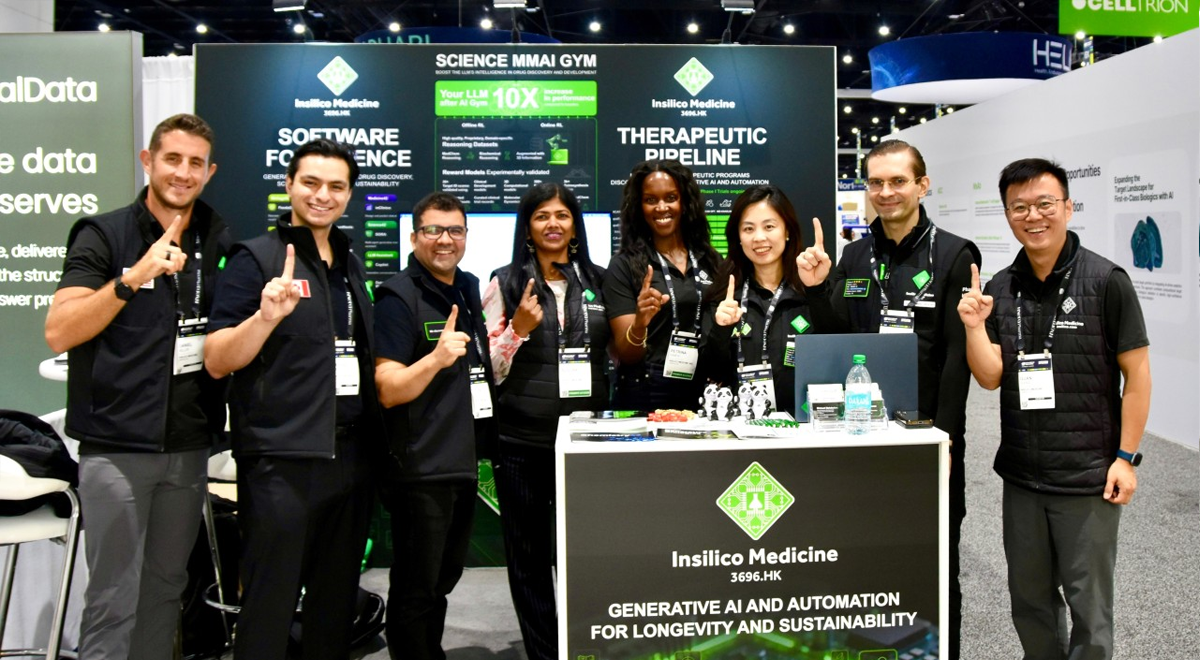
Insilico Medicine signed a record-breaking US$2.5 billion global R&D collaboration with SK Biopharmaceuticals for neuroimmune disorders within the central nervous system (CNS) at BIO International Convention (BIO 2026) in San Diego in June – making it Insilico’s largest partnership with an APAC-based collaborator to date.
One of the leaders is Dr Alex Zhavoronkov, founder and CEO of Insilico Medicine, whose AI platforms analyse enormous biological datasets to identify promising drug candidates in a fraction of the time required by traditional research.
My job is to make you live much, much longer,” Zhavoronkov told The Wall Street Journal, describing his ambition to use AI to accelerate treatments for cancer, pulmonary fibrosis, Parkinson’s disease and other age-related illnesses.
The company has already advanced one of the world’s first AI-designed medicines into clinical trials and recently entered a partnership with Japanese pharmaceutical company Takeda worth up to US$600 million.
Robots enter the operating theatre
Artificial intelligence is also changing the operating theatre. Chinese companies such as MicroPort MedBot are rapidly expanding the availability of robotic surgical systems capable of assisting surgeons during highly complex procedures. These systems promise greater precision, smaller incisions and faster patient recovery.
Lower manufacturing costs are also making robotic-assisted surgery increasingly accessible across Asia, potentially opening opportunities for more regional hospitals to adopt advanced surgical technologies.
As populations continue to age, technologies that improve surgical efficiency while reducing recovery times are likely to become an increasingly important part of healthcare delivery.
Repairing the body—not simply treating disease
Rather than simply slowing disease, scientists are increasingly asking whether damaged tissue can actually be repaired. Japan continues to lead regenerative medicine following the Nobel Prize-winning discovery of induced pluripotent stem (iPS) cells by Professor Shinya Yamanaka.
Receiving the Nobel Prize, Yamanaka reflected that his research had opened “a new door into medical science.”
Today, researchers across Japan, South Korea and China are investigating regenerative therapies for Parkinson’s disease, spinal cord injury, retinal degeneration and damaged cartilage.
Future medicine may increasingly repair damaged organs rather than simply managing declining health.
Healthcare is becoming smarter
Artificial intelligence is also moving into everyday clinical care.
Hospitals across China, Singapore and South Korea are using AI to help interpret X-rays, CT scans and MRI images, allowing doctors to prioritise urgent cases more quickly while reducing workloads for specialist clinicians.
Importantly, the technology is not replacing doctors. It is helping them spend more time where human judgement matters most—treating patients.
For Australia, where many regional communities continue to experience specialist shortages, these technologies could significantly improve healthcare access.
From AI-designed medicines and robotic surgery to regenerative therapies and biomedical innovation hubs such as Hengqin, Asia is assembling one of the world’s most dynamic healthcare ecosystems.
For Australian universities, hospitals, startups, investors and policymakers, the opportunity extends well beyond exporting technology. It is about helping build the next generation of healthcare alongside our regional neighbours.
Because the future of medicine is no longer being invented in one place.
It is being co-created across an innovation corridor stretching from Melbourne and Singapore to Shanghai, Shenzhen and the Greater Bay Area.
Australia has already shown it can change the world through medical innovation. The next chapter may be written together with Asia.
Check out and signup for any of our 6 training programs: FNGN CLIMAX©MEDIA COMMS ACADEMY
Future Now Green News is a forward-thinking media platform dedicated to spotlighting the people, projects, and innovations driving the green & blue economy across Australia, Asia and Pacific region. Our mission is to inform, inspire, and connect changemakers through thought leadership and solutions-focused storytelling in sustainability, clean energy, regenerative tourism, climate action, and future-ready industries.