

New Zealand marine technology company Vessev is bringing its electric hydrofoiling vessels to Australia, with trials and partnerships emerging in Sydney, Perth and Hobart. The question is no longer whether these boats work—but whether Australia’s cities are ready for a new era of waterborne mobility.
As Australian cities grapple with congestion, rising emissions and growing pressure on transport infrastructure, a new generation of electric vessels promises to turn underutilised waterways into high-speed, zero-emission transit corridors.
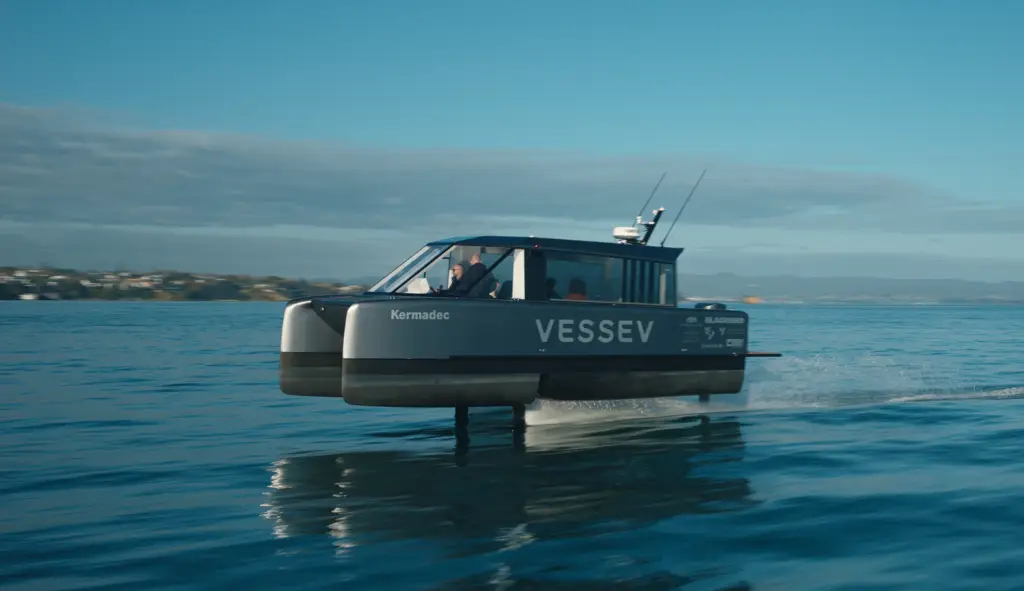
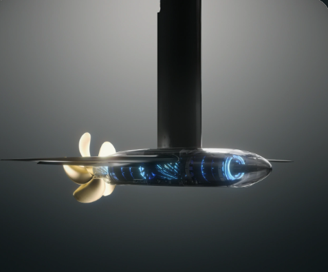
The technology is called hydrofoiling. Instead of pushing through the water like a conventional ferry, underwater carbon-fibre wings lift the vessel’s hull above the surface, dramatically reducing drag. Suitable for tourism, hospitality, fishing enthusiasts, marine rescues, transport.. and more.
This week Vessev has signed a commercial agreement to deliver multiple VS–12 electric hydrofoiling vessels into Sydney, supporting a future water transport network for Sydney Harbour.
The network aims to complement existing public transport infrastructure by increasing capacity on waterways without adding significant noise, emissions or shoreline impact, and will support plans to electrify the city.

Sydney Harbour is one of the world’s most iconic waterways and has the opportunity to become a global showcase for next-generation sustainable marine transport. We’re thrilled to be part of that journey.
Vessev Chief Executive Officer Eric Laakmann.
A New Model for Waterfront Cities?
For decades, urban transport planning has focused primarily on roads and rail.
Electric hydrofoils suggest a third pathway—one that leverages existing waterways as low-carbon mobility networks.
The technology is unlikely to replace conventional ferries entirely. Instead, experts see hydrofoils complementing existing services, creating new point-to-point routes and connecting communities currently underserved by public transport.
If successful, Australia’s harbour cities may soon discover that their next major transport corridor has been there all along.
The result? Quieter journeys, smoother rides and significantly lower energy consumption.
Max Olson and Eric Laakmann lead the team at Vessev. Hailing from opposite sides of the Pacific (Auckland and Seattle), both grew up on the water and found their calling in technology.
Max has always been drawn to an engineering challenge. He co-founded Halter – the breakthrough virtual fencing technology for cattle – before starting Vessev a few years later.
Eric built his career at Apple, leading engineering programmes and launching three generations of the Apple Watch. He sailed 30,000 nautical miles to New Zealand, where he’s taking Vessev to the world.
New Zealand-based marine technology company Vessev believes the concept could reshape urban transport across Australia’s harbour cities.
We don’t simply make electric boats—we make better boats. By removing the boat from the water using hydrofoils, we substantially reduce drag by about three times, making the vessel three times more efficient.”
Vessev Chief Executive Officer Eric Laakmann.
From America’s Cup to Public Transport
Hydrofoils are not new. The technology has been used in competitive sailing for decades, most notably in the America’s Cup.
What’s changed is the convergence of lightweight materials, advanced batteries, electric propulsion systems and digital controls that automatically adjust the foils in real time.
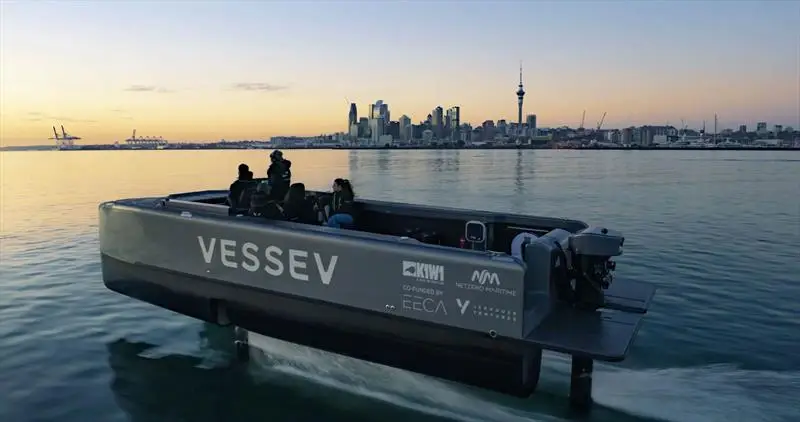
Vessev’s current flagship model, the VS-9, carries up to 10 passengers and operates at speeds of around 25 knots with a range of approximately 50 nautical miles. A larger model, the VS-12, designed to carry up to 30 passengers, is expected to enter Australian service in the coming years.
The company is showcasing the vessels to transport authorities and commercial operators in Sydney while partnering with Perth’s Enautic Group and Hobart-based start-up Fly Derwent.
Australia’s Untapped Blue Highways
Despite being one of the world’s most urbanised coastal nations, Australia has historically underutilised its waterways for everyday commuting.
Sydney’s ferries carry more than 15 million passengers annually, yet waterways in cities such as Perth, Brisbane and Hobart remain relatively underdeveloped as public transport networks.
Laakmann sees an opportunity to rethink urban mobility.
We think of waterways like subway systems that already exist—we just haven’t built enough stations or routes to take advantage of them.
Vessev Chief Executive Officer Eric Laakmann
Electric hydrofoils could unlock new transport corridors without the need for expensive road tunnels, rail lines or major land acquisition.
The Sustainability Case
Transport accounts for around 21 per cent of Australia’s greenhouse gas emissions, with road vehicles responsible for the overwhelming majority. Decarbonising marine transport remains an important but often overlooked challenge. (AREA)
Globally, shipping contributes approximately 3 per cent of total greenhouse gas emissions, according to the International Maritime Organization.
Research into electric hydrofoils suggests the technology can deliver substantial environmental benefits. A study by Sweden’s KTH Royal Institute of Technology found electric hydrofoil ferries can reduce carbon emissions by up to 98 per cent compared with conventional diesel vessels.
Hydrofoils also generate minimal wake, helping reduce shoreline erosion and protecting sensitive marine ecosystems.
For cities such as Sydney, where waterways pass through national parks, heritage areas and residential zones, quieter and lower-impact transport options could prove particularly attractive.
Economics Beyond Emissions
While upfront capital costs remain higher than conventional ferries, operators argue the long-term economics are compelling.
According to Vessev, hydrofoiling vessels can reduce fuel costs by up to 90 per cent while lowering maintenance requirements through simpler electric drivetrains.
However, challenges remain.
Charging infrastructure, regulatory approvals and integration with existing transport systems will require coordinated planning and investment.
A recent study on electric ferry systems found that optimising charging infrastructure alongside vessel operations can reduce overall system costs by nearly 8 per cent, highlighting the importance of holistic planning rather than simply replacing diesel vessels with electric alternatives.
Just beneath the water’s surface.
Future Now Green News is a forward-thinking B2B media platform dedicated to spotlighting the people, projects, and innovations driving the green & blue economy across Australia, Asia and Pacific region. Our mission is to inform, inspire, and connect changemakers through thought leadership, investigative journalism and storytelling in sustainability, clean energy, regenerative tourism, climate action, and future-ready industries.