

Tokyo is betting on global talent networks to win the quantum and AI race. Australia has a rare chance to turn that bet into a green economy dividend.
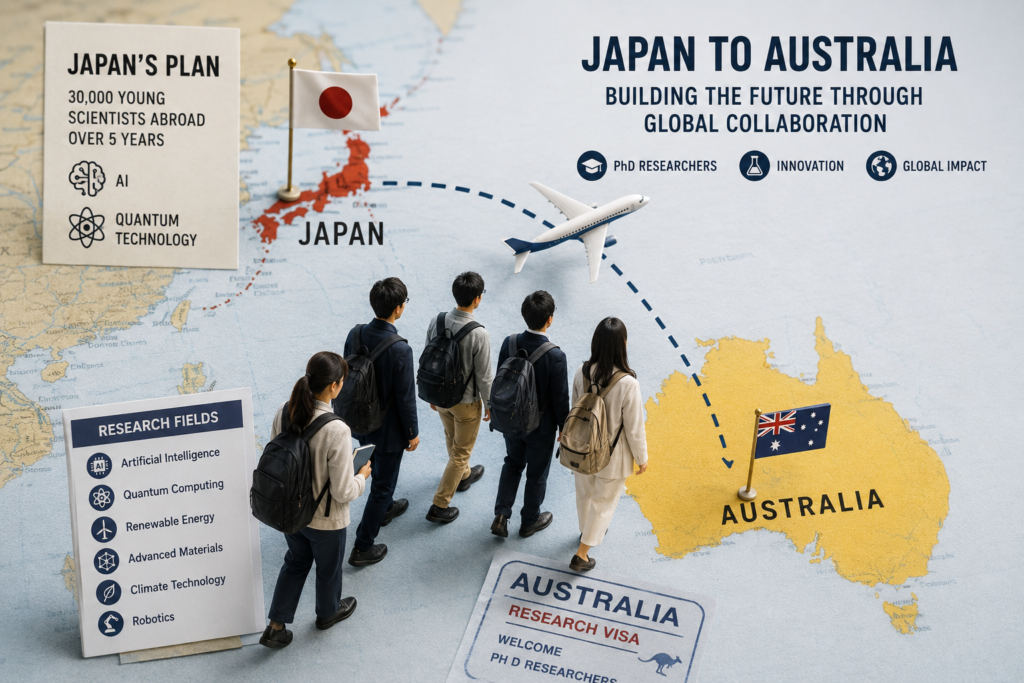
JAPAN’s recent announcement in finalising “Integrated Innovation Strategy 2026”, is to send 30,000 young researchers abroad over the next five years to gain deep experience quantum computing and artificial intelligence, earning a Ph.D. and doctoral university qualifications. Six thousand researchers a year, for five years, in medium to long-term placements at leading institutions around the world, is one of the most significant scientific mobility programs any country has launched in recent memory.
Quantum and AI are not abstractions for the energy transition. They are, in a very real sense, part of its infrastructure. AI is already optimising grids and accelerating materials discovery. Quantum computing is coming for the harder problems — the molecular simulations and the optimisation challenges at a scale that classical computers cannot crack. Together, they are reshaping what’s possible.
Why Japan is doing this
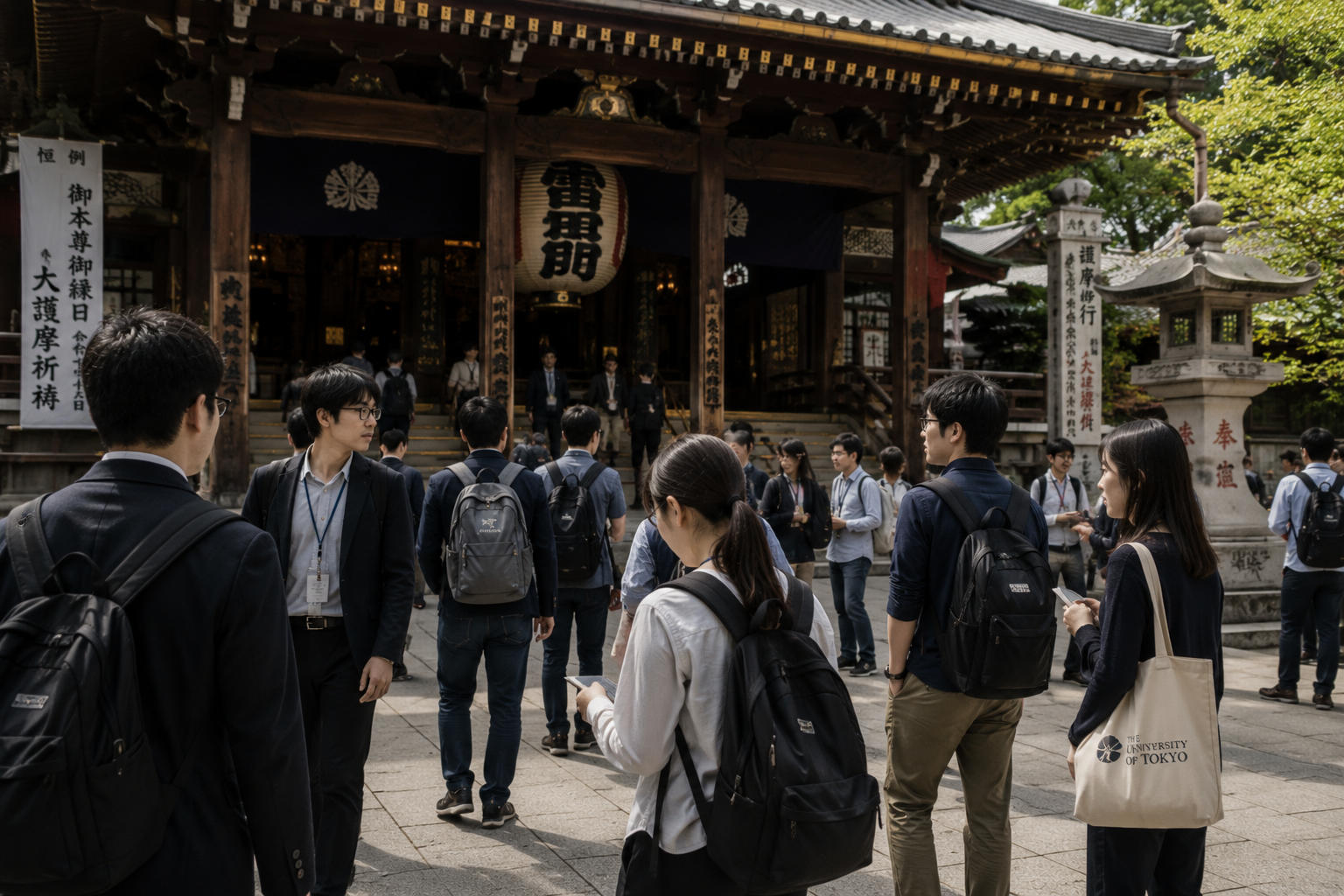
Tokyo’s concern is straightforward, even if the solution is ambitious. Japanese researchers have become less internationally mobile at a time when scientific breakthroughs are increasingly the product of cross-border collaboration. The country’s universities remain strong, but its innovation ecosystem has been losing ground in global rankings. The fields Japan has identified as priorities — AI and quantum computing — happen to be exactly those where international exposure matters most, where the frontier is moving fastest, and where talent networks built today become competitive advantages tomorrow.
What are the benefits for Australia
Australia punches above its weight in both artificial intelligence and quantum science, although the two sectors tell markedly different stories.
In quantum technologies, Australia is widely recognised as a global leader, ranking among the world’s top five nations for research excellence, startup creation and breakthrough discoveries. Australian researchers have pioneered key advances in silicon-based quantum computing, quantum sensing and quantum communications, supported by institutions including the University of New South Wales, home to the Australian Centre for Quantum Computation and Communication Technology; the Australian National University, a leader in quantum optics and policy; and the University of Queensland, renowned for photonics research. These capabilities have spawned globally significant companies such as PsiQuantum, Silicon Quantum Computing, Q-CTRL and Diraq.
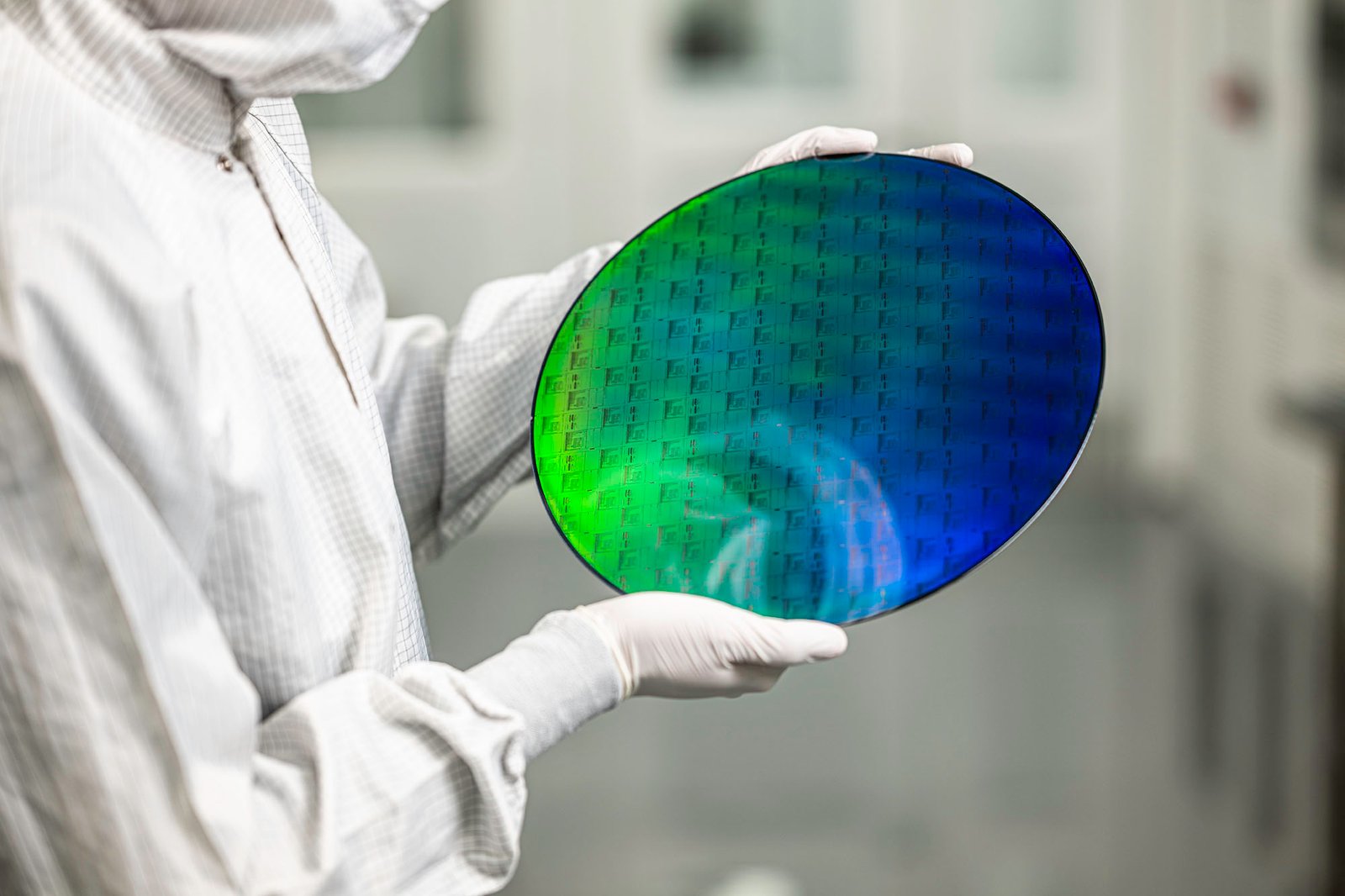

PsiQuantum: “The concept of using photons for quantum computing was pioneered at the University of Queensland, where our CEO and I worked on early experimental breakthroughs. The world’s first quantum transistor for light came out of the research team there.”
In artificial intelligence, Australia boasts world-class research expertise and consistently ranks within the global top 10 for AI talent, publications and responsible AI frameworks. Leading institutions including the University of Melbourne, Monash University, the University of Sydney and CSIRO are advancing machine learning, robotics, climate modelling and energy optimisation.
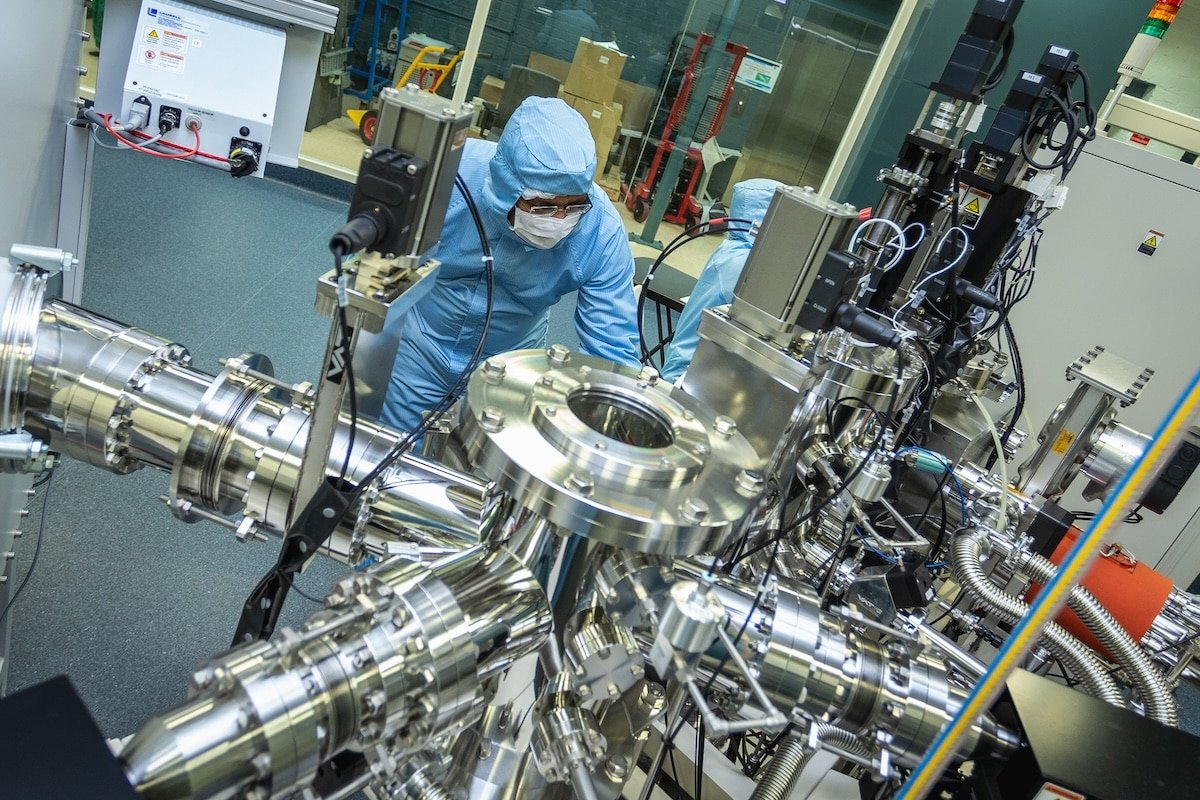
CSIRO, Australia’s national science agency, and collaborators RMIT University and the University of Melbourne, have developed the first proof-of-concept quantum battery that could pave the way for long- distance charging of devices and super-fast charging of electric cars.
However, Australia continues to lag the United States and China in commercialisation, sovereign computing infrastructure, venture capital investment and the development of large-scale AI platforms.
Japan could possibly provide Australia with commercialisation opportunities in the region
For Japan’s next generation of researchers, this creates a compelling proposition: Australia may not rival Silicon Valley’s scale, but it offers deep expertise at the intersection of AI, quantum science and climate technologies—fields increasingly central to energy security, critical minerals, advanced manufacturing and the net-zero transition.
Existing relationship with room to grow
Australia and Japan already cooperate extensively on clean energy. The bilateral hydrogen partnership is one of the most developed of its kind in the Asia-Pacific, with supply chain trials, joint investment frameworks and a shared interest in getting the economics right before the window closes.
What the research exchange program could do is add a deeper scientific layer to that relationship — moving from government-to-government agreements into institution-to-institution and researcher-to-researcher networks that tend to be stickier, more generative and longer-lasting.
UNSW’s quantum computing program, ANU’s quantum science research, CSIRO’s expanding work across energy systems and robotics — Australia has real assets to offer. The University of Melbourne and Monash are advancing battery technology and advanced manufacturing research that maps directly onto Japan’s green economy priorities.
A Japanese researcher spending two or three years embedded in one of those environments doesn’t just produce papers. They build relationships, develop an understanding of Australia’s industry landscape, and often return home as advocates for deeper collaboration. Some stay. Some become the founders and CTO’s of the next generation of clean energy companies operating across the Australia–Japan corridor.
The competition is real
None of this is automatic. The United States, United Kingdom, Germany and Singapore are all competing for exactly this cohort of researchers, and they are investing accordingly. Australia’s cost of living pressures, housing market and visa settings are genuine friction points that won’t resolve themselves.
What Australia has that others don’t is proximity, an established bilateral relationship with Japan, and a clean energy story that is directly relevant to what these researchers are working on. That alignment is an advantage — but only if it’s actively leveraged rather than passively assumed.
Check out and signup for any of our 6 training programs: FNGN CLIMAX©MEDIA COMMS ACADEMY
Future Now Green News is a forward-thinking media platform dedicated to spotlighting the people, projects, and innovations driving the green & blue economy across Australia, Asia and Pacific region. Our mission is to inform, inspire, and connect changemakers through thought leadership and solutions-focused storytelling in sustainability, clean energy, regenerative tourism, climate action, and future-ready industries.