
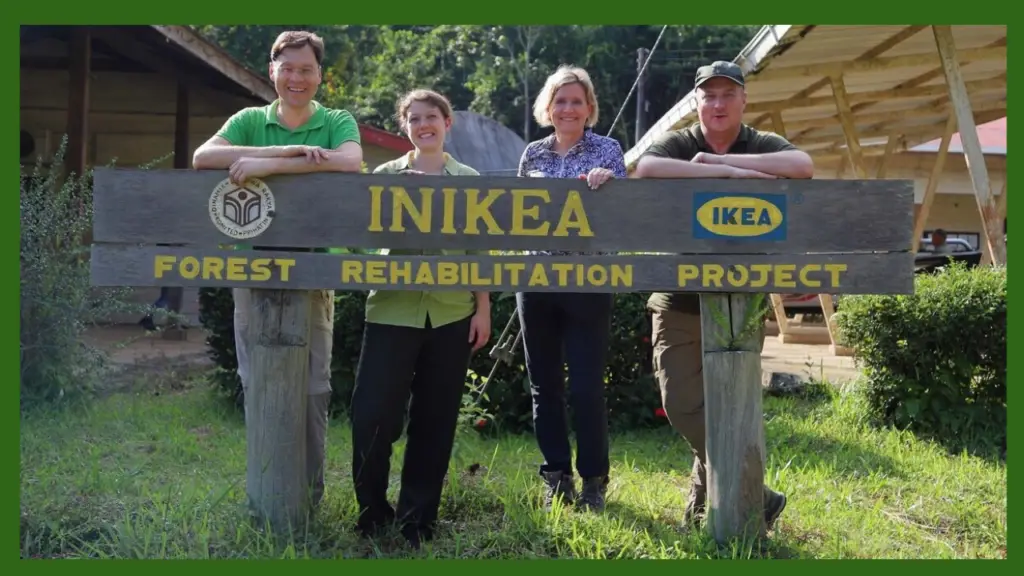

IKEA has continued its partnership with the Swedish University of Agricultural Sciences and the Sabah Foundation to launch the Living Rainforest Restoration Lab, a 10-year research program built on 25 years of IKEA’s rainforest restoration work in Borneo. The initiative has restored 18,500 hectares of land previously degraded by fire and logging, with five million trees planted across 90 species.
For decades, IKEA has become synonymous with affordable furniture, flat-pack boxes and weekend DIY projects.
Now the Swedish retailer wants to be known for something very different.
In the Malaysian state of Sabah, on the island of Borneo, IKEA has launched a Rainforest Restoration Lab—an initiative that moves beyond simply protecting forests towards understanding how damaged tropical ecosystems can be rebuilt using science, long-term research and local partnerships.
It is another signal that the world’s largest companies are beginning to rethink what environmental responsibility actually looks like.
Planting trees is no longer enough. The challenge is learning how to restore entire ecosystems.
Beyond planting trees
The new research lab builds on more than two decades of restoration work undertaken through the IKEA Social Entrepreneurship and IKEA Supply partnership with the South East Asia Rainforest Research Partnership in Sabah.
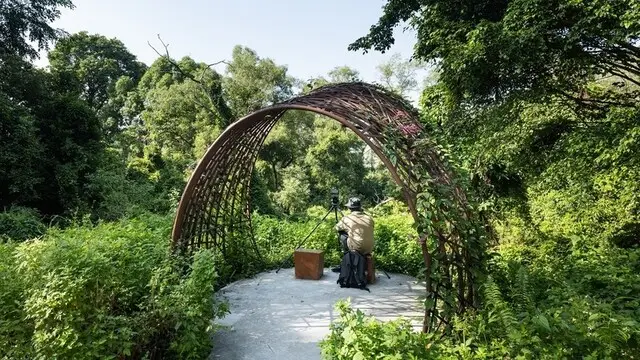
Rather than focusing solely on tree planting, scientists are studying how degraded rainforest can recover its biodiversity, carbon storage, soil health and ecological resilience over decades.
Sabah contains some of the world’s oldest tropical rainforests, home to orangutans, pygmy elephants, clouded leopards and thousands of unique plant species. Large areas, however, have been degraded by historical logging and land-use change.
The new laboratory will allow researchers to better understand which restoration methods work—and which do not.
A business case for nature
For IKEA, rainforest restoration is becoming part of a broader business strategy rather than a philanthropic side project. Former Ingka Group CEO Jesper Brodin has repeatedly argued that sustainability is not separate from business performance.
“If you’re smart with resources, you’re essentially being smart with money,” Brodin said in an interview with TIME, describing how reducing waste, investing in renewable energy and embracing circular business models have strengthened IKEA’s long-term competitiveness. (Time)
Under Brodin’s leadership, Ingka Group says it reduced its climate footprint by more than 30% while continuing to grow revenue.
He has consistently argued that climate action is becoming an economic advantage rather than a cost.
Forests are becoming natural infrastructure
Rainforests do far more than store carbon. Healthy tropical forests regulate rainfall, stabilise soils, reduce flooding, protect biodiversity and support local livelihoods.
Scientists increasingly describe forests as critical infrastructure every bit as important as roads, dams and power stations.
That thinking is driving a shift in corporate investment—from offsetting emissions towards restoring natural systems that businesses ultimately depend upon.
Rather than asking how many trees can be planted, restoration ecologists are asking:
- Which native species return first?
- How quickly do wildlife populations recover?
- How does soil biology regenerate?
- Can degraded forests once again become self-sustaining ecosystems?
These are the kinds of questions the Sabah laboratory hopes to answer.
From sustainability to regeneration
The timing is notable.
Only weeks after Singapore’s World Cities Summit promoted the idea of regenerative cities, IKEA is investing in what could equally be described as regenerative landscapes.
The common thread is moving beyond reducing environmental harm. Instead, organisations are beginning to ask whether their investments can actively improve the health of natural systems.
It mirrors a broader evolution occurring across business. Companies are increasingly recognising that resilient supply chains depend on resilient ecosystems.
For a company whose products rely heavily on timber and renewable materials, healthy forests are not simply an environmental issue. They are fundamental to long-term business resilience.
Lessons for Australia
Australia faces many of the same questions.
From restoring native forests after bushfires to rebuilding degraded agricultural landscapes and protecting biodiversity, the country is increasingly investing in nature-based solutions.
The Sabah initiative highlights another opportunity.
Successful restoration requires more than volunteers with tree seedlings.
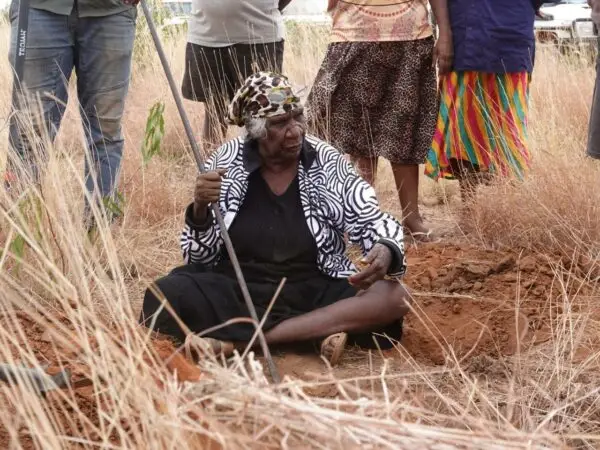
It demands decades of ecological monitoring, local Indigenous and community knowledge, scientific research and long-term investment.
Those capabilities represent an emerging economic sector in their own right.
Universities, environmental consultancies, satellite monitoring companies, AI developers and ecological researchers all have roles to play.
As governments and corporations invest more heavily in restoring ecosystems, the demand for restoration science is likely to grow alongside it.
Looking beyond the forest
The Rainforest Restoration Lab is, in many ways, a modest announcement.
It is one research facility in one Malaysian rainforest. Yet it reflects a much larger change taking place across global business. The conversation is moving beyond sustainability.
The next frontier is regeneration—restoring forests, rebuilding ecosystems and treating nature as productive capital rather than something simply to be protected.
For IKEA, the future may still begin with a flat-pack box. Increasingly, however, it also begins in a rainforest.
Check out and signup for any of our 6 training programs: FNGN CLIMAX©MEDIA COMMS ACADEMY
Future Now Green News is a forward-thinking media platform dedicated to spotlighting the people, projects, and innovations driving the green & blue economy across Australia, Asia and Pacific region. Our mission is to inform, inspire, and connect changemakers through thought leadership and solutions-focused storytelling in sustainability, clean energy, regenerative tourism, climate action, and future-ready industries.