

WHAT HAPPENS when a solution to one of the Pacific’s biggest environmental problems creates an even bigger question: whose waste, whose coastline — and who gets to decide?
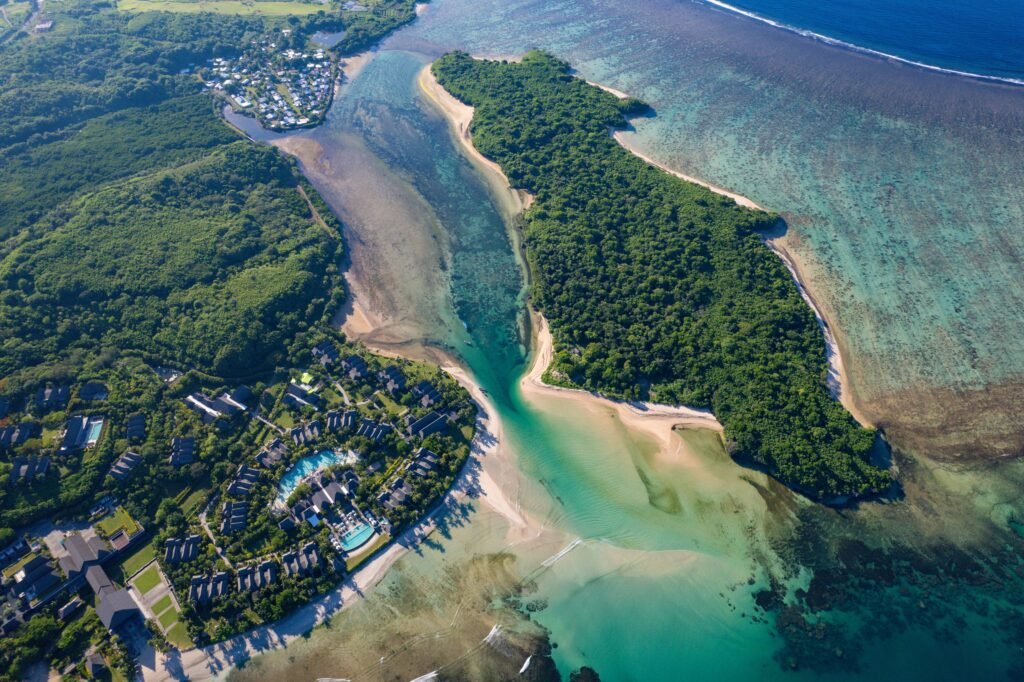
On a stretch of coastline south of Lautoka, Fiji is fighting a battle that has become far bigger than a proposed incinerator.
At stake is a FJ$1.4 billion (about US$700 million) waste-to-energy project, a private port and a plan to turn hundreds of thousands of tonnes of rubbish into electricity. Its Australian developer says it could help solve Fiji’s chronic waste and fuel problems.
Critics see something very different: a foreign-backed industrial project that could depend on importing other countries’ rubbish into Fiji for decades.
That has triggered an extraordinary collision of environmental regulation, chiefly authority, foreign investment, energy security and what opponents are calling “waste colonialism.”
At the centre of the dispute is the proposed facility at Naikorokoro Point, Vuda-Saweni, near Lautoka, being developed by Australian billionaire entrepreneur Ian Malouf through The Next Generation Holdings (Fiji) Pte Limited (TNG).
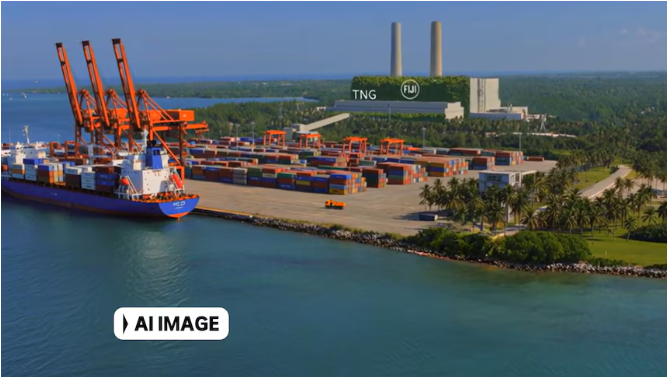
The project has already suffered a major setback. Fiji’s Department of Environment rejected TNG’s Environmental Impact Assessment (EIA), and the company is now challenging that decision before the Environment Tribunal, with related proceedings recently returning to the Suva Magistrates Court.
What happens next could establish a precedent for how Fiji — and potentially other Pacific island nations — handle large foreign-funded industrial projects.
The uncomfortable maths behind the project
TNG proposes an 84-hectare industrial precinct featuring two 40MW combustion lines, producing a combined 80MW of electricity. The company says that could supply around 40–45 percent of Fiji’s national grid.
But the most controversial figure isn’t the electricity.
It is the 900,000 tonnes of waste the plant is designed to process every year.
Fiji generates only around 200,000 tonnes of municipal waste annually.
That means the proposed facility would require more than four times Fiji’s current municipal waste stream to operate at full capacity.
TNG’s model therefore envisages importing an estimated 700,000 tonnes of waste a year from Australia, New Zealand and other Pacific nations.
And that is where the argument becomes explosive.
Malouf has reportedly told The Australian that he expects the plant could ultimately receive more waste from Pacific neighbours than from Australia.
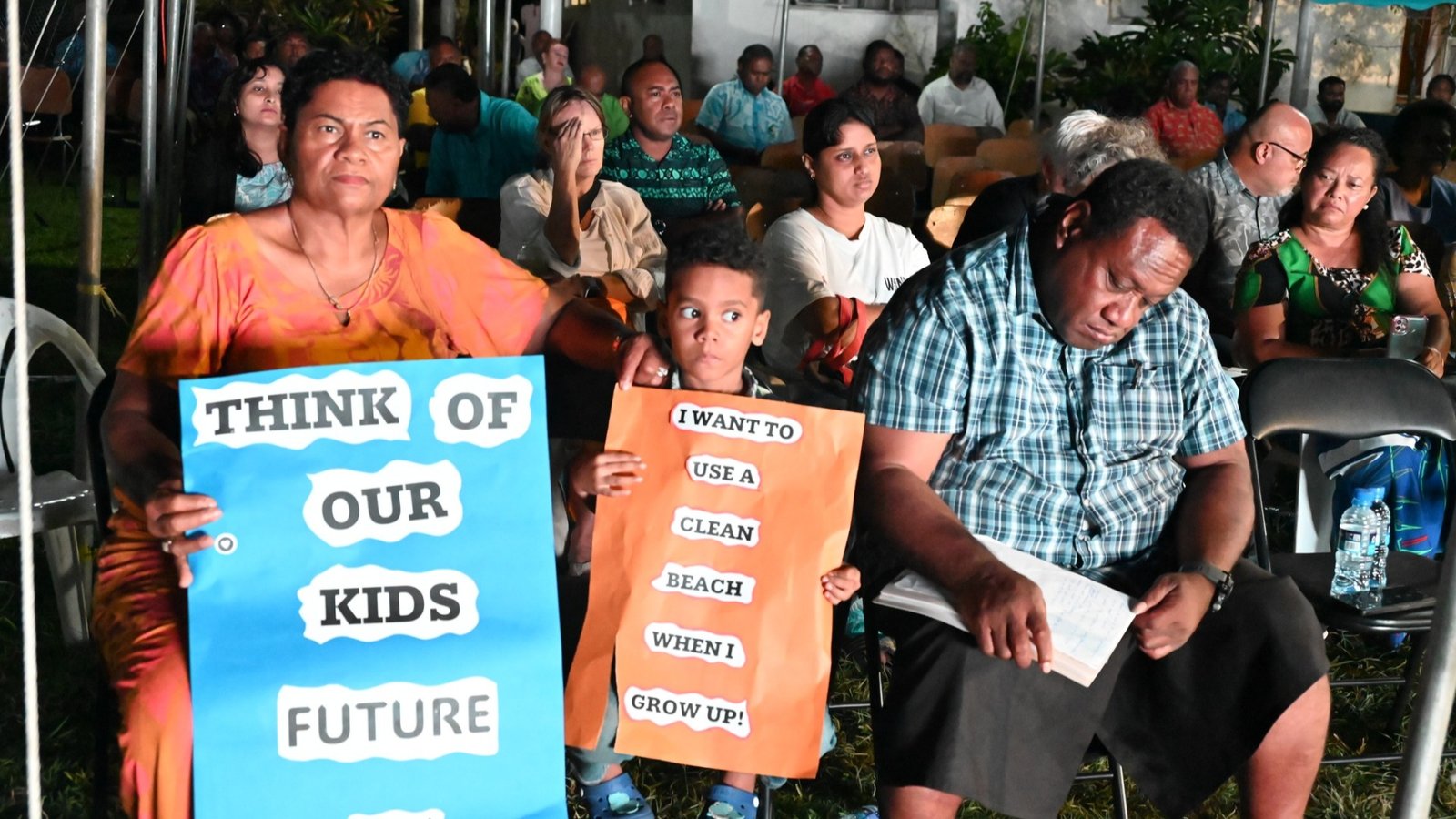
For critics, the numbers are the strongest evidence yet behind their accusation of “waste colonialism” — the idea that wealthier countries could effectively export their waste problem to a smaller, less industrialised Pacific nation.
Former Flying Fijian and political commentator Randall Kamea put it bluntly:
“No country in the world runs an incinerator built to primarily burn another nation’s rubbish.”
TNG rejects that characterisation.
The company presents the project as an energy and waste solution for Fiji — one capable of reducing landfill dependence while producing electricity and cutting the country’s reliance on imported fossil fuels.
Waste or energy crisis?
There is a compelling economic argument behind TNG’s proposal.
Fiji spends roughly US$700 million a year on petroleum imports, making fuel one of the country’s largest import categories.
TNG argues its project could save approximately FJ$250 million (US$114 million) annually in fuel costs, while transforming waste into a source of electricity.
The company’s EIA claims the project could deliver an 83 percent reduction in emissions compared with Fiji’s existing landfill-and-diesel system.
Opposition submissions dispute that calculation, with independent analysis cited by critics projecting instead a 25 percent increase in national emissions.
That extraordinary gap illustrates one of the fundamental problems facing the project: even the environmental mathematics has become contested territory.
“This is a power plant that turns waste into biofuel, and we are looking at a long-term solution to Fiji’s waste management issue,” Malouf has said.
But the question remains: how much waste would Fiji actually need to import to make that solution work?
Why Fiji’s government said no
Fiji’s Department of Environment rejected the EIA on several grounds, including concerns over:
- imported waste;
- hazardous ash management;
- environmental and public health risks; and
- the project’s economic viability.
For a project of this scale, the rejection represents a significant regulatory roadblock.
The most difficult issue may be what happens after the rubbish has been burned. Incineration produces ash, including potentially hazardous fly ash that requires secure long-term management. NatureFiji-MareqetiViti (NFMV), a Suva-based conservation organisation, lodged an eight-page, 25-point objection arguing that the EIA did not provide sufficient detail on the long-term storage and management of toxic fly ash.
NFMV director Nunia Thomas-Moko has warned that the consequences could extend far beyond the project’s operating life.
She described the issue as an “ecological, intergenerational time bomb”, arguing Fiji’s regulatory and enforcement capacity is not yet strong enough to manage a project of this complexity.
“Someone has to tell some hard truths about where we are as a country,” she said, arguing Fiji could be “at least a generation away” from being able to regulate a development of this scale effectively.
When environmental opposition becomes cultural resistance
The dispute is not simply about emissions, ash or electricity. For the people of Vuda, it is also about land, identity and authority. The Momo Levu na Tui Vuda, Ratu Eparama Tavaiqia, issued a formal objection to Prime Minister Sitiveni Rabuka and TNG director Rob Cromb.
His message was uncompromising.

“The proposed waste-to-energy factory at Naikorokoro Point is not progress — it is pollution, dishonour, and insult.”
He called for Saweni to be protected as a place of “unity, dignity, and abundance” and said the Vuda district would not engage further with TNG.
He described the position as “ceremonial, legal and final.”
That gives the dispute a dimension that cannot be resolved simply through an environmental impact assessment.
It raises a more difficult question: who has the right to define development in a place where customary authority, environmental protection and national economic interests overlap?
Fiji’s UN envoy Filipo Tarakinikini has also expressed concern that the country could become a dumping ground for foreign waste.
Writing about the project, he said he was speaking not simply as a diplomat but as a Fijian concerned about the country’s environmental inheritance.
Tourism interests have raised another concern.
Vuda sits within a coastline with long-term tourism and resort potential. Critics fear that locating a major waste-processing and port facility there could undermine investment and development opportunities that pre-date the incinerator proposal.
Then a US challenger appeared
The debate took another turn in April 2026 when US company Infinite Power Clean Energy (IPC) submitted a competing proposal. Its model is dramatically smaller. Rather than building one huge imported-waste-dependent facility, IPC proposes three “no-burn” plants at Fiji’s existing landfills — Naboro, Vunato and Labasa.
The proposed investment is around US$138 million, roughly one-fifth the cost of TNG’s project.
The plants would generate around 19MW, create an estimated 375 jobs and, crucially, process domestic waste rather than imported rubbish.
IPC says it does not require government or Energy Fiji Limited funding. Instead, it is seeking a waste-supply agreement and power purchase agreement.
That difference has changed the political equation.
For TNG’s opponents, the US proposal demonstrates that Fiji may not have to choose between doing nothing and building a billion-dollar incinerator.
Taskforce organiser Paul Forrest welcomed the alternative, saying his group would be happy to see TNG focus its efforts on developing a project “to scale in the right location.”
The battle isn’t over
TNG has not walked away.
The company has appealed the Department of Environment’s decision to the Environment Tribunal. Its legal team has also sought further government documents relating to the rejection, with the Ministry providing only some of the requested material and further filings pending.
TNG had originally envisaged beginning site works by the end of 2026 and reaching full operations by 2029.
That timetable now looks increasingly difficult.
But the stakes are no longer simply about whether one incinerator gets built.
Fiji’s bigger test
Vuda has exposed a dilemma confronting many Pacific nations.
Their populations are relatively small. Their waste systems were designed for a different era. Tourism and consumption are increasing. Landfill capacity is under pressure.
Yet the capital and technology required to modernise those systems often come from overseas.
That creates an uncomfortable question:
When does foreign investment provide a solution — and when does it simply move someone else’s environmental problem somewhere with less political and regulatory power?
Fiji now has two very different models in front of it.
One is a FJ$1.4 billion industrial mega-project, potentially dependent on hundreds of thousands of tonnes of imported waste. The other is a much smaller domestic-waste model, requiring a fraction of the investment and avoiding the international waste trade altogether.
The Environment Tribunal and ultimately Fiji’s government will have to decide where the balance lies. But whatever happens at Vuda, the message will travel well beyond Fiji. For investors, it will signal how seriously Fiji takes its environmental and customary consent processes.
For Pacific governments, it will raise a much bigger question:
Are the islands becoming the dumping ground for the developed world’s waste — or can foreign capital help build genuinely Pacific solutions on Pacific terms?
FutureNow Green News will continue to track the Environment Tribunal proceedings and IPC’s regulatory progress as both move through Fiji’s approvals process.
Check out and signup for any of our 6 Media Communications training modules: FNGN CLIMAX©MEDIA COMMS ACADEMY
Future Now Green News is an independent forward-thinking digital media platform dedicated to spotlighting the people, projects, and innovations driving the green & blue economy across Australia, Asia and Pacific region. We inform, inspire, and connect change-makers through thought leadership and solutions-focused storytelling in sustainability, clean energy, regenerative tourism, climate action, and future-ready industries.