
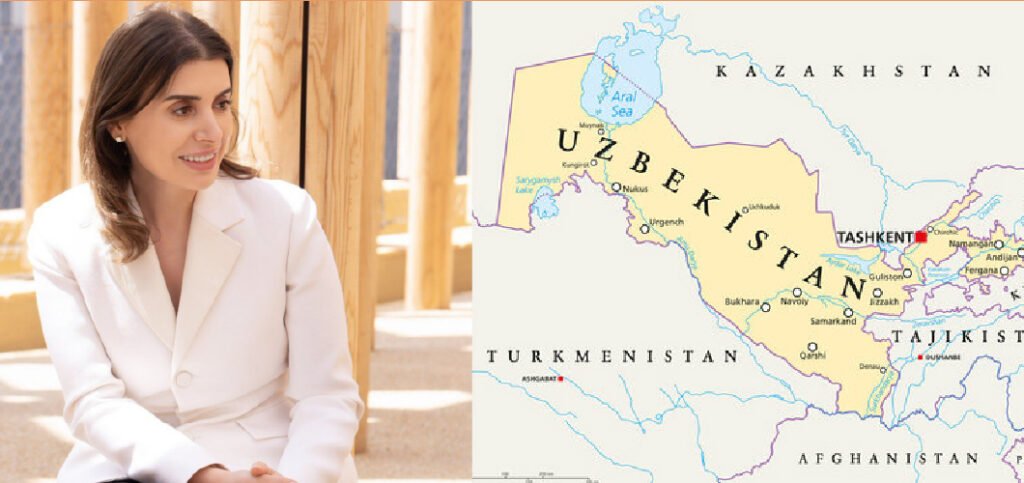

UZBEKISTAN is fast becoming a green growth frontier; its ancient Silk Road heritage, booming eco-tourism, and large-scale renewable energy investments converge across a nation of 38 million people, spread over an area roughly the size of California.
The Silk Road as a trade network is generally dated to around the 2nd century BCE, when the Han Dynasty in China opened formal trade routes westward into Central Asia. But the urban civilization in what’s now Uzbekistan goes back even further — cities like Samarkand (ancient Afrasiab) date to around the 8th century BCE, and Bukhara has roots stretching back over 2,000 years.
The United Nations Statistics Division (UNSD) places Uzbekistan under the “Central Asia” subregion of Asia. So officially, it’s Asia. Geographically, Central Asia. The five Central Asian countries of Uzbekistan, Kazakhstan, Kyrgyzstan, Tajikistan, and Turkmenistan, were part of the Russian Empire from the mid-to-late 19th century, then became constituent republics of the Soviet Union after the 1917 revolution – and independent following the collapse of the USSR in 1991. All five hold elections and have constitutions with formal democratic structures (parliaments, courts), however, observers question genuine political competition, independent media, or judicial independence.
Uzbekistan is officially a secular state, a legacy of the Soviet period whereby the constitution separates religion from government. Bukhara and Samarkand remain iconic centres of Islamic architecture and heritage of madrasas, mosques, and mausoleums that are now major draws for cultural and heritage tourism.
Soft-Power Culture
Both the Bukhara Biennial and Cultural District form part of a long-term, holistic masterplan for the UNESCO Creative City of Craft & Folk Art — spearheaded by Gayane Umerova, with Wilmotte & Associés as lead architecture practice.
The inaugural Bukhara Biennial, curated by Diana Campbell under the theme “Recipes for Broken Hearts,” opened on September 5, 2025, transforming the historic centre of Bukhara — a UNESCO World Heritage site — into a vast cultural stage. More than 200 artists and contributors from 39 countries created over 70 new, site-specific works commissioned for the event. Founded by the Uzbekistan Art and Culture Development Foundation (ACDF) under Commissioner Gayane Umerova, the Biennial is being hailed as Central Asia’s most ambitious cultural gathering — part of a broader tourism surge that has seen Uzbekistan rank among the world’s top seven fastest-growing destinations (Jan–Sept 2025, UN Tourism), with international arrivals up 73% on 2019 levels.
The Bukhara Biennial runs from 5 September until 20 November 2025.
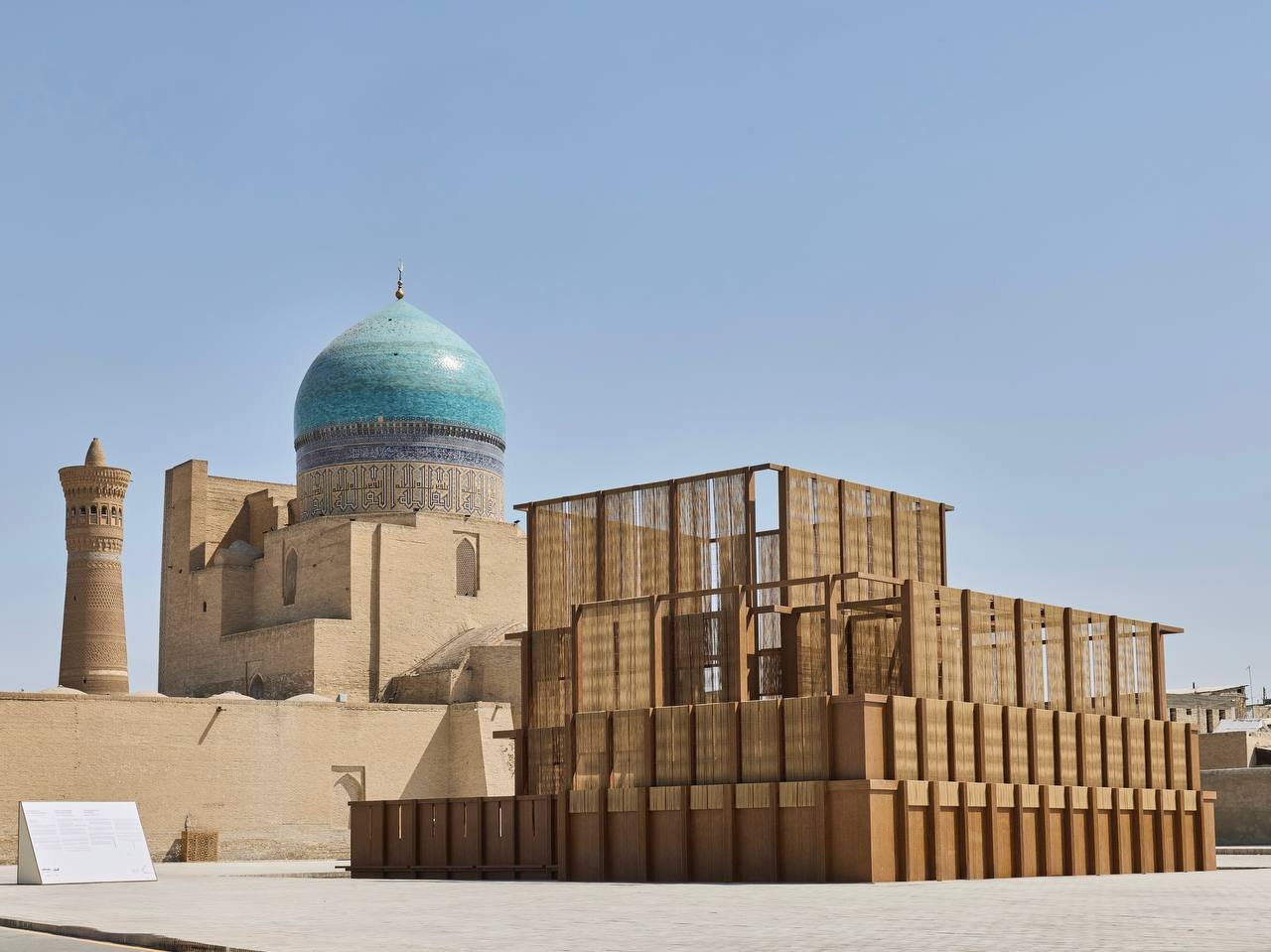
Among the Biennial’s highlights was On Weaving, winner of the inaugural AlMusalla Prize, first awarded at the Biennale of Islamic Art and presented in Bukhara as part of this year’s programme. The work turns weaving into a philosophy of creation, uniting tradition and modernity: its structure, woven from date palm fibres, symbolises dialogue and a sustainable future. Conceived as a universal space for prayer, gathering, and creativity, it remains open to diverse interpretations.
ACDF extends its deep gratitude to the Minister of Culture of Saudi Arabia, Prince Badr bin Abdullah bin Farhan; to Aya Al-Bakree, CEO of the Diriyah Biennale Foundation; and to the jury, chaired by Prince Nawaf bin Ayyaf, for the opportunity to present this project in Bukhara.
Looking ahead, the opening of a major new cultural landmark in September 2026 : the Uzbekistan Contemporary Art Gallery in Tashkent, positioned as a hub for modern artistic expression showcasing leading Uzbek and international artists. And in March 2028, the Tadao Ando–designed National Museum of Uzbekistan will open — cementing the country’s growing role on the global cultural stage.
Australia, Melbourne Forum “Business Diplomat Exchange Australia–Uzbekistan 2025”

In June the inaugural business forum “Business Diplomat Exchange Australia–Uzbekistan 2025” commenced with a high-level visit to the Victorian Chamber of Commerce and Industry. The day’s agenda was designed to provide comprehensive insights into the Australian business and investment environment, with a strong focus on bilateral opportunities for collaboration.
Australia’s AgTech Expertise Could Meet Uzbekistan’s needs
Australia could actually offer Uzbekistan quite a lot in AgTech, given both countries face similar issues: water scarcity, salinity, heat stress, and the need to modernise farming for global competitiveness.
-
Water Management & Irrigation Tech
- Smart drip and micro-irrigation systems suited to arid and semi-arid zones.
- Remote sensing and IoT soil moisture sensors to optimise water use.
- Salinity management solutions (big issue in the Murray-Darling Basin, equally relevant to Uzbekistan’s irrigated cotton and wheat fields).
-
Precision Agriculture
- Drones and satellite imaging for crop monitoring, yield prediction, and pest/disease detection.
- AI-driven farm management platforms that integrate weather data, soil metrics, and planting schedules.
- Variable-rate application tech for fertilisers and pesticides—cutting costs and minimising runoff.
-
Climate-Resilient Crops & Practices
- Drought-tolerant wheat and barley varieties developed in Australia.
- Expertise in conservation tillage and soil carbon sequestration practices.
- Pasture improvement and mixed farming models to balance crop and livestock sustainability.
-
Livestock & Feed Innovations
- Australia’s experience with rangeland livestock management could transfer to Uzbekistan’s sheep and cattle sectors.
- Feed efficiency and methane-reduction supplements (like asparagopsis seaweed) could cut emissions and boost productivity.
-
Post-Harvest & Supply Chain Tech
- Cold chain logistics for fruit, vegetables, and dairy—critical for Uzbekistan’s growing horticulture exports.
- Agri-fintech and farm data platforms to improve credit access for small farmers.
- Grain storage, grading, and biosecurity systems to reduce waste and meet export standards.
-
Renewable Energy for Agriculture
- Solar-powered pumps and greenhouses for off-grid farming communities.
- Integration of agri-voltaics (solar + farming) to maximise land use in sun-rich Uzbekistan.
Australia is a Perfect Fit
Uzbekistan is actively trying to diversify away from cotton dependency, modernise irrigation, and boost food exports. Australia has dryland farming expertise, frontier research in AgTech, and strong education/training systems. There’s scope for bilateral partnerships: R&D tie-ups, demonstration farms, and joint ventures in food security and climate-smart agriculture.
Uzbekistan has developed a national program, for which over US$294 million is anticipated in grant funding, to adapt agriculture to climate change and mitigate its impact. Read Full article>
Australia DFAT Country brief: UZBEKISTAN
Join Victoria Uzbekistan Association: https://vua.org.au/about/