
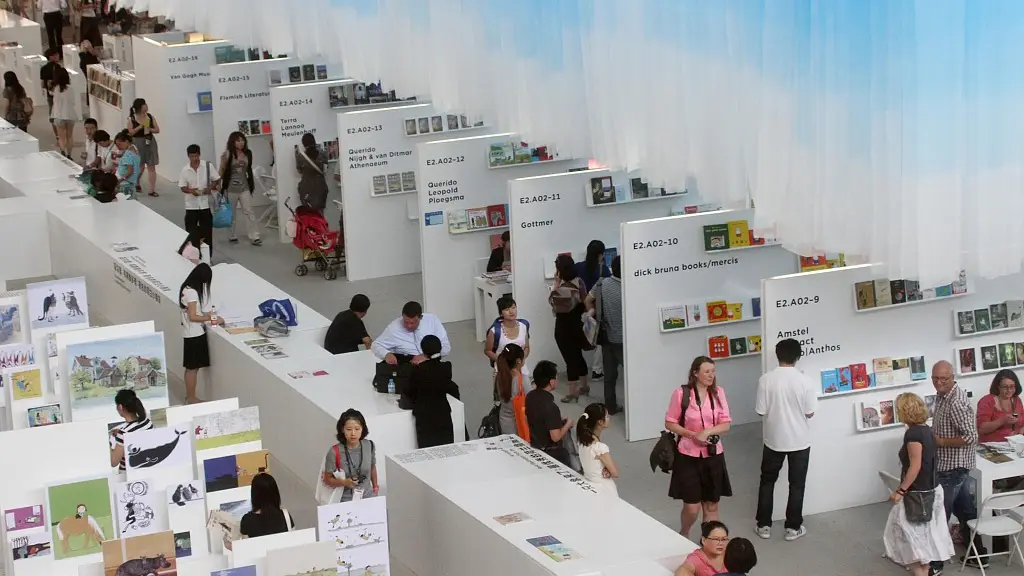

Image credit: CTGN
THE Beijing International Book Fair is not a propaganda exercise. It is one of the world’s most commercially significant rights markets — and the rest of the world keeps showing up.
There is a habit in Western media coverage of China to reduce complexity into a single frame. When it comes to publishing, that frame is almost always censorship. China does regulate content – that is a fact – but publishers operating in China, work within guidelines that cover national security, political stability, ethnic relations and social values — a system that is more centralised, and more explicit, than the regulatory frameworks of most Western democracies.
The official theme of BIBF 2026 is “Using books as a medium to facilitate communication and dialogue.” That language carries weight in the current geopolitical climate, where communication between China and the West is more fraught, and more needed, than it has been in decades.
BIBF is not primarily a place where books are sold to readers. It is a rights market.
BIBF is a place where translation deals are negotiated, academic partnerships are formed, children’s content is licensed, digital intellectual property is traded, and film and gaming adaptation rights change hands. It sits alongside Frankfurt and London as one of the world’s three most commercially significant events in global publishing.
Now in its 32nd edition — and marking its 40th anniversary year — BIBF opened this week at Beijing’s China National Convention Center with more than 1,700 exhibitors from 82 countries and regions, approximately 220,000 titles on display, and a 60,000-square-metre exhibition floor humming with deal-making energy. More than 1,100 of those exhibitors are overseas participants.
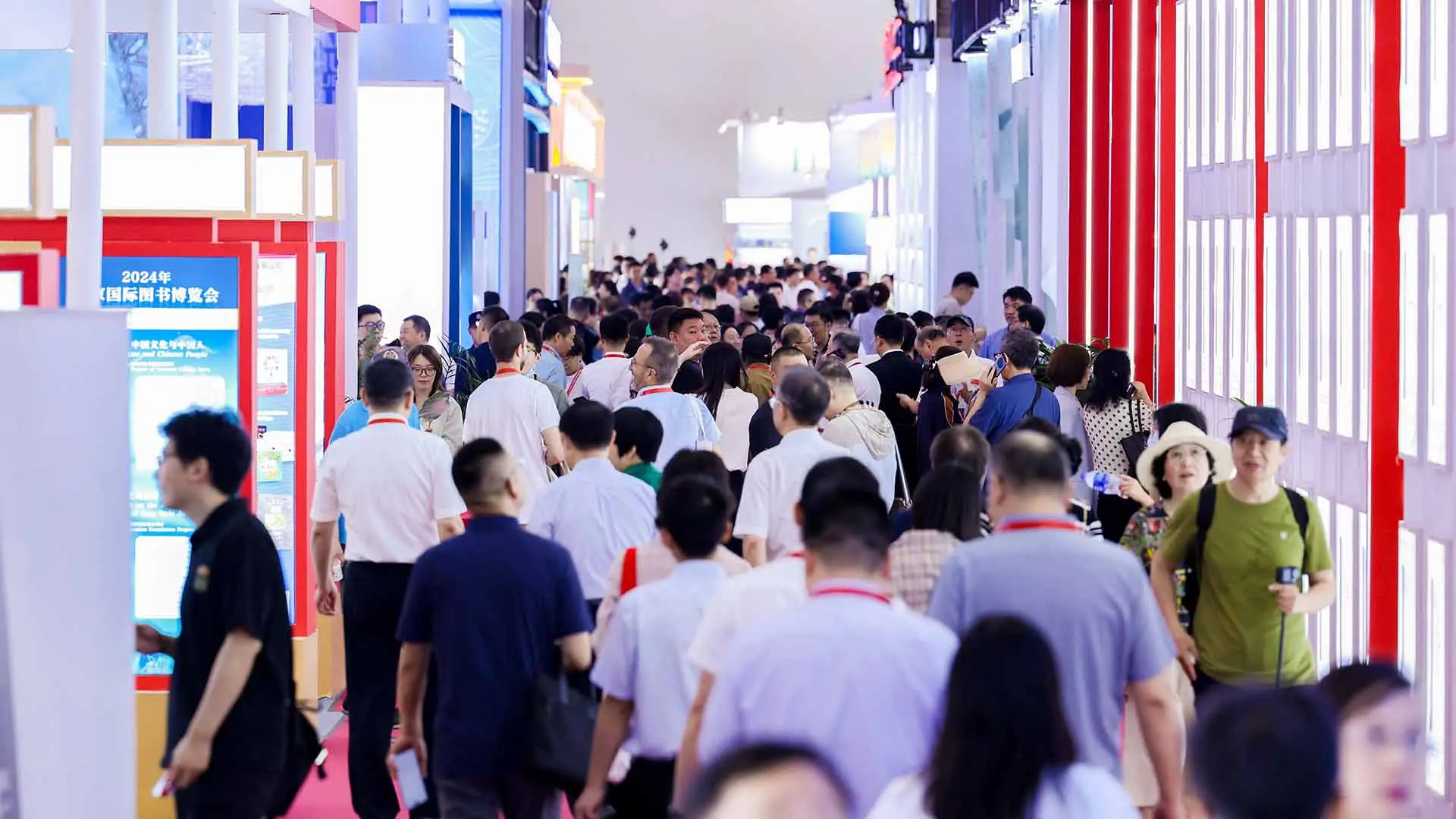
Image credit: The BooksellerThe numbers alone challenge the isolation narrative. But what they don’t convey is the nature of what actually happens at BIBF, which is fundamentally different from what most people imagine when they picture a book fair.
Global publishing houses including Springer Nature, Penguin Random House, Wiley, Taylor & Francis and Cengage are exhibiting this year — not as acts of political goodwill, but as acts of commercial strategy. China is one of the world’s largest and fastest-growing publishing markets. Ignoring it is not a principled stand; it is a market exit.
The people turning up in Beijing know this.
Niels Peter Thomas, President of Greater China and Managing Director of Books at Springer Nature, has described BIBF as one of the most important book fairs in the world, saying he hopes to use the platform to deepen cooperation with Chinese publishing and introduce more projects to promote economic and cultural exchanges globally.
Jeremy North, Managing Director for Books Publishing at Taylor & Francis, has spoken about his company’s solid cooperative partnerships and friendships with Chinese publishing institutions, noting that its publishing volume in the market is constantly expanding.
Brigitta van Rheinberg, Associate Director of Princeton University Press, has described BIBF as a vital opportunity to meet and discuss business with long-term partners in China. These are not the words of people attending out of diplomatic obligation.

Publishing is changing fast again and so must we. Our vision is to become a global creative assets hub supporting publishers in rights, IP and embracing all the opportunities that AI can bring.”
said Lei Jianhua, Vice President of CNPIEC, the fair’s organiser.
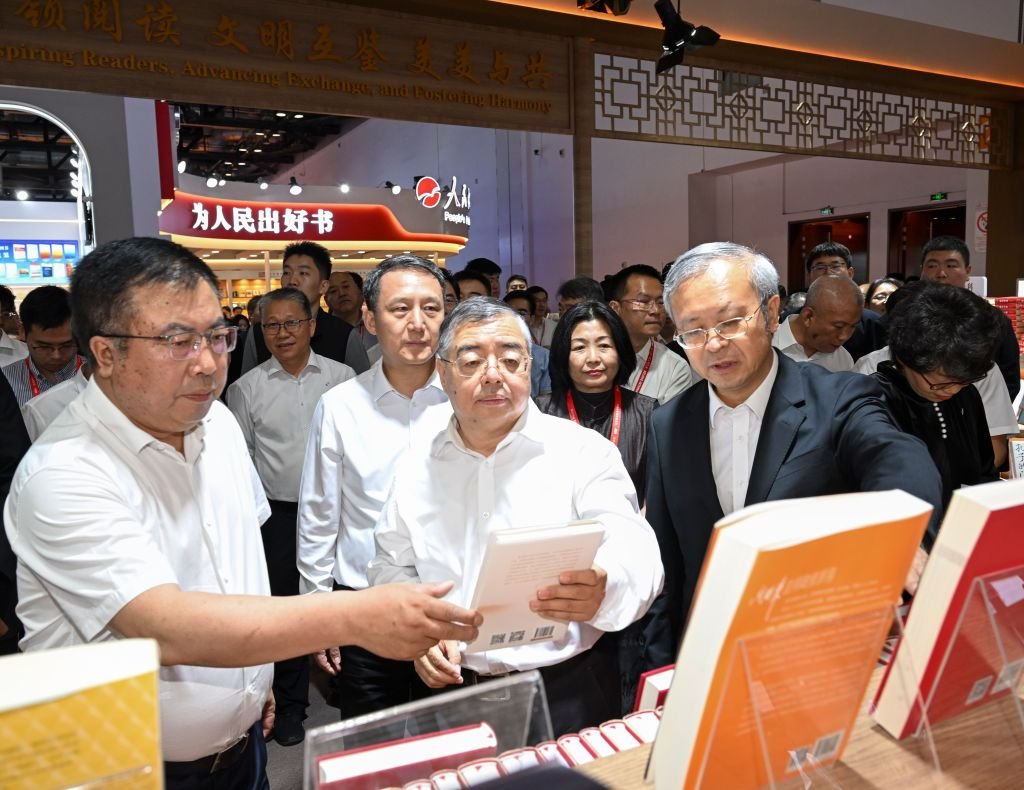
Li Shulei, a member of the Political Bureau of the Communist Party of China (CPC) Central Committee and head of the Publicity Department of the CPC Central Committee, visits the 32nd Beijing International Book Fair
Like the Frankfurt Book Fair, the London Book Fair, and Sharjah’s internationally significant fair in the UAE — this year’s BIBF Guest of Honour — publishing events have always operated on two levels simultaneously. One is commercial. The other is cultural diplomacy.
What the misconceptions cost us
Three misconceptions recur in coverage of China’s publishing sector, and all three have consequences for how Australia and the wider Asia-Pacific region engage with one of their most significant cultural and commercial partners.
Foreign books are unavailable in China. They are not unavailable. International publishers actively participate in Chinese rights trading, and thousands of translated titles enter the market each year.
The most consequential is that cultural exchange between China and the rest of the world flows in only one direction: outward from the West, inward to China. That model is increasingly obsolete. China is now an exporter of cultural product, intellectual property and narrative frameworks at a scale that demands serious attention from anyone working at the Australia–Asia trade and cultural interface.
Ahead of this year’s fair, Douyin — the Chinese domestic equivalent of TikTok — reported that book-related content uploads doubled year-on-year, contributing to a 99 per cent increase in book orders, including niche academic and cultural categories. In children’s books, science and nature-themed titles have become the largest sub-sector of the Chinese children’s book market, with roughly a 29 per cent share. The reading public is enormous, digitally engaged, and increasingly influential in shaping what gets published globally.
For Australia, that duality has practical implications. As publishers from 82 countries gather in Beijing this week, the question for Australian media, cultural institutions and trade bodies is not whether to engage with China’s publishing sector — it is how to do so with clear eyes, commercial acumen, and genuine curiosity about what is actually happening in a market that is, by almost any measure, too large and too consequential to misread.
The 32nd Beijing International Book Fair runs June 17–21 at the China National Convention Center, Beijing.
Check out and signup for any of our 6 training programs: FNGN CLIMAX©MEDIA COMMS ACADEMY
Future Now Green News is a forward-thinking media platform dedicated to spotlighting the people, projects, and innovations driving the green & blue economy across Australia, Asia and Pacific region. Our mission is to inform, inspire, and connect changemakers through thought leadership and solutions-focused storytelling in sustainability, clean energy, regenerative tourism, climate action, and future-ready industries.