

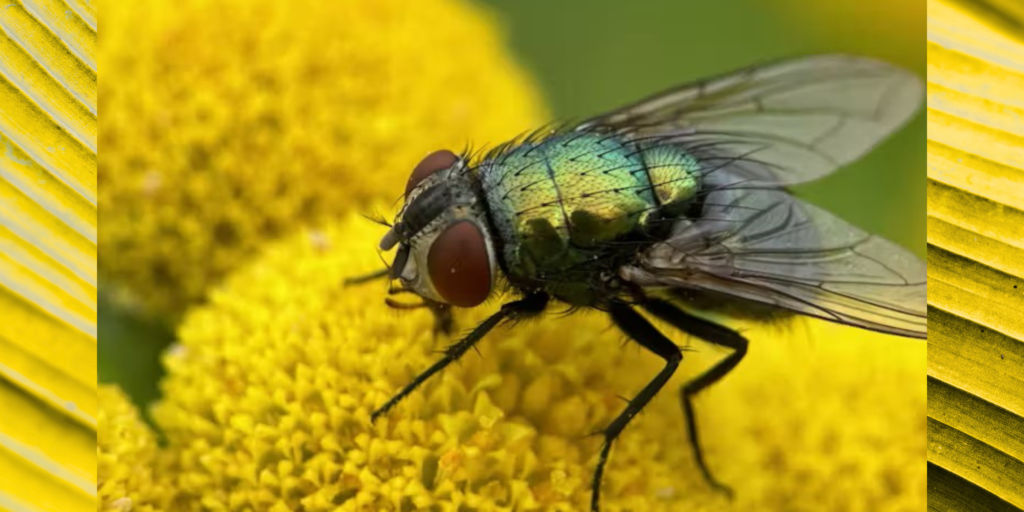

WHEN most people think of pollinators, they rarely think of the humble fly. We’ve all been to Australian barbecues, relaxed on the beach, or worked in the garden, only to be relentlessly pestered by thousands of flies—the same ones we spend every summer swatting away from our faces, ears and even our mouths.
But these much-maligned insects have a surprisingly noble role. Far from being just a nuisance, many species of flies are proving to be valuable pollinators, playing an important part in the reproduction of native plants and agricultural crops alike.

An estimated 30,000 species of fly (Diptera) call Australia home, making them the second largest group of insects after the beetles. (The Conversation)
Every third bite of food we eat depends on animal and insect pollination. Essential food crops like apples, almonds, blueberries, and tomatoes rely heavily on these animals to produce fruit and seeds – and insect pollination adds tens of billions of dollars in economic value to worldwide agriculture each year.
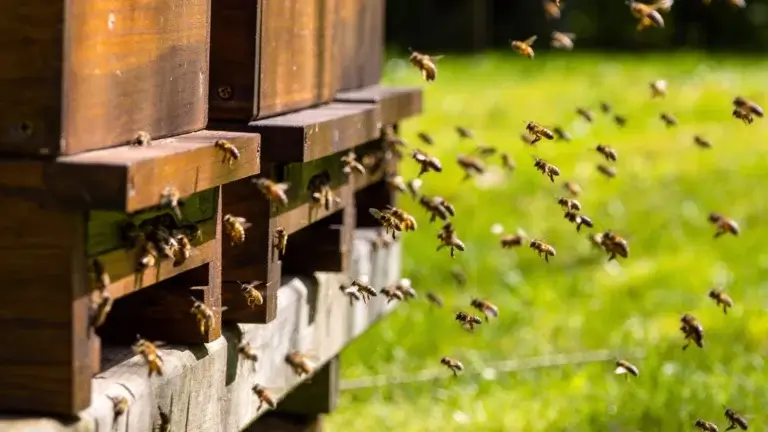
Most of us can imagine the European honeybee buzzing between blossoms, carrying pollen and supporting the production of fruits, vegetables and seeds. Urban gardens are booming in nature strips to attract the Bees back into our gardens and our lives… and of course the health benefits of the Honey that they produce.
Hidden among Australia’s diverse ecosystems is an overlooked group of pollinators: native flies.
Native flies may not replace honeybees, but they could become an important part of a more resilient pollination strategy. Unlike honeybees, some fly species can remain active under cooler conditions and may operate effectively in environments where bee activity is limited. The lesson from Western Australia’s Department of Primary Industries and Regional Development’s (DPIRD) research is simple:
The future of sustainable agriculture may depend on appreciating the value of species we once ignored.
The research is not only about insects. It is about building a more resilient food system, reducing risks from declining pollinator populations and creating new opportunities within Australia’s emerging nature-positive economy.
From soil microbes to insects, biodiversity is becoming one of the world’s most valuable economic assets. Australia’s native flies are proving that sometimes the smallest workers can make the biggest contribution to a greener, more secure food future.
New research led by DPIRD is challenging long-held assumptions about agricultural pollination, revealing that several fly species have the potential to complement honeybees in commercial crop production.
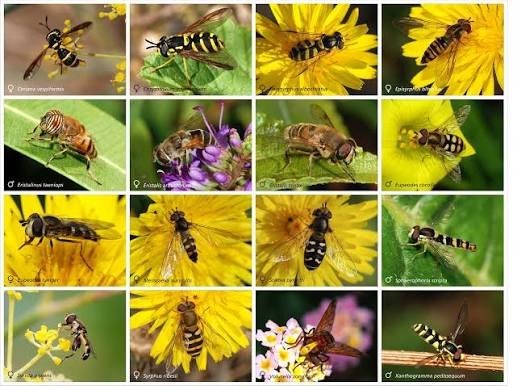
While managed honeybee numbers are artificially sustained by humans for farming, wild pollinators—such as wild bees, butterflies, moths, and hoverflies—are experiencing severe declines. Research indicates that roughly 40% of insect pollinator species face the risk of extinction in the coming decades.
However, the honeybee is not native to Australia. It’s an introduced species that has routinely escaped hives and gone feral, negatively impacting our native animals and biodiversity in general.
The Primary Drivers of Decline
- Habitat loss: Expanding cities, logging, and large monoculture farms destroy the wild meadows and nesting sites these insects need to survive.
- Pesticides: Chemical sprays like neonicotinoids poison insects or disrupt their nervous systems, impairing their ability to navigate and forage.
- Climate change: Rising temperatures and extreme weather alter plant blooming times, leaving insects out of sync with their food sources.
- Diseases and pests: The spread of pathogens, alongside global threats like the Varroa mite, severely weakens both wild and managed populations.
- Resource competition: In regions like Australia, highly dense populations of introduced European honeybees frequently outcompete vulnerable native bee species for limited pollen.
But Australia’s future food security may depend on a much wider workforce.
The Rise of the “Unexpected” Pollinator
For decades, agriculture has relied heavily on managed honeybees for crop pollination. However, global pressures — including pests, diseases, climate change and biodiversity loss — have highlighted the risks of depending on a single pollinator species.
Australian researchers began exploring whether other insects could provide additional support.
DPIRD research scientist Dr David Cook and collaborators investigated the pollination potential of several fly species, including drone flies, native drone flies and blowflies.
Their findings showed that flies are not simply visitors to flowers — they can actively contribute to pollination.
Research published by DPIRD scientists found evidence that flies from groups including Calliphoridae, Rhiniidae and Syrphidae have potential as managed pollinators for horticultural crops. (Digital Library)
“Flies make ideal pollinators as they regularly visit flowers for nectar and pick up pollen on their hairy bodies,” DPIRD research highlights noted. (Western Australian Government)
From Avocados to Blueberries: Testing Nature’s Workforce
The research has moved beyond laboratories into commercial growing environments. Trials have examined native fly performance in crops including avocados, blueberries, cherries and vegetable seed production.
One of the key findings is that flies may offer advantages in certain agricultural situations.
DPIRD trials have investigated species including:
- Western blue-bodied blowfly (Calliphora dubia)
- Golden native drone fly (Eristalinus punctulatus)
- Drone fly (Eristalis tenax)
Researchers are now examining how these species could potentially be bred, managed and deployed to support growers. (Western Australian Government)
In blueberry trials, native blowflies were released into large tunnel houses to assess their impact on crop yield and fruit production. (Western Australian Government)
A New Tool for Climate-Resilient Agriculture
The implications extend beyond pollination.
A diverse pollinator network is a form of ecological insurance.
As climate change creates new pressures on agriculture, farmers are increasingly looking for ways to strengthen natural systems rather than relying solely on external inputs.
This aligns with the principles of regenerative agriculture:
- Supporting biodiversity on farms
- Creating habitats for beneficial insects
- Reducing dependence on single-species systems
- Working with natural ecosystems rather than against them
The research also highlights the importance of designing farms as living ecosystems.
Dr Cook said future work will explore ways to improve farm environments for flies and other beneficial insects, including habitat features such as border plantings, inter-row vegetation and artificial ponds that support insect life cycles. (Western Australian Government)
The Economics of Nature
The economic opportunity is significant.
Pollination-dependent crops contribute billions of dollars to Australia’s agricultural economy. Protecting pollination services is therefore not only an environmental priority — it is a food security and economic issue.
Hort Innovation General Manager Production and Sustainability R&D Anthony Kachenko said pollination is fundamental to horticulture productivity and profitability.
Pollination is fundamental to horticulture productivity and profitability.This research highlights the role native flies could play, as part of a broader approach to safeguarding pollination into the future”.
The potential commercial benefits are also attracting attention.
Changing the Way We See Flies
Perhaps the greatest challenge is cultural. For many people, flies represent a nuisance rather than an ecological asset. But nature rarely follows human perceptions. The same insects often dismissed in urban environments can perform critical ecosystem services in agricultural landscapes.
Native flies are part of Australia’s biodiversity capital and a natural resource that has been largely overlooked.
Recognising their role represents a broader shift in thinking: moving from controlling nature towards understanding and working with it.
The Future of Farming May Be More Diverse
Australia’s agricultural future will require multiple solutions.
Technology, artificial intelligence, precision farming and renewable energy will all play important roles. But so too will the millions of small organisms that quietly maintain ecosystems every day – feeding our nation.
Check out and signup for any of our 6 Media Communications training programs: FNGN CLIMAX©MEDIA COMMS ACADEMY
Future Now Green News is a forward-thinking media platform dedicated to spotlighting the people, projects, and innovations driving the green & blue economy across Australia, Asia and Pacific region. We inform, inspire, and connect changemakers through thought leadership and solutions-focused storytelling in sustainability, clean energy, regenerative tourism, climate action, and future-ready industries.