
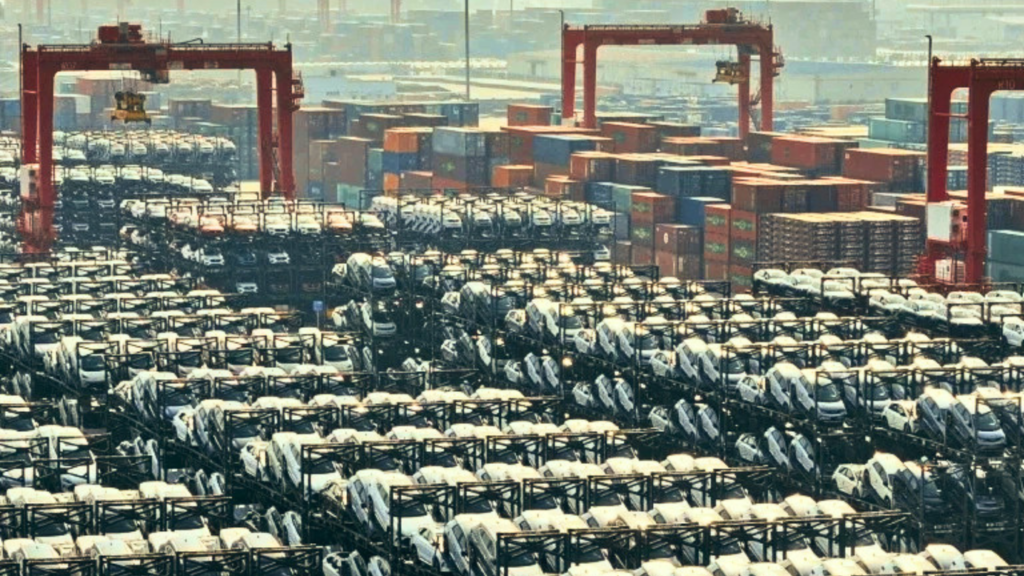

IN CHINA, the first great wave of electric vehicles is now producing a second industrial challenge: what to do with millions of ageing battery packs once they reach the end of their driving life.
The answer is increasingly clear. China is not treating retired EV batteries as waste. It is treating them as an urban mine.
Across the country, old power batteries are being collected, dismantled, shredded and chemically processed so their valuable materials can be recovered and fed back into new battery production.
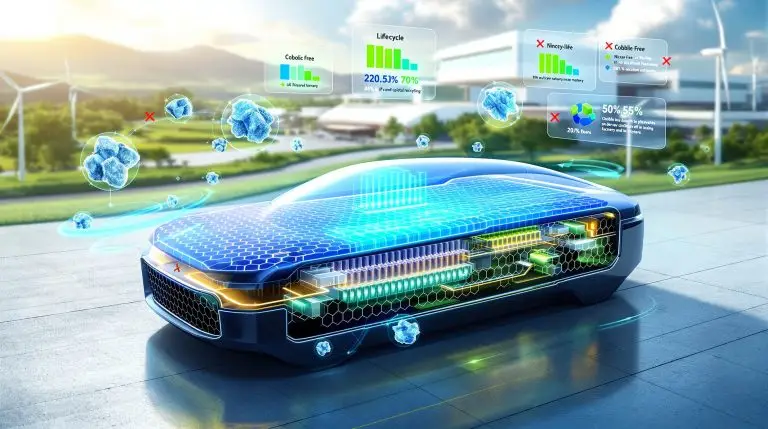
Nickel, cobalt, manganese and lithium — the same critical minerals that power the electric vehicle boom — are being pulled from dead packs and returned to the manufacturing chain.
The China’s scale is already significant.
China recycled around 300,000 tonnes of EV batteries last year, with the market valued at more than CNY 48 billion. By 2030, China’s domestic power battery recycling market is expected to exceed CNY 100 billion, or about US$14 billion. (SEAISI)
This is not just a clean-up exercise. It is industrial strategy.
Liu Hongsheng, director of the standardisation and technical department at China’s State Administration for Market Regulation, described power battery recycling as “currently a key task” for government. China has now built a national standards system covering recycling, dismantling, chemical treatment and reuse, with 22 national standards already in place. (SEAISI)
The results are striking. Under new recycling standards and pilot programs, some companies are reporting recovery rates of 99.6% for nickel, cobalt and manganese, and 96.5% for lithium. CATL subsidiary Brunp Recycling has achieved those rates using its directional recycling technology. (CarNewsChina.com)
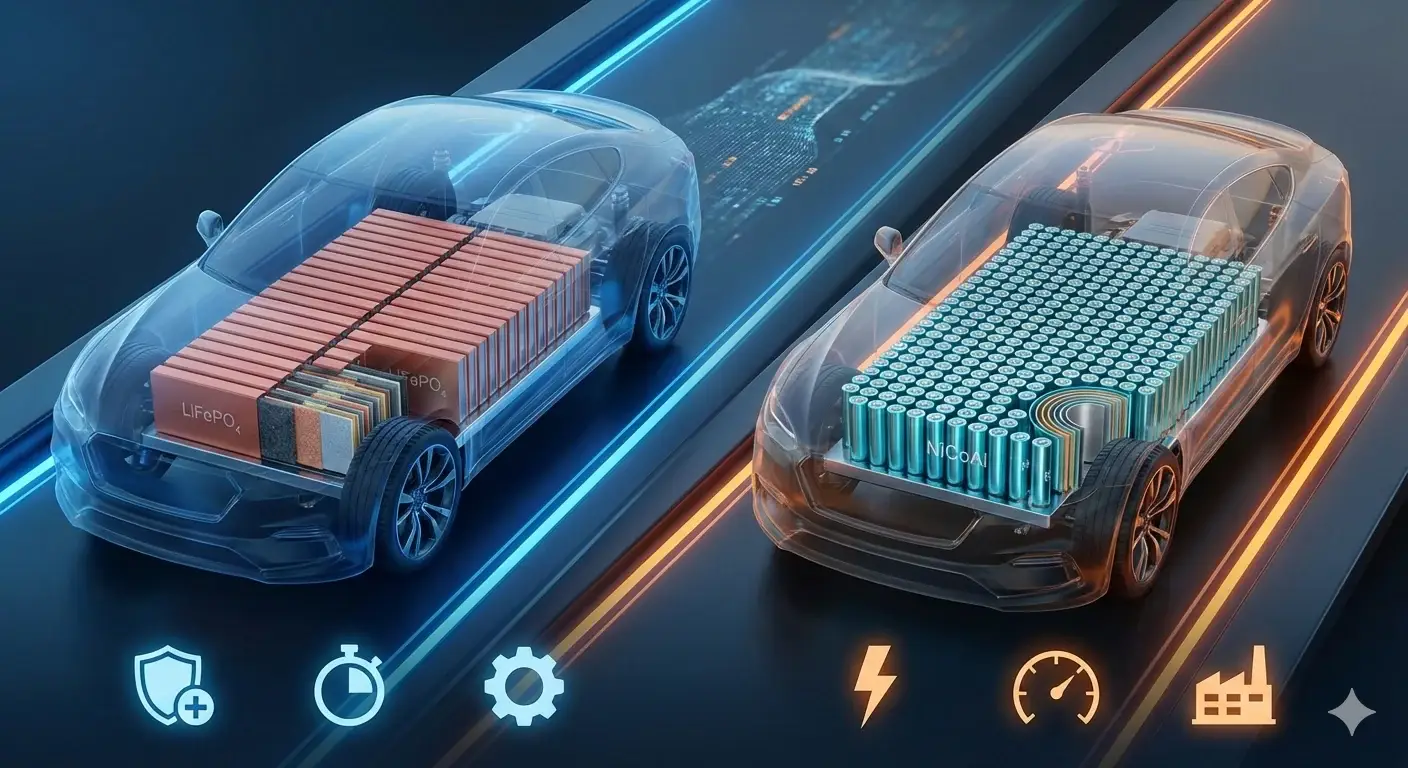
Left vehicle — BYD Blade Battery (LFP / LiFePO₄) with the battery modules are labelled “LiFePO₄” (Lithium Iron Phosphate). Right vehicle — Tesla-style Nickel-based battery (NCA), made up of hundreds of cylindrical cells and is labelled “NiCoAl”, referring to Nickel-Cobalt-Aluminium (NCA) chemistry,
Rather than competing with identical technology, BYD and Tesla have pursued different battery philosophies. BYD champions safer, longer-lasting Blade Batteries – while Tesla balances LFP and high-energy nickel chemistries to maximise vehicle performance, range and manufacturing scale.
For a country that dominates EV manufacturing but still depends heavily on imported raw materials, this matters.
A senior researcher at the China Automotive Technology and Research Center told Chinese state media that China imports more than 90% of the cobalt, nickel and manganese used in its batteries, and about 60% of its lithium. Recycling gives Beijing another lever: reduce exposure to foreign mineral supply chains by mining its own fleet of ageing electric cars. (Rest of World)
“Many countries without lithium resources are seeing end-of-life batteries as a potential source of lithium to be more self-sufficient,” Adam Megginson, principal analyst at Benchmark Mineral Intelligence, told Rest of World.
But China is moving faster than most. New rules that took effect on 1 April require spent EV batteries to be kept within formal recycling channels, rather than being stripped out and resold into unsafe or informal uses. The policy also reflects a key difference between China and the West. While the United States and Europe often favour giving old EV batteries a second life in grid storage before recycling them, China is prioritising immediate material recovery.
There is a reason for that. Many Chinese EVs use cheaper lithium-iron-phosphate batteries, which contain less high-value nickel and cobalt. That makes recycling less profitable unless regulation forces the system to work.
That blunt regulatory push may become one of China’s biggest advantages.
Its recycling sector is not only solving a waste problem; it is building a circular supply chain around the world’s largest EV market. Recovered battery materials can be refined, reprocessed and sent back into new batteries, cutting pressure on mining, lowering exposure to volatile commodity markets and strengthening China’s control over the clean transport supply chain.
The system is not perfect. Some plants are reportedly underused, and lithium recovered from older batteries often needs further processing before it can meet battery-grade standards. Recycling lithium-iron-phosphate batteries also remains less lucrative than recycling nickel-rich batteries.
But the direction is unmistakable.
China has turned EV battery recycling from an environmental afterthought into a national industrial priority. Dead batteries are no longer simply the final chapter of the electric car story. They are becoming feedstock for the next one.
For Australia, the lesson is sharp. As EV adoption grows, battery recycling should not be treated as a future waste-management problem. It is a critical minerals, manufacturing, circular economy and energy security opportunity.
China is already building that loop at scale.
Check out and signup for any of our 6 training programs: FNGN CLIMAX©MEDIA COMMS ACADEMY
Future Now Green News is an independent forward-thinking media platform dedicated to spotlighting the people, projects, and innovations driving the green & blue economy across Australia, Asia and Pacific region.nt Our mission is to inform, inspire, and connect changemakers through thought leadership and solutions-focused storytelling in sustainability, clean energy, regenerative tourism, climate action, and future-ready industries.