

FOR more than two decades, sustainability has been the language of city planning. It has shaped everything from green buildings and recycling systems to electric buses, bike lanes and net-zero commitments.
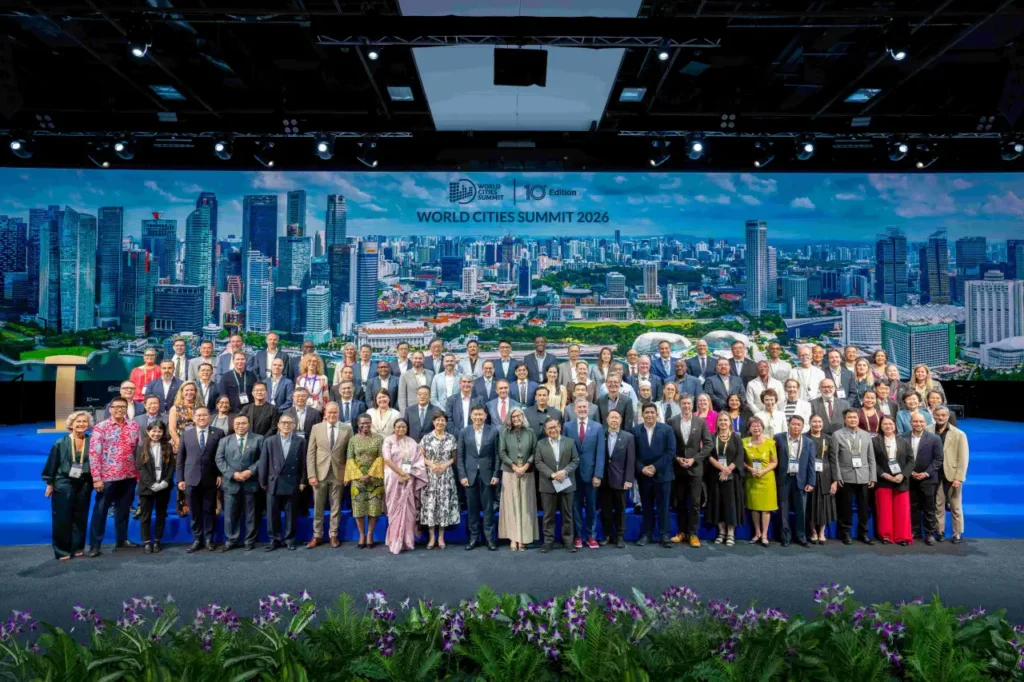
But at the 10th World Cities Summit in Singapore, attended by mayors, urban planners, scientists and policymakers from around the world, a quiet but profound shift took place.
Singapore wasn’t talking about building sustainable cities. It was talking about building regenerative cities.
The distinction may sound subtle. It isn’t.
One seeks to reduce harm. The other asks how cities can actively restore the natural systems on which they depend.
For Australia—where every capital city is grappling with housing shortages, urban heat, biodiversity loss, water security and climate resilience—it is an idea worth paying close attention to.
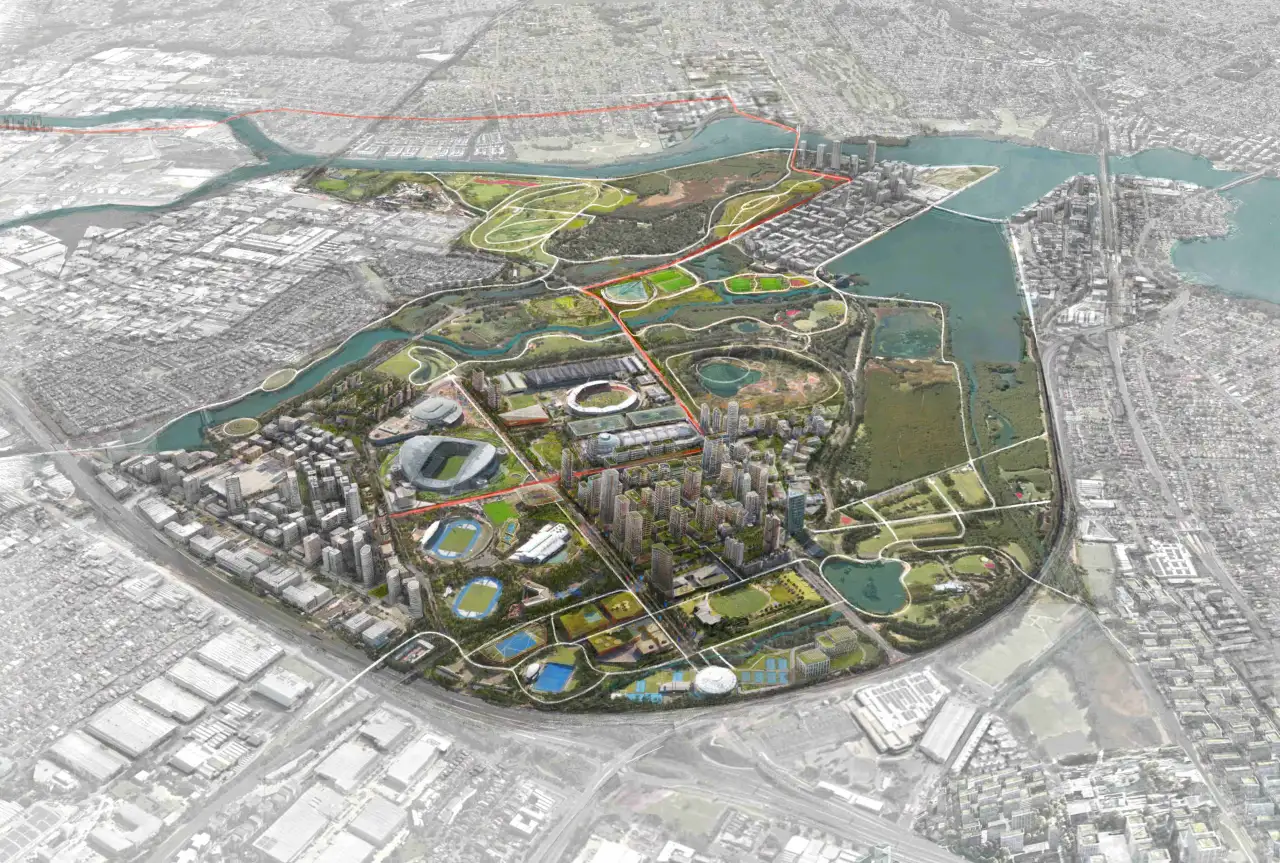
From “doing less bad” to creating net-positive cities
Hosted by Singapore’s Centre for Liveable Cities (CLC) and the Urban Redevelopment Authority (URA), the World Cities Summit has become one of the world’s leading forums for urban innovation. This year’s theme, “Liveable and Sustainable Cities: ACT Now!”, attracted city leaders from every continent.
Yet the summit’s most enduring legacy may prove to be the launch of a new publication: Beyond Sustainability: Building a Regenerative Future for Our Cities.
Developed over two years with contributions from more than 100 international experts and supported by researchers from the Singapore University of Technology and Design, the publication argues that sustainability has reached an important milestone—but not the destination.
For decades, cities have focused on reducing carbon emissions, lowering waste, conserving water and becoming more energy efficient.
Necessary? Absolutely. Sufficient? Not anymore.
The regenerative model asks cities to become active contributors to healthier ecosystems rather than simply smaller consumers of resources.
Instead of asking, “How do we minimise damage?” planners are encouraged to ask, “How do our cities leave nature, communities and economies better than before?”
The framework identifies four major shifts:
- from reducing harm to creating benefit;
- from managing trade-offs to maximising co-benefits;
- from human-centred planning to whole-ecosystem thinking; and
- from linear development to circular, closed-loop systems.
Importantly, Singapore is not presenting regeneration as another aspirational planning slogan. Alongside the framework, the CLC launched the Regenerative City Self-Assessment Tool (RCSAT), allowing governments to evaluate both their outcomes and their institutional capacity to deliver regenerative development.
Singapore’s own living laboratory
Its proposed Long Island coastal protection project has become perhaps the clearest example of regenerative thinking in practice. To protect the East Coast from rising sea, strengthen water resilience, and create more land for future possibilities.
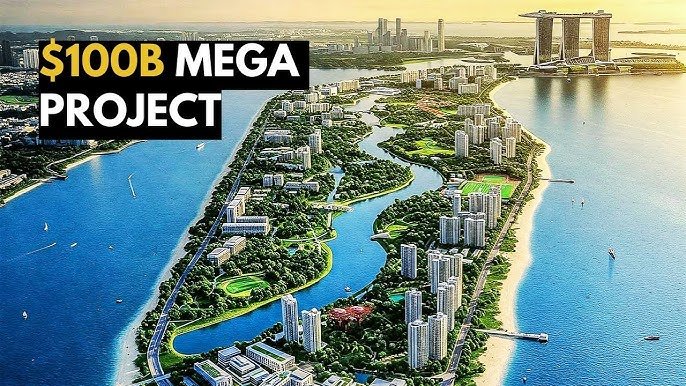
Singapore’s LONG ISLAND reclamation program solution
Rather than constructing a traditional seawall to defend against rising oceans, Long Island combines coastal protection with water storage, ecological enhancement and the creation of new land for future housing, recreation and economic activity.
One project. Multiple outcomes.
National Development Minister Chee Hong Tat described it as the type of integrated planning the regenerative framework is designed to encourage—where infrastructure solves several long-term challenges simultaneously instead of addressing each in isolation.
The urgency is becoming increasingly clear.
Singapore’s Third National Climate Change Study projects average temperatures could rise by as much as 5°C by the end of the century, while sea levels may increase by up to 1.15 metres if global emissions remain unchecked.
Recognising this, Singapore has declared 2026 its Year of Climate Adaptation, while preparing its first National Adaptation Plan and progressively increasing its carbon tax.
The message from the summit was unmistakable: adaptation can no longer be treated as tomorrow’s problem.
A conversation Australia is already having
Although Singapore’s geography differs dramatically from Australia’s, many of the underlying challenges are remarkably familiar.
Brisbane is planning for population growth alongside flood resilience.
Sydney continues balancing housing density with green space, biodiversity and transport infrastructure.
Melbourne faces increasing urban heat, water management pressures and rapid suburban expansion.
Perth is responding to declining rainfall and long-term water security, while regional coastal communities across Australia confront rising sea levels, erosion and more frequent extreme weather events.
Australian governments have embraced sustainability through net-zero commitments, green building standards, circular economy strategies and renewable energy targets.
Singapore’s proposition is that these initiatives should now become the foundation—not the finish line.
The next generation of cities will not simply consume fewer resources. They will generate cleaner air, healthier waterways, richer biodiversity, cooler neighbourhoods and stronger social resilience.
In other words, cities themselves become ecological assets.
Cities learning from cities
The World Cities Summit has increasingly become less about showcasing iconic architecture and more about sharing practical governance.
This year’s Lee Kuan Yew World City Prize recognised London for coordinating transformational change across nine million residents and 32 boroughs—a reminder that good urban outcomes depend as much on collaboration and leadership as they do on engineering.
Special mentions were awarded to Antwerp, Budapest, Guangzhou, Taipei and Tianjin, reflecting the increasingly global exchange of urban knowledge.
For Australian planners, another release may prove equally valuable.
CLC published Mandai: Balancing Development and Nature, documenting how Singapore integrated conservation with the redevelopment of the Mandai Wildlife Reserve.
It is precisely the sort of case study likely to resonate with Australian councils attempting to reconcile housing demand with biodiversity protection.
Looking beyond sustainability
Perhaps the biggest lesson from Singapore is not that regeneration offers all the answers.
Rather, it changes the questions.
Instead of measuring success solely by lower emissions or reduced environmental impact, cities begin asking whether every new precinct, transport corridor, waterfront, park or housing development leaves the surrounding environment healthier, communities more resilient and economies more productive.
As Australia’s cities continue to grow, the conversation is gradually moving beyond simply building greener buildings.
The challenge now is building places capable of restoring the natural systems that sustain them. If sustainability defined the first generation of climate-conscious cities, regeneration may well define the next.
Singapore has fired the opening shot in that conversation.
The rest of the Asia-Pacific—including Australia—will be watching closely.
Source: Centre for Liveable Cities Knowledge Hub; World Cities Summit 2026 official programme; press coverage of WCS 2026 and the Lee Kuan Yew World City Prize 2026 ceremony.
Check out and signup for any of our 6 training programs: FNGN CLIMAX©MEDIA COMMS ACADEMY
Future Now Green News is a forward-thinking media platform dedicated to spotlighting the people, projects, and innovations driving the green & blue economy across Australia, Asia and Pacific region. Our mission is to inform, inspire, and connect changemakers through thought leadership and solutions-focused storytelling in sustainability, clean energy, regenerative tourism, climate action, and future-ready industries.